February 25 – San Xavier

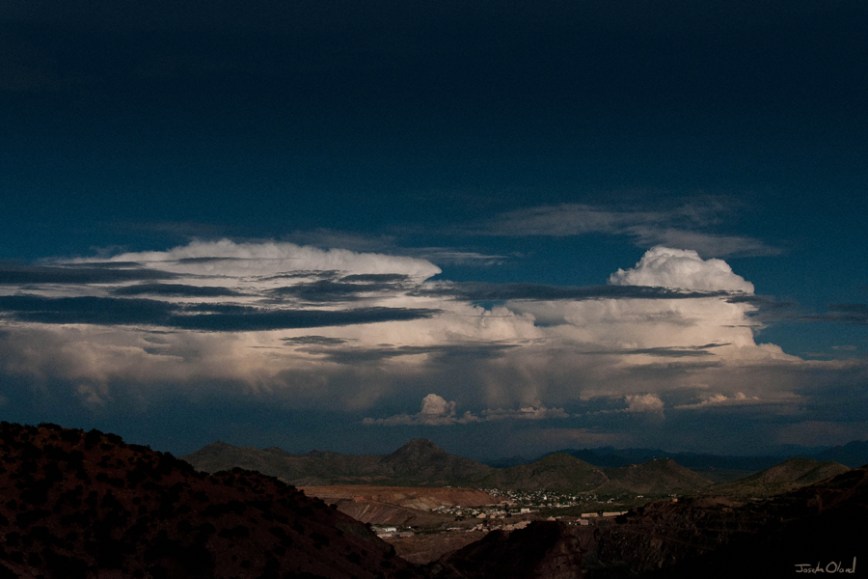
02-25 San Xavier post“Apply yourself both now and in the next life. Without effort, you cannot be prosperous. Though the land be good, You cannot have an abundant crop without cultivation.”

~Plato

– – –

FINE ART PRINTS AVAILABLE HERE

SIGN UP FOR THE LENSEBENDER NEWSLETTER

February 24 – The Mule Mountains

02-24 Bisbee post“Nature holds the key to our aesthetic, intellectual, cognitive and even spiritual satisfaction. As a single footstep will not make a path on the earth, so a single thought will not make a pathway in the mind. To make a deep physical path, we walk again and again. To make a deep mental path, we must think over and over the kind of thoughts we wish to dominate our lives.”

~Henry David Thoreau

– – –

FINE ART PRINTS AVAILABLE HERE
SIGN UP FOR THE LENSEBENDER NEWSLETTER

February 23 – All

02-23 All post“Pictures, abstract symbols, materials, and colors are among the ingredients with which a designer or engineer works. To design is to discover relationships and to make arrangements and rearrangements among these ingredients.”

~Paul Rand

– – –

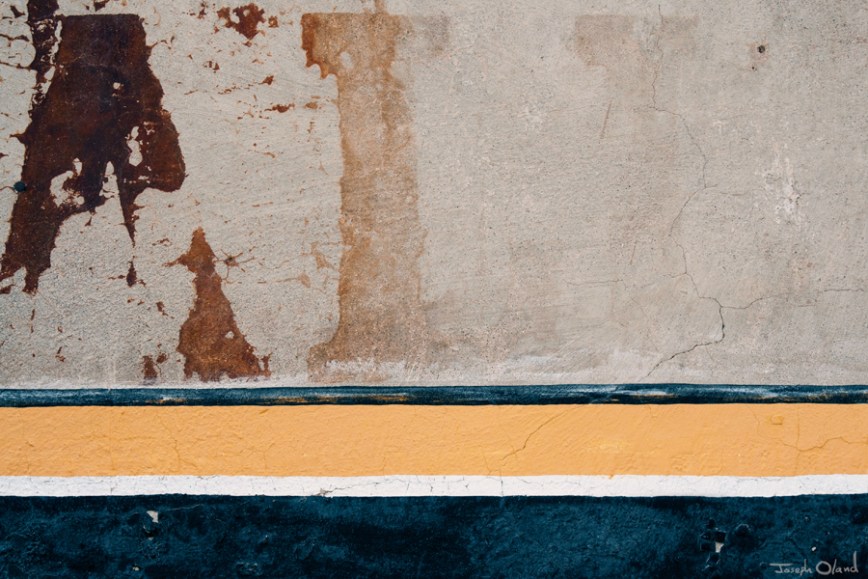
No flowery words today. Film February marches on with this very basic composition, taken with my first real camera, the Nikon N80 that my parents got me. Up until that point, I was using an old Canon with a broken manual rewind lever – it would take about five minutes to wind the film after finishing a roll.

This picture was made using my favorite film stock, a color-reversal stock from Fujifilm called Velvia. It was pretty expensive film, so I never used it much, but it produced these rich colors that always seemed to take the most basic, common, mundane, and forgettable subject matter leap up at you.

A faded practice, film photography, for the faded paint lettering on an old building.
Seems appropriate enough.

FINE ART PRINTS AVAILABLE HERE
SIGN UP FOR THE LENSEBENDER NEWSLETTER

February 22 – The Nebula

02-22 Nebula postExperimentation sometimes leads to the break-through. It certainly leads to some failure. Sometimes you hit an in-between result; this one lives somewhere in the middle. Today’s image wasn’t made with film, nor was it made with a camera. It was made with black-and-white photo paper, an incandescent light, some old print developer (Kodak Dektol multigrade), and a bottle of india ink.

An entire box of my photo paper was accidentally exposed to light; the material isn’t cheap, and I wasn’t amused by the loss. For those of you who don’t know what film and photo paper is, it’s a light-sensative material that’s coated in silver halide (a crystallized salt form of the metal). When light hits this material, the areas that were exposed to the greatest amount of light turn correspondingly dark. With the assistance of corrosive chemicals, you can accelerate the process of darkening the tones and then you can use another set of chemicals to fix the image permanently.

When a box of photo paper is accidentally exposed, it becomes useless for traditional printing – all prints will be slightly flat-toned or “fogged” when you go to draw a print in the darkroom. Rather than snap my fingers in defeat and pitch the useless pages into the trash, I decided to try and have some fun. The paper was already ruined, so what could I lose?

I started taking these pieces of partially-exposed paper out. I threw them into the developing bath and sprayed india ink over the prints before snapping on the overhead light. Since some of the paper was protected from the light by the dark, floating plumes of ink, strange patters begin to emerge on the paper. I’d then lift the prints before they turned completely black and put them in the fixing chemicals. The result is what you see above – atmospheric swirls and bubbles that, to my eye, are reminiscent of astral photography. I’d stumbled on a new, slightly messier form photogram, and I spent the entire afternoon experimenting, saving the best results to be toned, hand-colored, or scanned into digital files later.

Sometimes it pays just to goof off for a bit and forget that there are any rules.

FINE ART PRINTS AVAILABLE HERE
SIGN UP FOR THE LENSEBENDER NEWSLETTER

February 21 – Manhole Cover

02-21 Manhole Cover post“The longer you look at an object, the more abstract it becomes, and, ironically, the more real.”

~Lucian Freud

– – –

Film February continues with yet another recurring theme in the pantheon of old subject matter. Some people miss out on what’s going on around them because they stare at their shoes rather than look around. There’s nothing wrong with staring at the ground, if you ask me – there’s a lot going on there.

As I’ve mentioned in previous entries to this project, street photographer Aaron Siskind played a major role in inspiring a younger version of myself. Seeking out interesting compositions in mundane places became something of a game. While interning at The Center For Creative Photography in Tucson, I also became deeply fascinated by a photographer named Minor White, who also had a tendency to isolate seemingly normal, everyday objects and somehow manage to make them alien, interesting, unique.

There is definitely something magical about working in black-and-white film.

FINE ART PRINTS AVAILABLE HERE
SIGN UP FOR THE LENSEBENDER NEWSLETTER

February 20 – The Serpent (and semiotics)

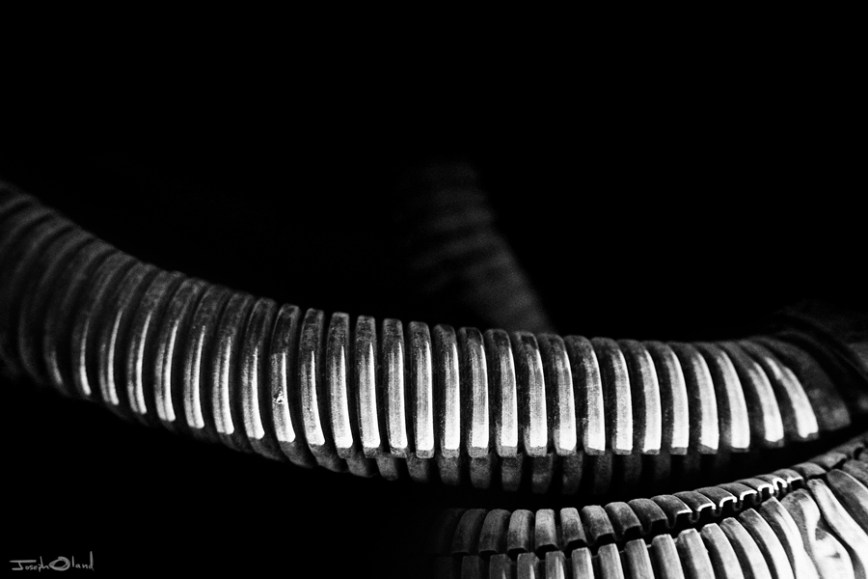
02-20 The Serpent postToday’s photograph for the continuation of ‘Film February’ corresponds to a time when I was first exposed to a different, more literary side of photography. After reading “Subculture: The Meaning of Style” by Dick Hebdige, the door to semiotics was opened. It was nauseatingly confusing to me, this new philosophy of graphic language, but it was also intriguing. I fell down the rabbit hole and found myself thinking about my photographs in a completely different way. I’m reminded of one of photography’s seminal publications, “Camera Lucida: Reflections on Photography,” and a particular passage by author Roland Barthes which summarizes my feelings perfectly:

“For me the noise of Time is not sad: I love bells, clocks, watches — and I recall that at first photographic implements were related to techniques of cabinetmaking and the machinery of precision: cameras, in short, were clocks for seeing, and perhaps in me someone very old still hears in the photographic mechanism the living sound of the wood.”

From the moment I began these new studies I started looking through the viewfinder differently. This is when I became interested in macro photography, and it’s when I became much more deliberate with my compositions. When I take the time to really investigate, I discover that there are interesting things all around, that there is always something interesting to investigate with my photographers’ tools. With camera in hand, I’m a kid looking under rocks and discovering whole worlds that I never knew were there before.

FINE ART PRINTS AVAILABLE HERE
SIGN UP FOR THE LENSEBENDER NEWSLETTER

February 17 – Hotel Monte Vista

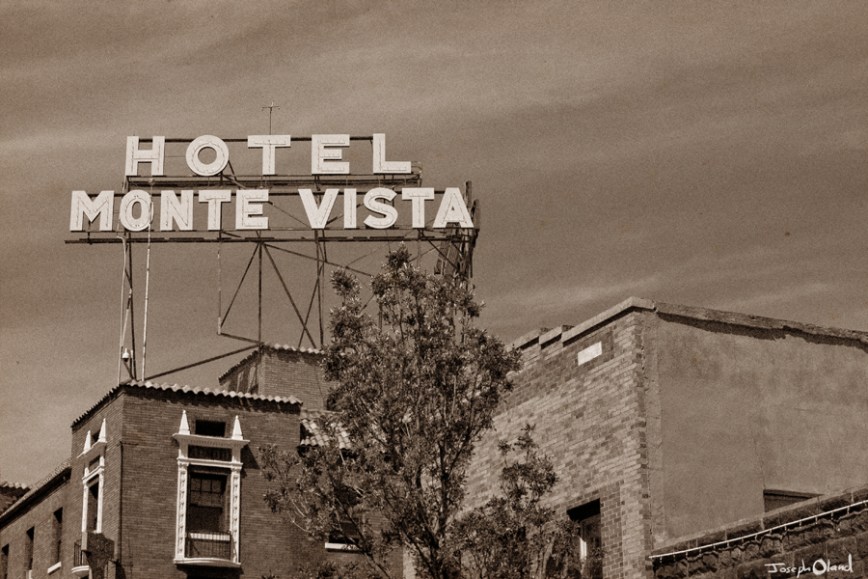
02-17 Monte Vista postAutomobile culture reached Arizona in the early 1900s and brought major roadway projects (see yesterday’s post about Miracle Mile Road) and an increase in tourism, which delivered new money to Flagstaff in the 1920s. Fundraising began in 1926 by local community leaders to establish first-class accommodation to replace some of the outmoded and run-down hotels.

Ground broke for the 73 room Community Hotel (named in honor of the prominent citizens who funded its construction) on June 8 of that year. It was finished in six months, opening its doors on New Years Day, 1927.

My first visit was back in 2005 or 2006, when I had the chance to tag along with a friend of mine. We worked together at a local Tucson photo lab and he happened to be a drummer in a band called “The Deludes.” I was able to hop aboard for a show they’d booked at the hotel’s “Cocktail Lounge.” It was a prohibition-era bootlegging operation, but the secret wasn’t kept long – local officers disrupted the illegal business in 1931. Ironically, the speakeasy reopened only two years later when prohibition was lifted.

It is one of the oldest operating hotels in Flagstaff and is a registered historic landmark, and its sign is one of the most recognizable landmarks in Flagstaff.

FINE ART PRINTS AVAILABLE HERE
SIGN UP FOR THE LENSEBENDER NEWSLETTER

February 14 – Stone Avenue Garage

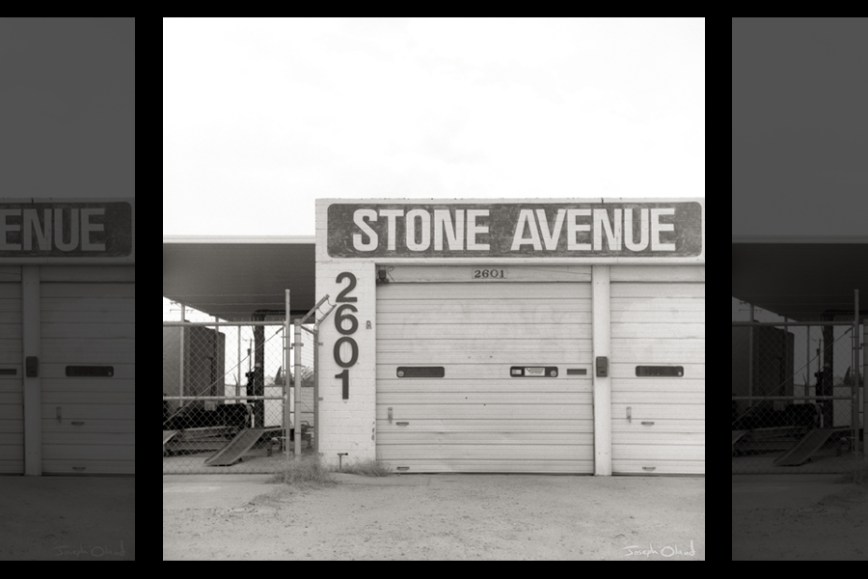
02-14 Stone Ave Garage postOne of the things I enjoy most about photographing using traditional film methods is the aesthetic. The ease of digital photography has ushered in a new era of thoughtlessness; we are free to machine-gun the shutter and then pick-and-choose which images we like after the fact. There’s nothing inherently wrong with this, but it’s a time-consuming approach. I genuinely believe that the time, limited frame-count, and money involved with film photography naturally motivates the photographer to be more thoughtful regarding what to photograph and how to photograph it.

I made today’s photograph of the day using my twin-lens Yashica-D vintage view camera.

There is also a built-in aesthetic that comes along with black and white photography. Removing the color element, the photograph is more focused on the architecture and balance of composition. These photographs appear more “classic” or “timeless” because of the reticulation of the film grain and the lack of vibrant color. I’m reminded of a lecture delivered by one of the best professors I ever had, Mr. Keith McElroy.

I’ll paraphrase:
“If any of you are interested in your photographs being important, remembered, recirculated, studied in text books, there’s one sure-fire way to help your chances. Go to the grocery store, the shopping mall, the warehouse markets. Go up and down the isles and photograph a catalog of all the merchandise on the shelves. In fifty years, the global marketplace is going to be different. Many of those products will have changed, will not exist, will be antiquated. People will be interested in seeing what they were like.”

It doesn’t sound like a glamorous project, but there’s so much truth to this. Photographs of turn-of-the-century Main Street, of general stores with apron-clad mustachioed men with monocles, New York street scenes with horse-drawn carriages, or street scenes with early model Ford cars and horses both navigating the thoroughfare – these are interesting photographs, even if the skill used to execute them is pedestrian. It’s the document that’s important and, in conjunction with the happenstance “aesthetic of age,” these photographs become unique (and sometimes important) historical specimens.

We never know what’s going to be considered important or interesting to future eyes. For all we know, a snapshot of t-shirt wearing shoppers at your local Wal-Mart will be republished in a History of Photography anthology at the dawn of the next century.

With the proliferation of photography, I expect to be reminded that such a snapshot would be but one of millions floating around. But computers crash and hard-drives fail. Not nearly as many photographs are printed as we might imagine. Digital file formats change, and can be corrupted; they disappear. Physical prints that survive the ages will be somewhat more significant.

Take a close look, too. Your one-hour photo prints are usually printed improperly, with exhausted film chemistry  by unskilled technicians. You may notice your old family photo albums are filled with fading coloring prints. And do-it-yourself printing is even worse. Inkjet prints fade faster and are highly susceptible to water damage. But then look at great-grandpa’s album. Those black and white albumen prints probably still look pretty darn good.

If I were you, I would scan and re-print all of your cherished prints before they fade entirely.

FINE ART PRINTS AVAILABLE HERE
SIGN UP FOR THE LENSEBENDER NEWSLETTER


February 13 – Paul Bunyan

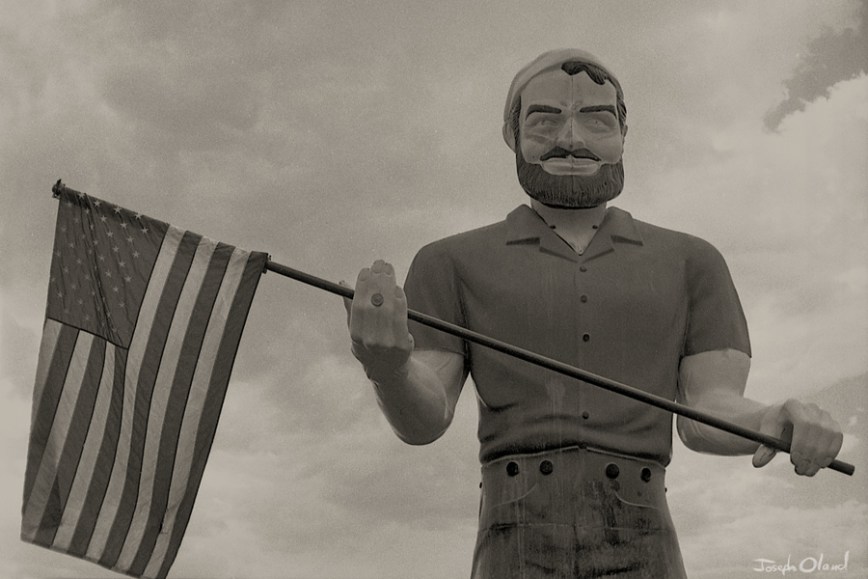
02-13 Paul Bunyon postIt was entertaining to learn that this statue of Paul Bunyan has a Yelp! review, which is about as nonsensical as the statue itself. I never looked into why or how this fifteen foot fiberglass statue arrived at the intersection of Glenn & Stone, but I definitely had to photograph it – this time with my Fujica Half vintage camera, on vintage film stock from the 1960s, on vintage photo paper from the 1960s. The film and photo paper was fogged from age, but I rather enjoyed the distressed look of the final print. Not a lot of trees for a lumberjack in Tucson, but he’s definitely become a landmark.

FINE ART PRINTS AVAILABLE HERE
SIGN UP FOR THE LENSEBENDER NEWSLETTER


Colossus – Gay Icon?

Colossus Tires postFINE ART PRINTS AVAILABLE HERE

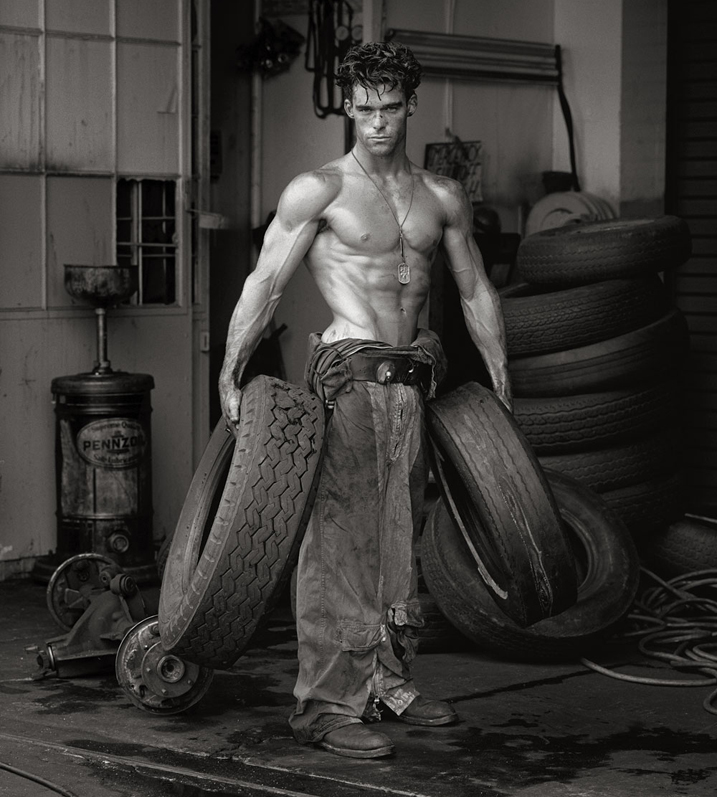
It had to happen. While watching the new “Deadpool” film opening night, this image immediately struck my psyche. I was immediately reminded of famous fashion and celebrity photographer Herb Ritts and one of his famous – and famously gay – portraits of a muscled man holding tires. His body of work is impressive, and I count him among one of the photographers who truly inspired me, even though I never developed in to a studio portraitist.

herb ritts

This image took a few hours to render, but I’m pretty happy with the way it turned out. Let me know what you think.

READ THE “DEADPOOL” MOVIE REVIEW
SIGN UP FOR THE LENSEBENDER NEWSLETTER