 Today I present the final image for Film February, a landscape made with my favorite old film stock, Fujifilm Velvia.
FINE ART PRINTS AVAILABLE HERE
– – –
SIGN UP FOR THE LENSEBENDER NEWSLETTER
Today I present the final image for Film February, a landscape made with my favorite old film stock, Fujifilm Velvia.
FINE ART PRINTS AVAILABLE HERE
– – –
SIGN UP FOR THE LENSEBENDER NEWSLETTER
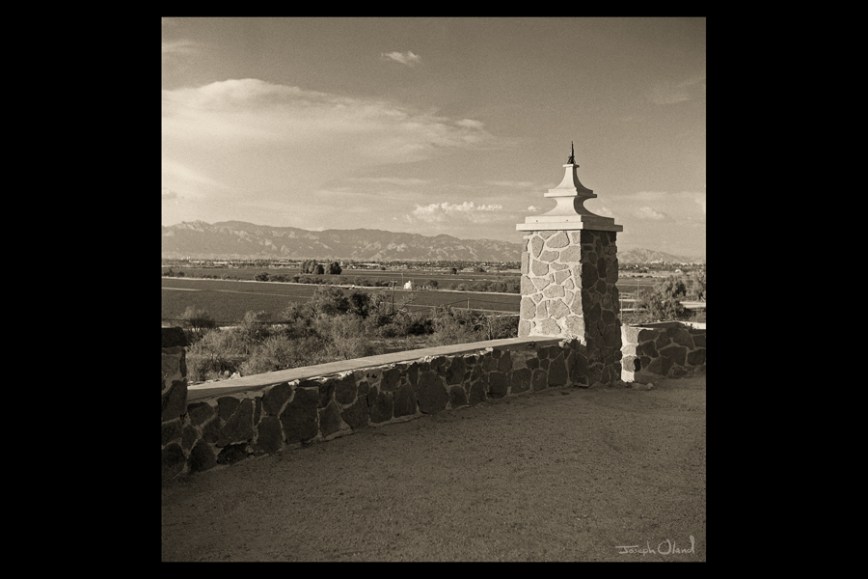 “The only wealth which you will keep forever is the wealth you have given away.”
~Marcus Aurelius
– – –
This is my meditation spot, and this is certainly not the only photograph I’ve made of it. Up on the hill overlooking the San Xavier Mission outside of Tucson is a shrine to the Guadalupe Virgin and a large white cross. You can hear the faint whisper of the highway off in the distance, and you can see a cluster of Downtown Tucson buildings on the horizon.
This is the place to watch the sunset. This is the place to find one’s center. Just thinking about it, looking on the pictures I’ve made there with my Yashica TLR camera, I feel a calm washing over me. I look forward to going out there again. Soon.
FINE ART PRINTS AVAILABLE HERE
—
SIGN UP FOR THE LENSEBENDER NEWSLETTER
 “Apply yourself both now and in the next life. Without effort, you cannot be prosperous. Though the land be good, You cannot have an abundant crop without cultivation.”
~Plato
– – –
FINE ART PRINTS AVAILABLE HERE
—
SIGN UP FOR THE LENSEBENDER NEWSLETTER
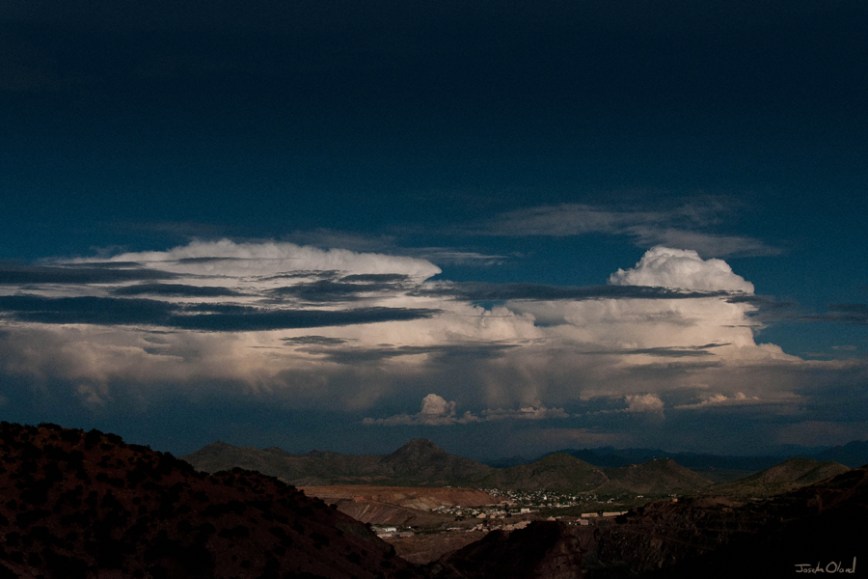 “Nature holds the key to our aesthetic, intellectual, cognitive and even spiritual satisfaction. As a single footstep will not make a path on the earth, so a single thought will not make a pathway in the mind. To make a deep physical path, we walk again and again. To make a deep mental path, we must think over and over the kind of thoughts we wish to dominate our lives.”
~Henry David Thoreau
– – –
FINE ART PRINTS AVAILABLE HERE
SIGN UP FOR THE LENSEBENDER NEWSLETTER
 “The longer you look at an object, the more abstract it becomes, and, ironically, the more real.”
~Lucian Freud
– – –
Film February continues with yet another recurring theme in the pantheon of old subject matter. Some people miss out on what’s going on around them because they stare at their shoes rather than look around. There’s nothing wrong with staring at the ground, if you ask me – there’s a lot going on there.
As I’ve mentioned in previous entries to this project, street photographer Aaron Siskind played a major role in inspiring a younger version of myself. Seeking out interesting compositions in mundane places became something of a game. While interning at The Center For Creative Photography in Tucson, I also became deeply fascinated by a photographer named Minor White, who also had a tendency to isolate seemingly normal, everyday objects and somehow manage to make them alien, interesting, unique.
There is definitely something magical about working in black-and-white film.
FINE ART PRINTS AVAILABLE HERE
SIGN UP FOR THE LENSEBENDER NEWSLETTER
 Rather than discuss a vintage camera, today’s Film February photograph highlights an antiquated printing process that, unlike the abnormally frail Daguerreotype or the albumen paper negative print, is still in somewhat frequent use today.
The “cyanotype” is a printing process that produces a blue-tinted print – cyan colored, even – so it’s an unironic name. Using basic ferric (iron) salts, this is one of the most affordable printing processes ever invented. This is why engineers used the process, with frequency, well into the 20th century; you would recognize them as “blueprints.”
The process uses two chemicals: ammonium iron(III) citrate and potassium ferricyanide.
During the latter half of the 19th century, photographers used horses and donkeys to carry their mobile darkrooms, consisting of photo chemicals, containers, camera equipment (view cameras were quite cumbersome) and a tent that served as dark room. Organic compounds commonly referred to as ‘ethers’ were used to dissolve collodion silver for wet-plate photography – never mind what wet-plate photography is, just know that it was the dominant method. The instances of field photographers being overcome by ether fumes and dying were not rare. In fact, the chemical nature of print photography has represented significant risk to all photographers prior to the digital revolution.
The pyrogallol (“pyro”) film developing process functions to tan and harden film images in a low sulfite environment. In the era prior to darkroom tongs, latex gloves, and ventilators, this chemical caused serious nerve damage to a generation of photographers. It’s most famously linked to Edward Weston, America’s founding father of photography. If you don’t know who Edward Weston is, don’t worry – you know his most famous pupil. Weston taught a young Ansel Adams. He had previously been though to have died of Parkinson’s disease. The symptoms of Parkinson’s are identical to prolonged exposure to pyrogallol, and he worked with this chemical for most of his life.
Selenium toners are used to make silver gelatin prints more archival. The selenium metal is less prone to aging, fading, or degrading than the silver halide crystals that it replaces. It also gives prints additional tonal density and a slight brown color tone that many photographers find appealing in their black-and-white work. Selenium toner poses cancer risks and respiratory damage if inhaled or absorbed through the skin.
Cyanotype printing is widely believed to be a harmless process, but potassium ferricyanide can be incredibly dangerous if improperly handled. Reactions can occur with other darkroom chemicals, producing a noxious gas that can be fatal.
Why do I say all of this? Well, I suppose because I find it all very interesting. Photography is both a science and an art, and I think that we forget that sometimes, especially with how easy photography has become with our smartphones. Prior to the digital revolution, photographers weren’t just ‘witnesses with cameras.’ They didn’t simply “Point. shoot. Viola! Here’s your print.”We were visual composers, yes, but we were also reasonably experienced chemists, often coming up with our own chemical mixtures – our own recipes – to produce desired film grain, image density, contrast, print aesthetic, and color tone. We don’t often think about the photographer in his darkroom (nor, contemporaneously, hunched over a computer screen). We prefer to think of the photographer in the field, riding in the back of a muddied Jeep, sitting on the 50-yard-line, credentialed and in the front row at the press conference. Photography is spent half out in the world, gathering images, and half in the dark, fine-tuning the images we’ve gathered.
Photographers have always had a history of risking health and personal injury in order to execute their craft, and I’m proud to consider myself among that cohort. I haven’t covered war, traveled to a third-world nation, been kidnapped. I’m no hero, but I like to think that I’ve had the opportunity to bear witness to extraordinary events, and I was there with my camera. I have participated, in my own small way, to that rich history.
The lessons I learned in the darkroom are lessons of patience, an appreciation for chemistry, and the rewards of diligence. Pulling prints from a negative is an involved process, and no amount of Photoshop can replace the sheer joy of walking into the light with fresh, wet print. To walk out of the red light in the darkroom and see what your print actually looks like, to have been working for hours and hours, and finally see that you’ve dialed it in, that you have the perfect print.
You stink. You’re tired. It’s three o’clock in the morning. And damn is it exhilarating. That’s why I still shoot film when I can.
FINE ART PRINTS AVAILABLE HERE
SIGN UP FOR THE LENSEBENDER NEWSLETTER
 The Flamingo was originally built in 1948, providing comfort and shelter for the likes of Bing Crosby, Gene Autrey, Rudy Valley, and other members of the Hollywood and show-business elite. Before it’s doors were closed in the 1980s, it had fallen into miserable disrepair. The rooms were poorly lit, the pool was dry and cracked. The old-world gloss had given way to broken concrete and mold.
When the doors were locked and the windows boarded up, shrink-wrapped soaps still sat in their dishes, dusty towels still hung on the racks, the beds still tightly made. It only sat vacant for seven years before the padlocks were snapped open and the hotel was resurrected with new furniture, carpets, air conditioning, and placards on the doors to designate which Tinseltown stars had stayed there.
I had the pleasure of staying in Burt Reynold’s room. Above the bed was a framed poster of a 1973 Reynolds feature I had never even heard of before: The Man Who Loved Cat Dancing. I still haven’t seen it, but I think I might have to check it out and add a movie review.
The Flamingo was the first Tucson hotel I stayed at – it’s salmon colored paint drawing me in – back in the Spring of 2001. I’d taken a road trip out to Tucson with my girlfriend to check out the city, seeing as how I had just received my acceptance letter from the U of A. Thankfully the new owner respected the building’s history – rather than tear down the classic sign, it was resurfaced and adorned with new neon tubes.
Hopefully, even as the city around it modernizes, The Flamingo will hold onto its charm. The neighborhood isn’t the prime real estate it once was, but affordable rooms in a college town will always find occupants. It isn’t fancy by today’s standards, but I’ll never forget how good that hot shower felt after camping on Mount Lemon for several days.
Today’s photograph is a continuation of “Film February,” made using the Fujica Half. I think the aged aesthetic of film works quite well with a classic mid-century building.
FINE ART PRINTS AVAILABLE HERE
SIGN UP FOR THE LENSEBENDER NEWSLETTER
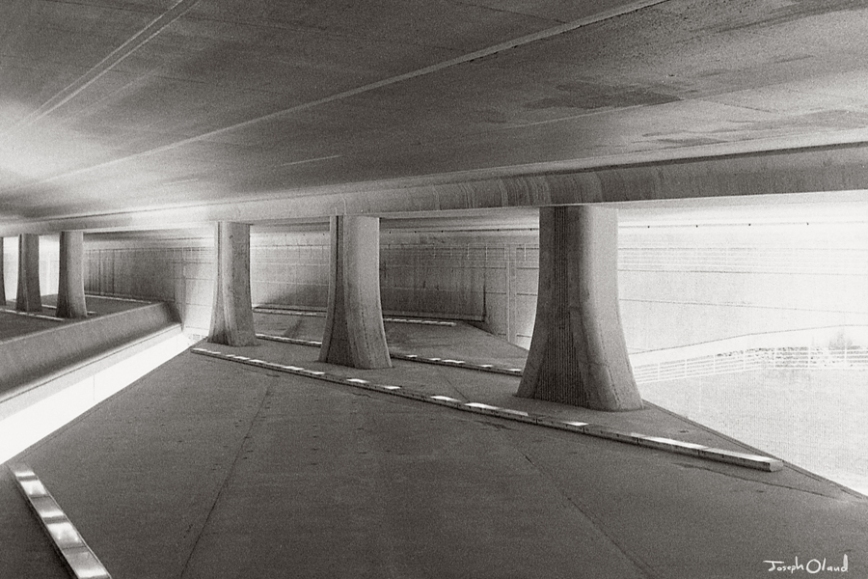 This Sunday’s photograph of the day is one of the older classics I’ve always loved and nobody else ever seemed interested in. That’s just one of the painful little things you have to get over when you’re an artist; almost every single painting or photograph that I love are the very paintings and photographs nobody seems to like. And those pieces that I’m not so sure about? The ones I even consider throwing away or deleting? Well, people tend to love those the most.
It’s just one of the ironies.
Nevertheless, I remember looking at the negatives, still dripping wet after being developed in my friend’s kitchen. These are Fujica Half images, so there were tons of exposures to look through. The composition of these really intrigued me. I had a small pile of proof prints eventually made, and that’s when I realized how I wanted to display these images. Thumbing through the proofs, I saw this image upside down, and it really intrigued me. It looked like an alien city or a futuristic concept.
I was reminded of the scene from Steven Soderbergh’s “Ocean’s Eleven” where the fidgety tech character is in the labyrinthine hallways to seek out the server room and tap into the security camera output for the hotel. The room itself is flooded with blue neon light and looks incredibly alien – it turns out that the film’s location scout had looked at a photograph of a server room upside-down and though it looked neat. So the set was built, complete with neon lights coming from the floor, rather than from the ceiling.
Happy little accidents. It’s the simple things we don’t think of that can really influence our work. That’s why critique is important, and why artists like to bounce ideas off each other. Some small little detail may make all the difference.
FINE ART PRINTS AVAILABLE HERE
SIGN UP FOR THE LENSEBENDER NEWSLETTER
 The year was 2001 and I was a cocky asshole of a man. My girlfriend and I somehow conned her parents into lending their minivan to the enterprise and we lit-out for the western territories. I’d received an acceptance letter from the University of Arizona and I was ready to get the hell out of Kansas. Little did I know that attending the UofA would mean just about nothing, other than a pile of debt with a degree worth less than the scrap of parchment it was printed on.
But that’s a whole other story.
An 18-year-old version of me screamed down the highway in a soccer-mom van with a young slab of beautiful woman-flesh – and that’s all that mattered. We camped along the high desert, free spirits, and I will never forget the experience. Trading sex in a two-door coup for sex in a bulky 1970s-style canvas tent is probably one of the more sublime experiences this young man could have ever hoped for at the time.
We drove through Tucson and struck camp at Mount Lemon and surveyed the landscapes along the painted desert of Northern Arizona. It was the first time in my life I felt truly unfettered, rising in the morning to the sound of rushing creek water and a lovely ivory face beside me, cloaked in locks of streaming brown hair, lips upturned in a sly satisfied smile.
No drug can ever replace the experience of being eighteen years old and in love. Today’s photograph is a reminder of that innocent time; my woman by my side, unaware of the struggles ahead, I dialed the numbers in and pushed a button along the rim of the great meteor crater. This picture represents everything I held important from those lofty teenage years.
It was a good time, in tall grass and open sky. And I will take that pleasure with me into the earth.
When the time comes.
FINE ART PRINTS AVAILABLE HERE
SING UP FOR THE LENSEBENDER NEWSLETTER
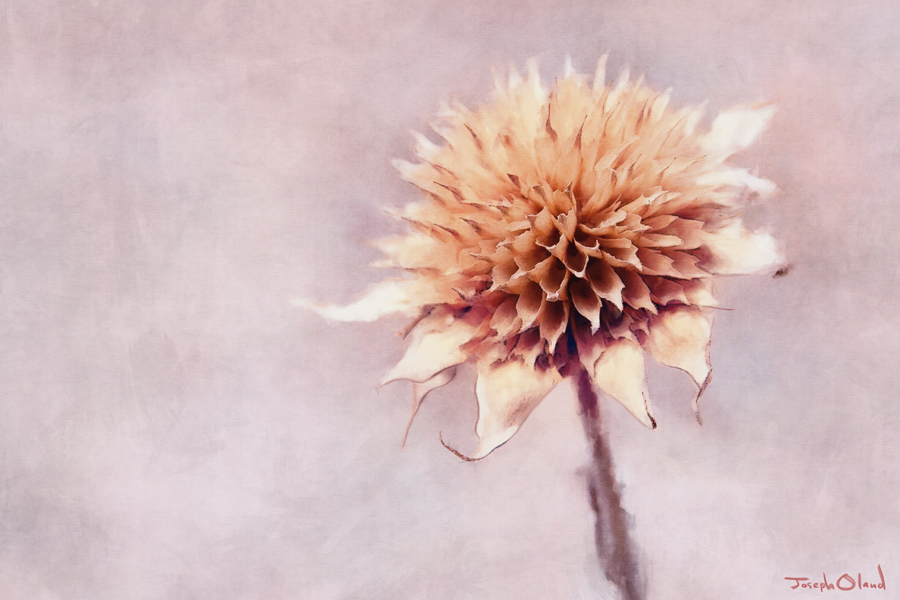 “Autumn is a second spring when every leaf is a flower.”
~Albert Camus
– – –
I was reminded of this painting, based on a photograph, by an unlikely figure: Facebook.
We all have a profile and engage in it’s meticulous, brilliant distraction. Over the past several weeks, I’ve plucked the crust from my eyes each morning and reached over to quell the grating sounds of my alarm clock – which would also be my phone. Usually there’s a recommendation from our social media overlord to reminisce and share an old memory – I’m guessing they’ve been pulling at your nostalgia-strings too. The catch, at lease for me, is that the past twelve months of my life have been, mildly put, troubled.
Facebook’s algorithms have yet to filter out the job losses, financial woes, marital strife, and death. It’s hard to fault an equation for hoisting my life’s misery back upon me, even as I scramble to escape the sense of demoralizing defeat, but there it is, like a mirror, holding your failures as a civilized man right up to your face.
Today, thankfully, brought a different narrative. Rather than a friend-turned-enemy or a recently-deceased compatriot, I was reminded of a painting I’d made and quickly forgot about. I made a simple picture of a crisp, lifeless twig; I was satisfied. The canvas of the earth shifts during the winter time; colors turn from vibrant to monochrome. A very good and close friend, deeply religious, often speaks of God’s divine design, proclaiming that “the colors of His palette never clash.”
I certainly couldn’t be described as a religious or faithful human being, but my friend is right. The colors of the natural world do not compete for glory – they sit side-by-side in exquisite harmony, promoting a sensory experience that is indeed “miraculous,” and can easily be described as “heavenly.”
And now I spread my gospel to you.
FINE ART PRINT AVAILABLE HERE
SIGN UP FOR THE LENSEBENDER NEWSLETTER
 LenseBender