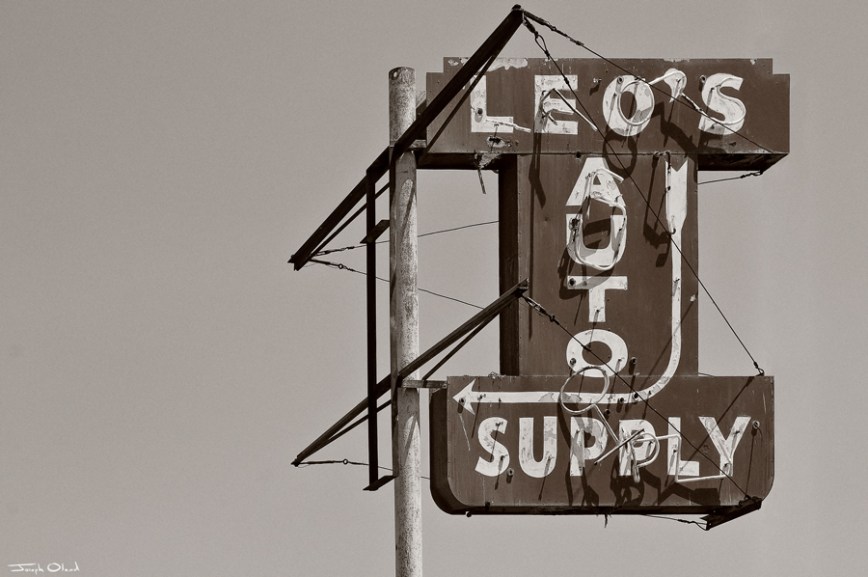
February 23, 2017 – Vintage Neon

FINE ART PRINTS AVAILABLE HERE
– – –
OTHER ‘IMAGE OF THE DAY’ PRINTS AVAILABLE HERE

Before the Interstate Highway System was developed, state routes and roadside motels dotted the southwestern landscape. Privately owned businesses lined these thoroughfares with unique signage offering a variety of services for the long-distance traveler. Greasy-spoon cafés and auto-service stations shared the strip. With the introduction of the Interstate System, travel was faster and more convenient, but the quality of character was supplanted by larger chains and a decidedly more corporate appeal.

Denny’s and Auto-Zone replaced these local businesses, few of which survive today.

More than half a century ago now, this particular sign – a red and white vintage neon for Leo’s Auto Supply – was purchased and moved to the intersection of Glenn & Stone in Tucson, Arizona, by the proprieter of Don’s Hot Rod Shop. One of the owners, Leo Toia, had it relocated.

Along the Old Benson Highway, many of the small old roadside Motels survive, and Tucson boasts a host of vintage neon signs along the now-infamous Miracle Mile. Many of the old businesses have been lost, but there is a rich history here in Tucson, and this Leo’s Auto Supply sign is one of the survivors.

SIGN UP FOR THE LENSEBENDER NEWSLETTER

February 21, 2017 – Textures on the Trail

FINE ART PRINTS AVAILABLE HERE
– – –
OTHER ‘IMAGE OF THE DAY’ PRINTS AVAILABLE HERE

My fondness for abstract photography is inexhaustible. This image was made in the open spaces of the San Rafael Valley, in Southeastern Arizona, in a small and underutilized ranch. This is a piece of farm equipment captured in my camera’s macro lens. There’s something about the texture of rust and chipped paint that I’ve found beautiful and fascinating, like a small little landscape the size of a human thumbnail.

“I understand abstract art as an attempt to feed imagination with a world built through the basic sensations.”
~Jean Helion

SIGN UP FOR THE LENSEBENDER NEWSLETTER

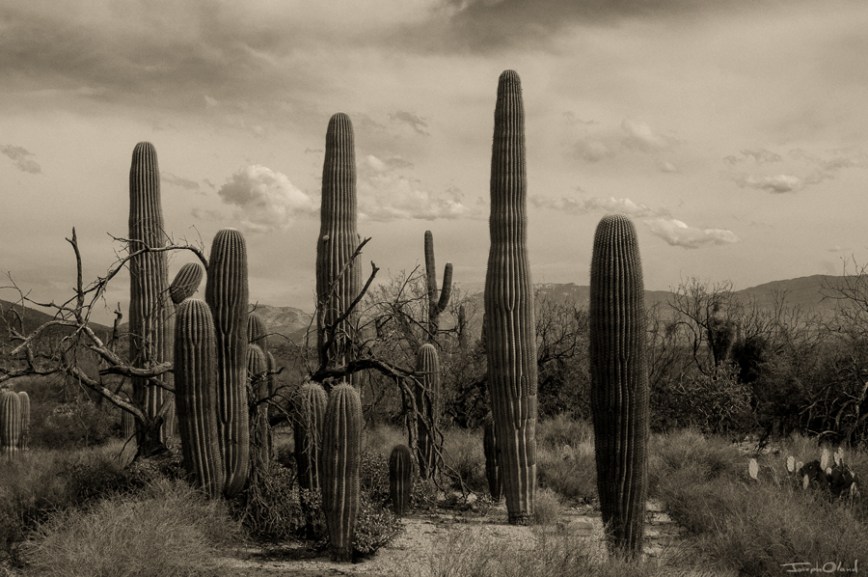
February 18, 2017 – Saguaro Cactus Landscape

sahuaros-postFINE ART PRINTS AVAILABLE HERE
– – –
OTHER ‘IMAGE OF THE DAY’ PRINTS AVAILABLE HERE

Sometimes black-and-white is the only way to go. There’s a timelessness to black-and-white landscapes that is almost universally appealing. This was taken while hiking through the mountain run-off in Sabino Canyon last week. My feet were wet and squishy from tromping through knee-deep water, tromping up to the Seven Falls area.

A thunderstorm rolled through and cut the hike short, but it was an exquisite several hours in the canyon.

Getting out into the world, walking the downtown streets or the canyons are going on my ‘urban hikes’ are terribly important to me. There’s so much to discover out there, even just walking around the block, if one takes a moment to concentrate, train themselves to really keep their eyes open all the time.

I hope you like today’s photograph. Cheers.

“If you want to be a better photographer, stand in front of more interesting stuff.”
Jim Richardson

SIGN UP FOR THE LENSEBENDER NEWSLETTER

Save

February 12, 2017 – Sunset From Sabino Canyon

sabino-canyon-sunset-post

FINE ART PRINTS AVAILABLE HERE
– – –
OTHER ‘IMAGE OF THE DAY’ PRINTS AVAILABLE HERE

I went on a much-needed hike yesterday with the most amazing woman in my life; I probably wouldn’t have made it out of the house if it wasn’t for her kind motivation. It has been several months since I’ve had either the opportunity or (more importantly) the drive to strap my boots on, get out there, and scramble up the mountains. The weather was perfect – just warm enough after several “cold” desert weeks – and the trails were filled with people.

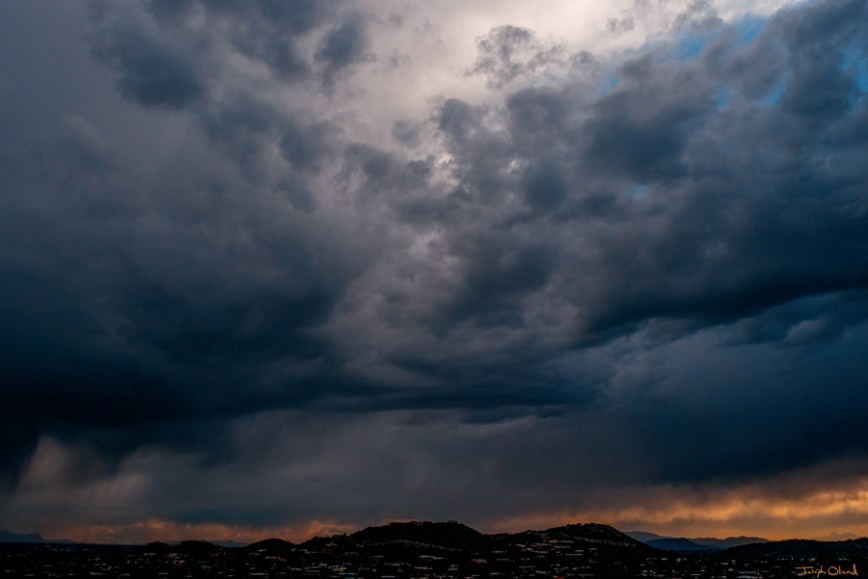
We didn’t hit the trials until the early afternoon and, just as luck would have it, dark clouds, thick atmosphere, and thunder greeted us near the summit of the Seven Falls hiking trail. The four-or-so miles into the canyon were flowing with water so deep that we quickly abandoned the notion of keeping our feet (or our pants) dry.

Walking back down to the car, as the sun was setting, our boots heavy with water and squishing with each step, we watched the electrical storm southwest over the horizon.

Just about any other woman I have ever known or dated would have made it through this hike without complaint. But the time we got home, we were a little sniffly, with itchy shriveled feet and aching muscles. But earlier, at the first sight of overflowing water on the trail, she was the one who insisted we keep going. And when we got home, she told me she was so happy that we had gone out.

That’s my kind of woman. The kind of woman that gives you a great deal to look forward to, and who appreciates the good things that are happening in the present, even when there are setbacks.

SIGN UP FOR THE LENSEBENDER NEWSLETTER

January 27, 2017 – Borderlands

the-borderlands-postFINE ART PRINTS AVAILABLE HERE
– – –
OTHER ‘IMAGE OF THE DAY’ PRINTS AVAILABLE HERE

The San Rafael Valley is a well-kept secret in the borderlands of Cochise County, Arizona. Micro-climates make this a surprisingly fertile territory for wine grapes, and several wineries are dotted throughout the area, surrounded by BLM territory and a collection of independently operated ranches. There are the odd ‘desert rats’ that live on these lands, too – individuals who prefer to live a more solitary life, away from the noise and bustle of the city.

This largely unmanicured region can seem threatening. The rules of the west are fully on display. If you trespass on the wrong property, you will most-assuredly come face-to-face with an angry rancher and a shotgun. Landowners are wary of outsiders; many are hardened against trespassers as a result of drug-muling and human trafficking. But for the casual traveler, if you play by the rules, the only sign of human life you will ever encounter are Border Patrol trucks and the occasional unmanned drone flying overhead.

I feel at home out here, looking down the deep valley, where the wind gliding through the dry grass is the dominant sound. Where the sky opens up and reminds one how small they really are.

SIGN UP FOR THE LENSEBENDER NEWSLETTER

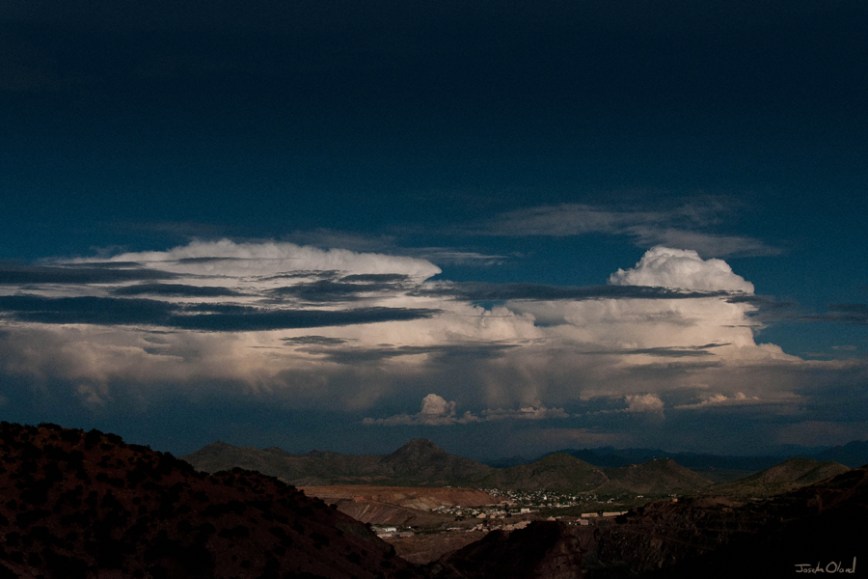
January 02, 2017 – Crying Statues

201701-02-blogFINE ART AND MERCHANDISE AVAILABLE HERE
– – –
FOLLOW LENSEBENDER ON INSTAGRAM

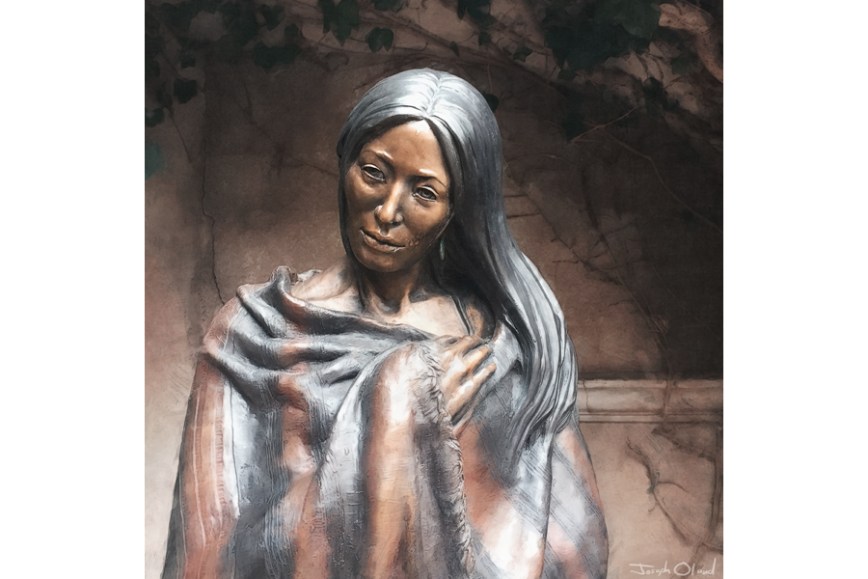
This image is an echo of a photograph I took almost seventeen years ago in Boston. I was still in high school, shooting black and white film, and I photographed an image of a statue – a weeping Native American woman, a memorial for the Trail of Tears. In the image a white, long tear can be seen dripping down the statue’s face – pigeon excrement, yes, but it photographed quite well. In today’s image, if you look close to this Sedona statue’s face, the rain is running down her face in a similar – albeit much more subtle – fashion.

Like yesterday’s photograph, this one was taken on vacation in Sedona. I was in the company of a lovely woman, swirling rain-clouds, and the unique red rocks of the region. Hiking in the rain, watching the clouds smother the red rock peaks, and the smell of the Arizona desert – a perfect start to the new year.

“Crying is all right in its way while it lasts. But you have to stop sooner or later, and then you still have to decide what to do.”
~C.S. Lewis

SIGN UP FOR THE LENSEBENDER NEWSLETTER

Save

Save

Save

February 26 – Hilltop

02-26 Xavier Hilltop post“The only wealth which you will keep forever is the wealth you have given away.”

~Marcus Aurelius

– – –

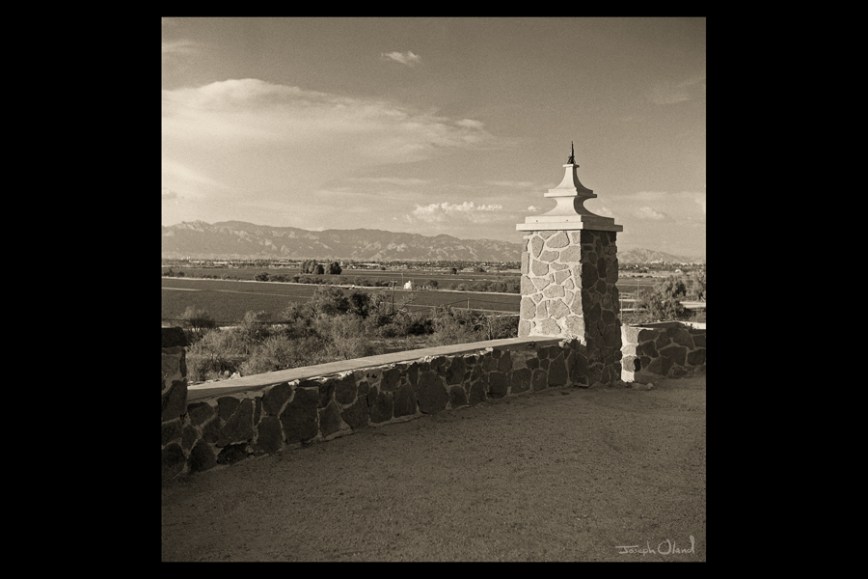
This is my meditation spot, and this is certainly not the only photograph I’ve made of it. Up on the hill overlooking the San Xavier Mission outside of Tucson is a shrine to the Guadalupe Virgin and a large white cross. You can hear the faint whisper of the highway off in the distance, and you can see a cluster of Downtown Tucson buildings on the horizon.

This is the place to watch the sunset. This is the place to find one’s center. Just thinking about it, looking on the pictures I’ve made there with my Yashica TLR camera, I feel a calm washing over me. I look forward to going out there again. Soon.

FINE ART PRINTS AVAILABLE HERE

SIGN UP FOR THE LENSEBENDER NEWSLETTER

February 24 – The Mule Mountains

02-24 Bisbee post“Nature holds the key to our aesthetic, intellectual, cognitive and even spiritual satisfaction. As a single footstep will not make a path on the earth, so a single thought will not make a pathway in the mind. To make a deep physical path, we walk again and again. To make a deep mental path, we must think over and over the kind of thoughts we wish to dominate our lives.”

~Henry David Thoreau

– – –

FINE ART PRINTS AVAILABLE HERE
SIGN UP FOR THE LENSEBENDER NEWSLETTER

February 19 – Liberty

02-19 Liberty postOne of the little tricks film photographers sometimes employ is known as “cross processing,” in which slide film is developed using chemicals designed to for regular color film. The results vary, but are characterized by a dramatic color shift, with punched-out contrast and deep tonal saturation. These effects can be applied to digital images with relative ease using editing software like Photoshop; the film photographer, however, is forced to accept the final result rather than having the opportunity to endlessly tweak the effect in post production.

Basically, cross processing is controlled chaos. It’s a method of embracing “happy accidents.”

This photograph was made in Jerome, Arizona, a small mining town outside of Prescott Valley in the Black Hills of Yavapai County. The copper mining operation saw a huge boom in the 1920s, pushing the population to around ten thousand. Today there are only about five hundred people, but it gets a lot of traffic from Phoenix – it’s a wonderful weekend getaway. I’ve always enjoyed walking around and looking at the old buildings, the narrow alleys, and the wrecks of brick rotting on the hillsides. It is a quiet place with a rich history. If you’re lucky, you might even bump into Tool and Puscifer front-man Maynard James Keenan, who moved to Jerome to start a winery in the early 2000s.

FINE ART PRINTS AVAILABLE HERE
SIGN UP FOR THE LENSEBENDER NEWSLETTER

February 17 – Hotel Monte Vista

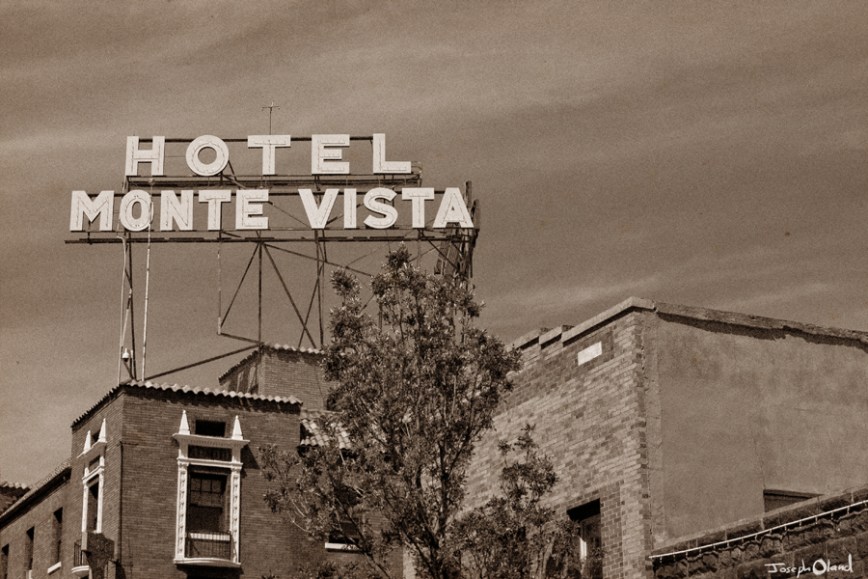
02-17 Monte Vista postAutomobile culture reached Arizona in the early 1900s and brought major roadway projects (see yesterday’s post about Miracle Mile Road) and an increase in tourism, which delivered new money to Flagstaff in the 1920s. Fundraising began in 1926 by local community leaders to establish first-class accommodation to replace some of the outmoded and run-down hotels.

Ground broke for the 73 room Community Hotel (named in honor of the prominent citizens who funded its construction) on June 8 of that year. It was finished in six months, opening its doors on New Years Day, 1927.

My first visit was back in 2005 or 2006, when I had the chance to tag along with a friend of mine. We worked together at a local Tucson photo lab and he happened to be a drummer in a band called “The Deludes.” I was able to hop aboard for a show they’d booked at the hotel’s “Cocktail Lounge.” It was a prohibition-era bootlegging operation, but the secret wasn’t kept long – local officers disrupted the illegal business in 1931. Ironically, the speakeasy reopened only two years later when prohibition was lifted.

It is one of the oldest operating hotels in Flagstaff and is a registered historic landmark, and its sign is one of the most recognizable landmarks in Flagstaff.

FINE ART PRINTS AVAILABLE HERE
SIGN UP FOR THE LENSEBENDER NEWSLETTER