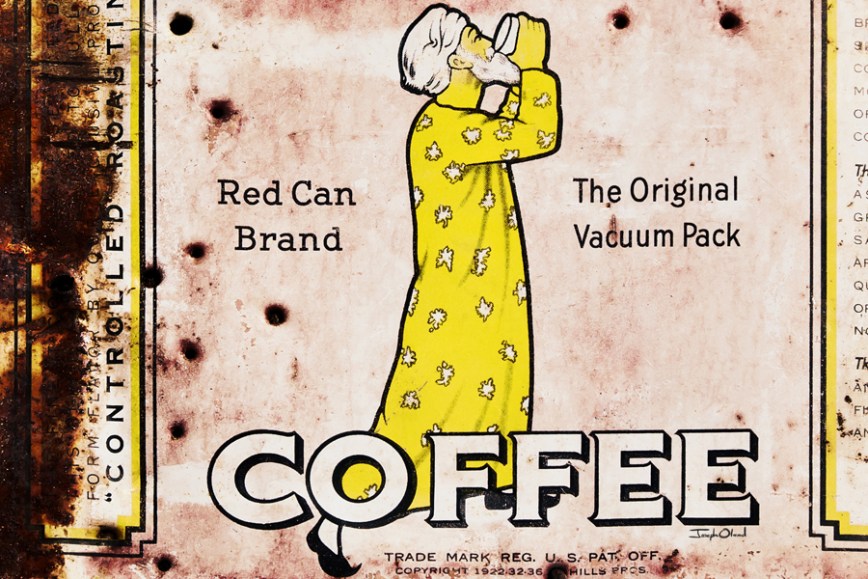
January 24, 2017 – Coffee Break

coffeecan-postrFINE ART PRINTS AVAILABLE HERE
– – –
OTHER ‘IMAGE OF THE DAY’ PRINTS AVAILABLE HERE

This is a photograph that I made while hiking around Bisbee, Arizona back in 2011. I was in the company of several friends, all journalists, and we had traveled to Bisbee to take a few days off after covering the horrible shooting incident involving Representative Gabby Giffords. We were working around the clock during that news cycle, attending press briefings and funerals, and submitting our photographs and our reports. It was a much-needed getaway after absorbing the tumult of that incident and its aftermath.

Interestingly, coffee is what brought me to Bisbee the following year. I managed to secure a job roasting coffee for a local Bisbee coffee roaster. It was a good few years, living in the bosom of the Mule Mountains. And I will never think about coffee the same way again, after learning the origins, the history, and the processes involved in harvesting, hulling, and roasting America’s number one beverage.

SIGN UP FOR THE LENSEBENDER NEWSLETTER

Save

January 15, 2017 – Rusted Car

rusted-carpostFINE ART PRINTS AVAILABLE HERE
– – –
OTHER ‘IMAGE OF THE DAY’ PRINTS AVAILABLE HERE

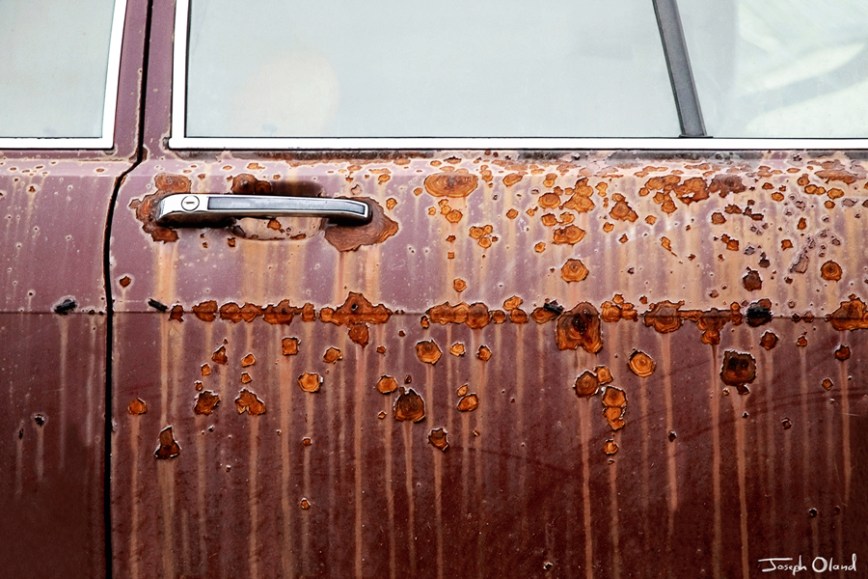
Today’s image – like most of them – is pretty self-explanatory. I mean, it’s photography, right?

Usually – but hey, not necessarily always – it’s almost always obvious what a photographic image is actually of. Even a brickwork of primary-colored Mondrian tiles is imbued with subtext and pregnant with meaning. So why not a portrait of a rusted heap, rotting in the desert like a disposed of beer can baking under the sun?

But it isn’t my job to tell anybody how they’re supposed to feel about an image like this. Much of my work, I’ve been told, carries with it, or conveys, a certain ambivalence. This isn’t even halfway close to true. I compose my images carefully, but I’m not concerned, at least not at all times, with being explicit with personal meanings. Ambiguity allows for different experiences, and I think that ambiguity can be a very powerful tool when creating artwork – especially photographic artwork, which is often disregarded as an easy, unimportant happenstance that occurs between the photographer and whatever happens to fall before his or her camera lens.

I am drawn to textures, contrasts, and colors. And I love the camera’s ability to take everyday objects and completely re-frame them. We all know what a car is – wheels and a seat, a hood and door-handles. But when we encounter cars in our day-to-day lives, we’re always taking in the whole thing. It’s a familiar object and, because of its familiarity, it’s easy to disregard. But when you look at the details, the scratches, the design of the body, the wear on the upholstery, the scuffs on the tires, something else emerges. I wouldn’t want to give that ‘something’ a name, really, but the camera has given me, if nobody else that looks at my photographs, the ability to recognize absolutely insane beauty in the unutterably mundane.

In a world filled with cars – to an almost sickening degree – I was walking down the road and saw the age and rust on this particular vehicle, and I was drawn to it. So…I dunno. Do with that anecdote what you will.

SIGN UP FOR THE LENSEBENDER NEWSLETTER

Save

Save

January 13, 2017 – Painted Bricks

painted-bricks-post

FINE ART PRINTS AVAILABLE HERE
– – –
OTHER ‘IMAGE OF THE DAY’ PRINTS AVAILABLE HERE

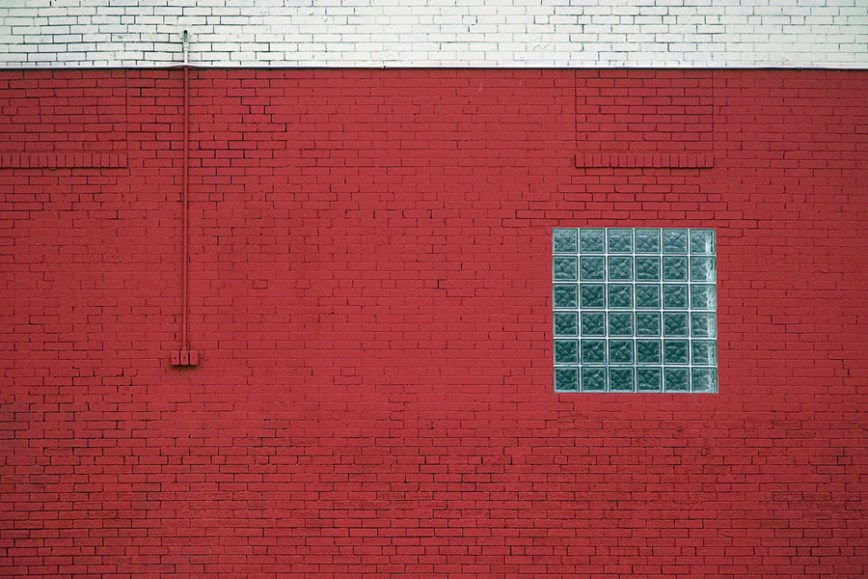
This is another image from a whole, hard-drive consuming series of reductionist, minimalist compositions I’ve made during my ‘urban hikes.’ I made most of these in Tucson, while I was attending university, but I’ve found myself looking at bricks and paint, electrical boxes and telephone wires, and the intersection of all these lines.

I still very much enjoy working in this mode, although it’s very obvious that the audiences is, at best, limited. But that won’t stop me. This kind of imagery is a pure joy to create.

SIGN UP FOR THE LENSEBENDER NEWSLETTER

January 03, 2017 – Muddy Stream

201701-03-blog

FINE ART PRINTS AND MERCHANDISE AVAILABLE HERE
– – –
FOLLOW LENSEBENDER ON INSTAGRAM

Textures – a long obsession of mine.
Without spending too much time being overwhelmingly boring, I will say that I have spent weeks – probably months – of my life with a macro lens in my hands and earbuds piping music into my brain, photographing cracks in pavement, tree bark, broken patches of clay-rich earth, rusty garbage containers, and just about anything you can find on a rusting old car or in a back alley, in order to expand my collection of texture images.

My library is extensive.

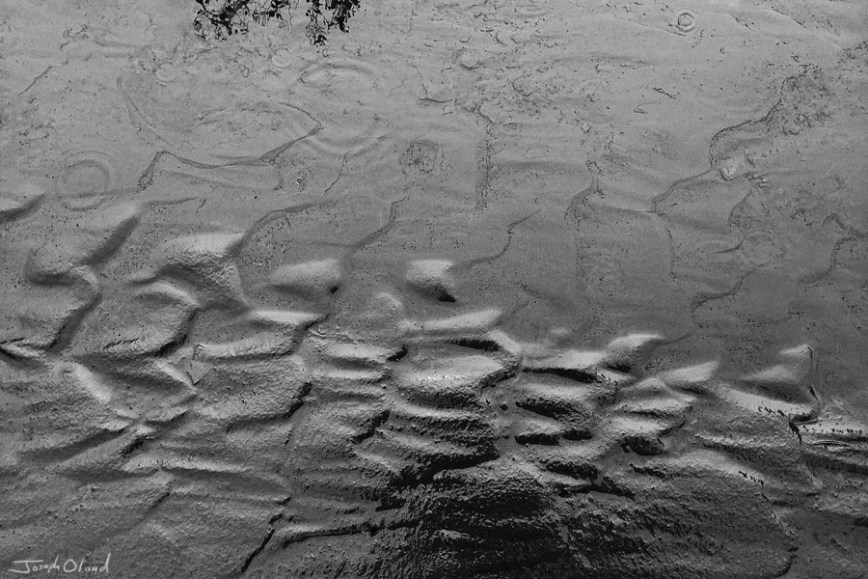
Some of these images are used to add grit and texture to other photographs I’ve taken (as overlays and double exposures). Some of them reveal themselves to be stand-alone pieces. The image above just so happens to be one of those stand alone pieces. While hiking through the rain-drenched red mud of Sedona, Arizona, there was a moment when I realized I had been paying too much attention to the mountains towering over me – that’s what always captures people’s attention – and I needed to take a moment and start looking around.

So I trained my lens on the ground, rather than the high peaks. To the streams and the insects, the animal tracks and the budding cacti, rather than the red rock spires that dominate the landscape. And this is what I got – a portrait of the tiny little stream, the stream that traveled a long distance from a large rock formation, from a mist of rain, to soak into my boots and ensure that my feet would be wet and itchy all day long.

Small price to pay to be reminded how beautiful the world is.

The details, the small little things? They really are beautiful. And they really do matter.

“The past becomes a texture, an ambience to our present.”
~Paul Scott

SIGN UP FOR THE LENSEBENDER NEWSLETTER

Illustration – Steam Punk Poster

Paris Steam postFINE ART PRINTS AVAILABLE HERE

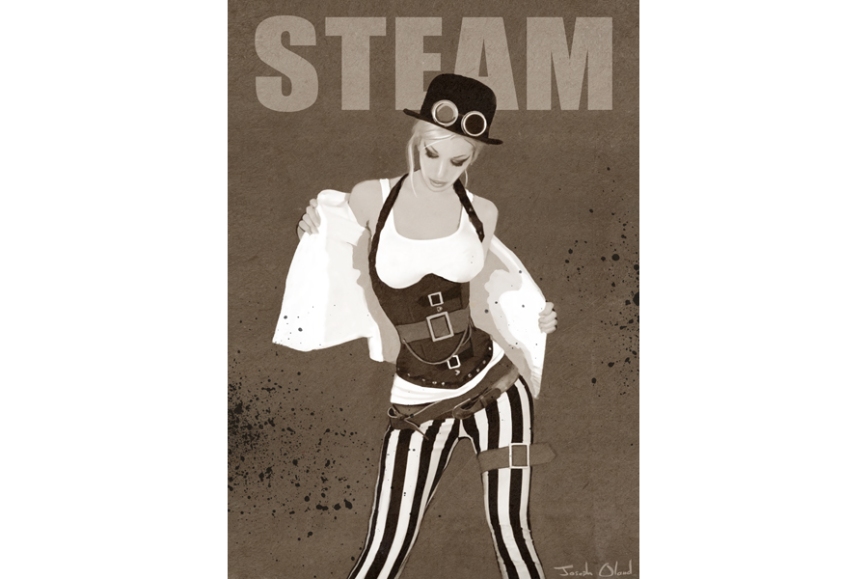
Right up front, I have to admit that this poster-style illustration is based on a photograph. I made a lot of choices while constructing this graphic but, I don’t know, I think it’s always important to be honest when sourcing other material. In cases where I’m doing fan art, it’s obvious that I’m sourcing from various popular culture properties, but it isn’t obvious when it comes to pieces like this.

I’ve never been into cosplay or SCA (society for creative anachronism), but I brush shoulders with countless creatives who participate in these activities. I’ve only been to a couple of comic book conferences, and I spend more time in front of the computer than I ever could spend trying to problem-solve my way through an elaborate fan costume. Rather than create a costume, I derive a lot of inspiration and develop ideas by knowing these people, listening to their ideas, and witnessing their marvelous creations.

That being said, the steam punk aesthetic has been popular for maybe about ten years now, but it wasn’t until the past few years that it has become recognized in a more mainstream way. Steam punk has been around for decades, tracing it’s origin back to the science fiction sub-genre ‘cyberpunk,’ usually attributed to the stories penned by William Gibson; Neuromancer should be required reading for anybody who feigns interest in cyberpunk and steam punk.

Aesthetically, steam punk designs are generally influenced by the style of the 19th-century scientific romances of Jules Verne, H.G. Wells, and Mary Shelley. It incorporates the technology and designs of 19th-century industrial steam powered machinery (hence the name), often implementing clocks, gears, modified 19th century dresses, suits, and hats, and other such paraphernalia.

I had a lot of fun tinkering with this illustration, and I certainly hope you enjoy it.

FINE ART PRINTS AVAILABLE HERE
– – –
SIGN UP FOR THE LENSEBENDER NEWSLETTER

Nude Woman With Flower

Woman With Flower post

FINE ART PRINTS AVAILABLE HERE

Art for art’s sake. Isn’t that the expression? We just like to look at pretty shit and say “hey, jeez, that’s some pretty shit.” Everything is beautiful, nothing is off-script in the production-house of life. We wipe the crust from our eyes every morning, slap the alarm clock, brew our coffee, and go about our lives. And everything involved in that process is pretty nifty when you get right down to it. I mean, there’s tragedy and frustration as well, but these things can also feed into a creative, evocative, and transcendent output.

All of that is to say this: when in down, artist friends, make pictures of naked women. It’s as old as cave paintings. I found myself sifting through old source material, looking for an excuse to make a painting, and the image above is where I landed, for lack of anything else to do. I hope you like it.

FINE ART PRINTS AVAILABLE HERE
– – –
SIGN UP FOR THE LENSEBENDER NEWSLETTER HERE

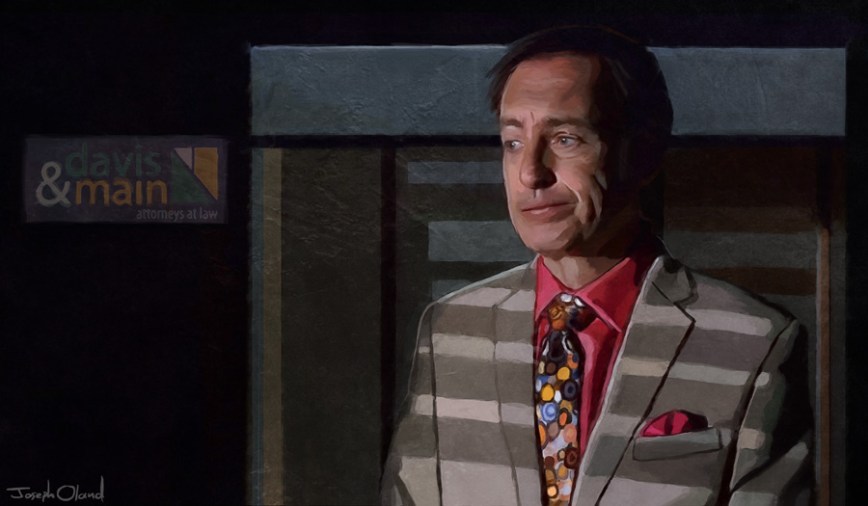
Better Call Saul 2.07 – Inflatable

Jimmy's Fired postFINE ART PRINTS AVAILABLE HERE
– – –
READ LAST WEEK’S REVIEW

This week’s episode of Better Call Saul opens in the summer of 1973, with an establishing shot of a magazine rack reminding us of the downfall of Richard Nixon. On the cover of the magazine, with Nixon’s stern portrait, the headline reads: “Can Trust Be Restored?” As the scene unfolds, we see a young Jimmy McGill, who eventually takes a hard (and wrong-headed) lesson from a grifter.

“Listen, kid. In this world there are sheep, and there are wolves.” Any Breaking Bad fan will remember that this exact line is spoken by a fully-grown Saul Goodman to Walter White and Jesse Pinkman midway through the series.

This opening scene clearly establishes young Jimmy as a preternaturally wizened student of the human carnival. He sees right through the grifter’s con, even trying to warn his father – a message that falls on deaf ears – before taking the con-man’s advice and yanking a few bucks from the till when dad isn’t looking. It’s an oddly moving scene, witnessing a twelve-year-old boy decoding the vulnerability of his father, the man who is supposed to have all the answers.

“And so we see Jimmy steal from the till, out of resolute bitterness. With a rejection of his father’s soft-hearted gullibility, and through extension the whole sucker-generation of sheep-idealists that let themselves be cheated by the wolves of violence and corruption.”

Clearly, the theme of this episode is occupied with corruption.

As an adult, we know that Jimmy McGill is incredibly good at spotting the long-con; that’s how he landed the lucrative Sandpiper class-action case and parlay that into a company car, corporate apartment, and cushy salary. He knows how criminals work because he is, in no uncertain terms, just like them. Rather than conning convenience store clerks, he has evolved into a legal animal hoping to justify his cons by going after other con artists – for the most part.

This episode sees Jimmy admitting to certain truths about himself openly. He comes clean and admits that his atrocious behavior at Davis & Main was a ploy to escape his contract (but not the signing bonus). He admits that he’s a “square peg” that needs to do his own thing. He drops the British secretary charade when he nestles back into his nail salon back-office. Kim, having absorbed Chuck’s story about Jimmy’s youthful thievery, also confronts Jimmy in more concrete terms. She cannot allow herself to partner with Jimmy and expose herself professionally to any of his shenanigans. Jimmy can sense her distrust even if he isn’t privvy to Chuck’s meddling.

Will Jimmy accept Kim’s proposal? The episode doesn’t seem to want to reveal this until next week, but my guess is that he eventually will.

FINE ART PRINTS AVAILABLE HERE
– – –
SIGN UP FOR THE LENSEBENDER NEWSLETTER

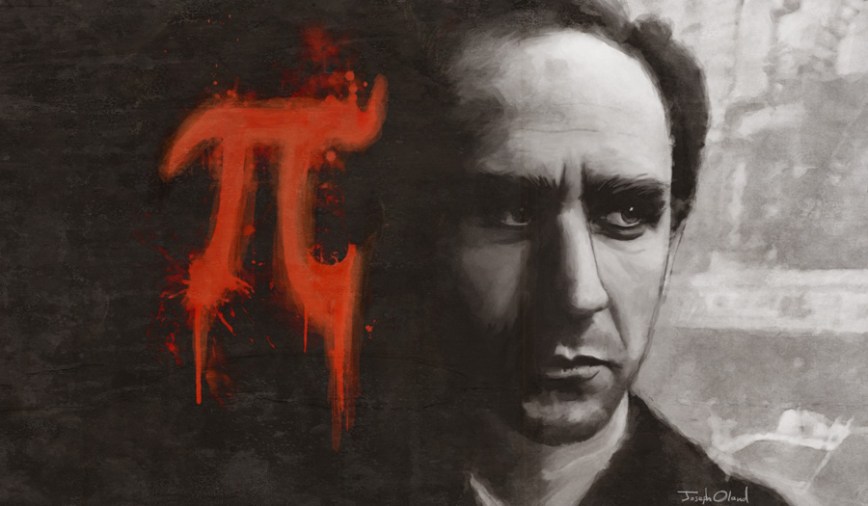
Happy Pi Day!

Pi Day postFINE ART PRINTS AVAILABLE HERE

Forget the smattering of delicious home-baked goodies swarming social media. “Pi Day” will always remind me of the pseudo-noir psychological thriller from esteemed director Darren Aronofski. It’s a difficult plot to summarize, but suffice it to say that it has the feeling of an experimental film, shot in cheap black-and-white film-stock with golf ball sized film grain that serves to hugely influence the dark tone of the film. The main character is a supremely brilliant mathematician that becomes obsessed with the number Pi, an obsession that leads him down a severely dark path. If you haven’t seen it, I highly, highly, recommend  it.

In honor of the day, I sat down and hammered out this illustration, which is now for sale at my online storefront.
Cheers!

FINE ART PRINTS AVAILABLE HERE
– – –
SIGN UP FOR THE LENSEBENDER NEWSLETTER

Self-Portrait With Glasses

Self Picasso postFINE ART PRINTS AVAILABLE HERE

I have hundreds of pages of sketches sitting on my bookshelf. Many of them were produced during a period following the financial collapse of 2008. I was laid off, from three different companies in succession – a bizarre land-speed record, I’d say – and was working in a temporary position at a call center, absorbing other people’s anger and frustration because of their own credit card debt. It was a hard time, but I did the best I could with a worthless education and very few resources of my own. It’s easy enough to satisfy a coffee-shop budget, though, and I re-acquainted myself with a very useful tool: the bicycle.

I was living “on the cheap” during that time. And it wasn’t all-too-terrible.

I met a lot of great people back then, and one of those individuals become a daily collaborator in artistic adventure. We didn’t go to clubs or movies, weekend trips or dinners out on the town. We drank cheep beer and indulged in the most lovely of all free commodities, conversation and creativity. It wasn’t a master’s class in rendering, but rather was a couple of guys occupying various Tucson coffee shops and bars, with mechanical pencils and sketch books at the ready.

We would throw down meaningless – absolutely meaningless – drawing challenges. “Sit here, fool. I’ll sit across from you. Take your pencil. I’ll keep the time. I’ll sit still. You have three minutes. Draw me.”

It was all fun and games. Literally. And it’s actually pretty liberating when you’re guaranteed to fail.

Show me a three-minute ‘perfect’ portrait, and I won’t (necessarily) be surprised; the world is full of genius. But show me that, and you will have shown me one of maybe ten people on earth who can do it. The idea, really, is to short-circuit the very real ‘fear-node’ that prevents one from starting a drawing – or any work of art – in the first place. We wanted to override that fear, eliminate that fear. You have a minute, maybe two. Not many people can sculpt a Michelangelo ‘David’ or paint a ‘Mona Lisa’ in a minute or two. You literally get a free pass. All you have to do is just scribble.

But then I started to revisit the scribbles to see if there might be something worthwhile there. Interestingly, there are a few promising articles, hiding in the piles and piles of otherwise wasted paper.

The image above was a self-portrait challenge. My friend had dropped by the apartment, and it was a woefully empty apartment at the time. My girlfriend – ex-girlfriend – had just moved out to be with a gentleman who played bass guitar in a local band. He was, up until that point, a friend of mine, too. I felt pretty betrayed, pretty alone. Feelings were hurt and I was wounded – my faith in humanity was running shallow. Needless to say, the lack of furniture, the heartache, and the smattering of empty wine bottles about the limited square-footage were probably not resting well with my friends; a few of them were concerned about my well-being.

My buddy Trent was over one day and, after some YouTube time-waste, some cigarettes, and a few beers, he tossed a tattered sketch book at me and instructed me to sit in front of a mirror (plucked from the living room wall, setting on the floor in the living room) and draw myself. The rules for this particular challenge were simple:

1. I wasn’t allowed to look at the paper in my lap; I could only look at my reflection and draw without looking down.
2. I wasn’t allowed to lift my pencil from the page. I had to draw myself without ever lifting my pencil.
3. I had exactly ninety seconds. We both were (are) collectors of stop-watches. He plucked his watch from the pocket of his thrift-store vest, looked up at me, and said…”go.”

I wasn’t surprised by my failure. At the end of the ninety seconds, I looked down and sighed, with relief, that it actually looked like a human being. I quickly buried the sketch with the hundreds of others. It wasn’t until, years later, I started looking at the old sketches, that I started seeing something I couldn’t have seen back then: some of these sketches are actually quite interesting. Our context can blind us, and what seems like a past failure can become a present opportunity. I know that this image isn’t the ticket that’ll save me as a creative professional, but it is interesting to me, today, in a way that it couldn’t have been interesting to me back in 2008.

This image reminds me, in an odd way, of Picasso’s end-of-life drawings. There’s no grandiosity here; I don’t think of myself as possessing the kind of brilliance that Picasso possessed. But there’s a simple, basic, and raw quality to this image, a stylistic quality, that reminds me of some of his lesser works. I’m happy to possess the compulsion to save everything – I would have abandoned this image a long time ago – because I scanned it, archived it digitally, and found it recently while wiping my hard drive.

So here you have it. A broken-hearted man, bespectacled, rendered in pigment and ink on cardboard. A simultaneously confident figure, weighed down with rejection and a crippling fear of loneliness. If you can think of a good title for this piece, please let me know in the comment section.

SIGN UP FOR THE LENSEBENDER NEWSLETTER
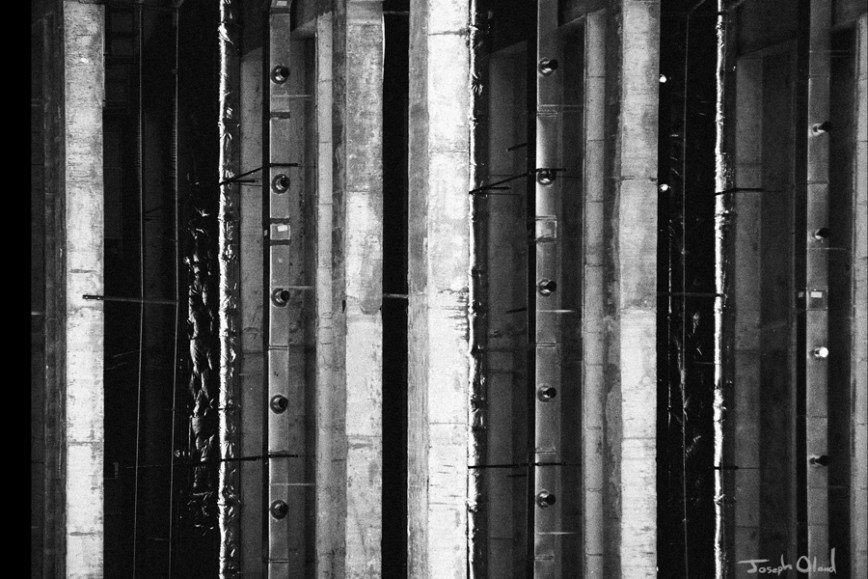
February 09 – Industry, Steel, And Aaron Siskind

02-09 Industry post“Stone, steel, dominions pass,
Faith too, no wonder.
So leave alone the grass
That I am under.”

~A.E. Housman

– – –

I’m not sure who said it first, but it always stuck with me: there is nothing as unnatural as a perfectly straight line.

There’s actually some truth to this. Straight lines don’t really just occur in nature. Every natural process with the potential to create a straight line is subject to other processes that disrupt it. Theoretically, trees would grow straight up were they not subjected to wind, rain, gravity, uneven soil. If the distribution of air, sunlight, nutrients, gravity, and other factors were perfectly even, we would have straight-edge trees. These elements aren’t even, have never been even, cannot be even, and so they produce randomly mutated fractal patterns.

Interestingly, we humans now we live in environments wholly based on the straight edge; I-beams and milled lumber, the foundations of our homes, our streetlamps, television screens, windowpanes. There is no greater example that I can think of that represents the unbroken human endeavor to conquer nature.

Today’s photograph is how I present the tension between humankind and the natural world – steel beams, the skeletal structure of a half-complete hotel in Albuquerque. I made this image when I was in my “Aaron Siskind” period. It was my second or third year of college, and I refused to photograph anything other than sub-par replicas of his patented abstract style. For those of you unfamiliar with Siskind, he was a prolific American photographer considered to be closely involved with the Abstract Expressionist movement, whose works focused primarily on the details of nature and architecture. At his height in the 1950s, his works were often described as blurring the line between painting and photography – something I’m personally interested in as an artist.

I was working as a research assistant at The Center for Creative photography on starvation-level wages under the Federal Work-Study Program. At the time it didn’t bother me; access to so many wonderful, historically significant photographic prints and photographer archives was plenty enough for me. Hell, I considered it an honor (and still do).

Then, recently, I found a faded, crinkled pay stub in an old suitcase. Boy was I being robbed.
But that’s a story for another day.

They say that emulation is the greatest form of flattery. I hope Mr. Siskind was looking down on my  from high with his notoriously crooked smile. I learned a lot trying to copy the masters, and I believe this is how many artists begin their journey. Not from square-one, but on the shoulders of giants, borrowing their voice while we struggle to find our own.

FINE ART PRINTS AVAILABLE HERE
SIGN UP FOR THE LENSEBENDER NEWSLETTER