Mr Robot – Season Two Preview

Hack Me blogFINE ART PRINTS AVAILABLE HERE
– – –

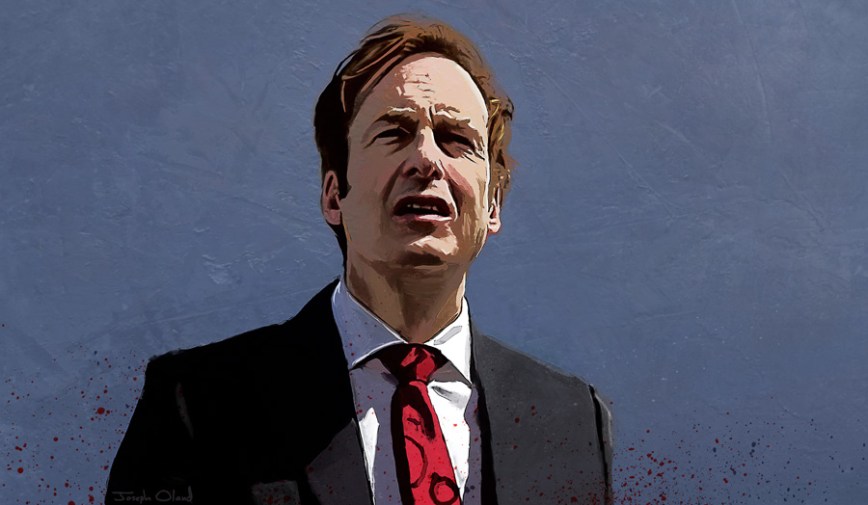
“Mr. Robot” officially begins its second season run on July 13th. The first season was a runaway success, winning several awards including the Golden Globe for best drama. Tapping into a wide variety of prescient subjects ranging from cyber security, “hacktivism,” and social anxiety, “Mr. Robot” has anticipated real-world scenarios of cyber-warfare, data breaches, and hacker activism. Show creator Sam Esmail has gone to great lengths, in fact, to illustrate hacker culture in a more realistic way, eschewing previous pop-culture iterations of the subculture as bands of pithy computer magicians who drink Jolt Cola and play amusing practical jokes on their enemies – usually school administrators or romantic rivals – from the comfort of their messy bedrooms (typically replete with music posters, comics books, and ironically anachronistic bed-sheets).

“Mr. Robot” taps into criticisms of consumer culture (and corresponding anxieties) in a style reminiscent of David Fincher’s “Fight Club.” The main character, Elliot – brilliantly portrayed by Rami Malek – is torn between the world he inhabits and his own idealism. He simultaneously hates the world, but feels oddly compelled to save it. He hates consumerism, but operates successfully within corporate culture. With his unique skill-set, he isn’t so much an anti-hero as he is a vigilante. Similar to the goals of Project Mayhem in “Fight Club,” Elliot is recruited by an insurrectionary anarchist known only as “Mr. Robot” – portrayed by Christian Slater – to try and wipe the debt record to zero and destabilize the entire global economy.

By the end of season one, the hacker collective has been successful in doing just that. But the social, political, and economic infrastructures of the entire western world cannot be obliterated in one calculated attack. The collective, known as “f-society,” still has plenty of work to do.

I’ll be bringing artwork and analysis after each episode, beginning after Wednesday’s season two premier. Hop aboard, will you? Let me know what you’re thinking about, and don’t forget to follow me on Facebook and also follow me on Twitter.

FINE ART PRINTS AVAILABLE HERE
– – –
SIGN UP FOR THE LENSEBENDER NEWSLETTER

Save

Save

Breaking Bad – Say My Name

Say My Name postFINE ART PRINTS AVAILABLE HERE
– – –
MORE POSTS FROM THE GILLIGAN-VERSE

Many folks herald Breaking Bad as the greatest television show in the history of television. I wouldn’t go so far. It was successful in developing a narrative that rewarded its audience and grew along with its popularity. But if we’re going to be honest with ourselves, it’s a show that began slow. It certainly managed to enhance its narrative velocity throughout its five-season run, but there was an undeniable lull during the earliest episodes. Its biggest success rested in the show-runners – and creator Vince Gilligan – outlining how they wanted the story to end. The network had no opportunity to milk the show – keep it on life support while the numbers were good – until it fell into relative obscurity (think Dexter or True Blood).

Sure, we would all have gleefully sat through an additional three seasons of Walter White and Jesse Pinkman dodging bullets and escaping the guillotine, but a poorly-resolved narrative condemns a story to the realm of ‘the forgettable.’ We remember Breaking Bad because the story respected its audience. It was designed to be a complete story, not a money-maker – and that’s why it’s such a profoundly successful money-maker. The competition between ‘art’ and ‘commerce’ destroys most shows, most books, and a lot of popular art. Focus groups and ratings have a direct influence on the direction many of our stories go – seeking to please audiences rather than impact them.

Focus groups are as effective as the SAT’s in measuring success – which is to say, they don’t measure success. In many cases, they destroy it. Breaking Bad is one of the greatest examples of long-form story-telling specifically because it didn’t allow itself to be influenced by outside, disaffected parties. It took risks. It reminded audiences that creativity and ingenuity can allow a television show to achieve as much – if not more – than feature-length films. Breaking Bad inaugurated the wave of cinema-quality television we’re now experiencing.

And hindsight is 20/20. If we can be genuinely objective, Better Call Saul is better at the job of character development and story-telling than Breaking Bad ever was. Artists – and the writers in their ranks – evolve. In Saul, nothing is taken for granted in it’s production. Breaking Bad, the early years, has the tainted film of “this might not be picked up for another season” written all over it. Better Call Saul is infinitely more confident in it’s story-telling – in a way that audiences have never seen. Sure, it could be canceled at any time, but it’s obvious that the writers know precisely where they’re going with their characters. They have to be, because half of these characters already exist in the Breaking Bad series.

With the ultimate fate of the principle characters an already-known quantity, the writers of Better Call Saul have been working on – and achieving – a heightened level of story-telling, the likes of which we have never, in the history of books, movies, or television, ever seen. It’s pretty damn cool.

Keep your eyes open. Look at the quality. And please: Say. My. Name.

FINE ART PRINTS AVAILABLE HERE
– – –
SIGN UP FOR THE LENSEBENDER NEWSLETTER

Better Call Saul 2.09 – Nailed

Jimmy-Boy postFINE ART PRINTS AVAILABLE HERE
– – –
READ PREVIOUS SAUL POSTS HERE

“Nailed” is about right. The screws are tightening and Better Call Saul has breached the barrier between ‘procedural’ into ‘true drama.’ This is the episode that fans have been waiting for, after a laborious – and often frustratingly tedious and long-winded – build-up. Consider the final two episodes as one long story; we’ve only seen the first act. And the gun from the Regalo Helado opening from last week? Well, we all know what happens when you introduce a gun in the first act.

The ‘Cain and Abel’ story between Jimmy and Chuck is reaching it’s apex. The connection between Mike and the Salamanca cartel is cemented, but not resolved. The spindle is turning and the yarn isn’t complete. For today, I’ll be reserving a more in-depth review until the season climax next Monday.

Any predictions?

FINE ART PRINTS AVAILABLE HERE
– – –
SIGN UP FOR THE LENSEBENDER NEWSLETTER

Better Call Saul – Expert Camera Work

Regalo Helado postFINE ART PRINTS AVAILABLE HERE
– – –
READ OTHER ‘CALL SAUL’ POSTS HERE

One of the better things I’ve heard somebody say recently was that “storytelling is telepathy.” I was listening to this interview with a young screenwriter and he summoned those [likely not too famous] words from author Stephen King. I enjoy the odd logic of the statement, though – somebody writes the words down, and then we absorb them when we read them and create the story in our minds. We don’t just absorb them; we become a part of the story. The inert symbols on the page, black ink on white paper, become images in our imaginations. We assign voices and details, interpretations and emotions, to the tune of elegant simplicity – black ink on white paper.

We’ve been doing it since the birth of civilization.

Cinema, a decidedly modern method of storytelling, is a little different. It’s all more specific. The images, the look of the characters and the sound of their voices – these things have all been chosen for us, by a director. In many ways, we can describe reading as more of a ‘participatory’ form of storytelling – we have to use our imaginations and help co-author the story being told – and watching film & television as more of a ‘passive’ form of storytelling. This is why we associate books with intellect and television with laziness.

This is a false dichotomy.

Good storytelling, either in print or telecast, motivates the reader (or audience member) to make decisions. Good storytelling on the screen is the kind of storytelling that rewards the audience for paying attention – to color palettes, symbolism, narrative structure, foreshadowing, and character development/evolution. Most of us recognize these things, even if we aren’t looking for them or actively thinking about them. Television shows in the last several years, it should also be noted, have achieved a level of quality and substance that rivals most mainstream feature films.

In many ways, the television series allows storytellers to exercise their talents in a way that feature film could never allow. Can a ninety minute film accomplish as much as a sixteen episode season (or an entire series)? Of course not. A television series has more time to introduce an ensemble of characters, establish their unique and individual qualities – their challenges, their strengths, their shortcomings – and bring the circumstance of their lives into clear and cutting focus.

Better Call Saul is a wonderful example of long-form story-telling. It’s one of the reasons that it’s so beloved (and simultaneously so under-appreciated, because of it’s painful rarity) in the television world. It is incredibly ‘literate’ in its approach, each episode a small little piece of a morality play, each episode a small little piece of a bigger puzzle. The most recent episode, to my mind, is one of the greatest examples of cinema-quality film-making applied to a television series, specifically because of how the opening scene is shot, choreographed, and cut.

The entire first sequence follows a refrigerated truck – presumably smuggling narcotics – across the US-Mexico port of entry. Using one camera operator, three different vehicles, and a steady-cam, the establishing shot is achieved in one single, sustained, three-plus minute shot. A ballet of vehicles and extras – law enforcement, truck drivers, perpetrators, and K-9 units – swirl around the scene. The camera glides through and captures this scene without a single cut. The trick of trying to cram non-narrative story into a long, sustained, uncut shot is as old as film itself, but rarely is it accomplished with such extraordinary finesse. The longer the camera can reveal an unfolding narrative, the less the audience is motivated – whether consciously or unconsciously – to question its authenticity. That’s because real life – our true, moment-to-moment lives – aren’t cut from angle-to-angle, perspective-to-perspective, over one shoulder and then <whack> over another shoulder. The longer the scene can go without an edit, the more we are seduced, as audience members, to believe it.

If you haven’t hopped aboard the Better Call Saul bandwagon, I suggest you give it a day in court – pun intended. Following the ‘cartel mule-truck through the port’ scene – an extraordinary achievement in television film-making – I can’t wait to see what other cards the show-runners are hiding up their sleeve.

– – –

Other films with remarkable tracking shots (nope, can’t think of any other television shows):

  1. Boogie Nights – The opening scene starts outside the night club, tracks into the club, snakes through the seating area and onto the dance floor, and winds back out. Every single major character in the film has at least one spoken line of dialogue and the scene lasts roughly ten minutes (a so-called ‘full-film-magazine’). It is insane when you consider how hard it must have been to choreograph this.
  2. Irreversible – This is the film that can’t be un-seen. It’s one of the most grotesque and challenging-to-watch films ever made, with Gaspar Noe at the helm. The film is replete with slight-of-hand cuts (paving the way for Birdman, but taking it’s inspiration from Alfred Hitchcock’s Rope) that give the illusion of long cuts, including the devastating brawl at the gay sex club in the first scene. But it’s the sexual assault scene in the middle of the film, in a dark roadway underpass, that is truly shocking. The camera sits like a fly on the wall. The graphic content of the scene makes it all-the-more uncomfortable for the audience, that the camera never blinks, never looks away, never cuts to something less awful than the brutal violation right in front of it. It’s easy to forget that this is just a movie, watching this scene. It’s hard to remember that it’s not real, that this isn’t in fact a true-to-life snuff film. This is one of the most amazing films ever made, but it comes with an asterisk – not for the weak of heart.
  3. Children Of Men – I’m not even a fan of this film. The premise is outlandish, with little or no real time spent on trying to explain how or why the characters live in a world where women simply can’t get pregnant. The idea itself is compelling, but the details are glossed-over and we’re expected to just accept that, yeah, this is the world of this film. Women ain’t gettin’ pregnant. World’s gonna end. Bummer, dude.
    Nevertheless, there is a moment in an embattled urban area, tanks creaking into the streets, in which the protagonist walks through mortar fire and military vehicles, through throngs of people, to bear witness among a huddled gathering of resistance fighters, to an infant child. The camera follows him through the streets, around tanks, amid explosions and hordes of civilians battling military personnel. The camera never cuts, and the scene is undeniably, tear-inspiringly beautiful. It’s a shame that it’s embedded in what, to me, is a muddled mess of a film. But it’s one brilliant piece of film-making nonetheless.

Can you think of any long-cuts that should be added to the pantheon? Let me know in the comments.

FINE ART PRINTS AVAILABLE HERE
– – –
SIGN UP FOR THE LENSEBENDER NEWSLETTER

The Walking Dead – “East”

Rick and Morgan postFINE ART PRINTS AVAILABLE HERE
– – –
LAST WEEK’S EPISODE REVIEW HERE

Carol and Daryl, taking things into their own hands, are the catalyst for a host of poor decision-making among the Alexandrians in this week’s episode of “The Walking Dead.” Carol, broken and weary, leaves a note behind announcing her departure, insisting that nobody come looking for her. Daryl, on the other hand, heads off in another direction, recklessly in pursuit of Dwight to avenge the needless slaughter of Doctor Denise. Rick and Morgan head out to find Carol while Rosita, Michonne, and Sasha head out to stop Daryl.

At this point in the story, “The Walking Dead” isn’t really a horror-genre narrative – it’s a study on survival on recovery. That being said, there are certainly horror tropes that persist, lest we forget that dead cannibalistic corpses continue to roam the countryside. Every character in the show that we have come to know as capable, dependable, and intelligent does the one thing you never do in a horror film: they split up, leaving Alexandria vulnerable. None of this is really in-character, but one might surmise that the storytellers are trying to cement the notion that the Alexandrians are prepared, have united as a community, can face any problem together, et al. But it falls flat. When all is said and done, the audience recognizes that this is an excuse to fragment the group, push forward with the character drama, and leave the principle characters in an exposed position for the [likely] explosive season finale.

The heart of this episode’s themes exist in the interaction between Morgan and Rick. We are reminded of the flimsy morality in the new world as the two characters explain why they have chosen their own particular path toward survival. Morgan refuses to kill the living and Rick sees killing as an inevitability; one message seems sage-like, the other authoritarian. As Morgan expresses how he sees everything as cyclical, explaining to Rick how he saved the Wolf who, in turn, saved Denise, it’s difficult not to view Morgan as the more sympathetic, morally upright person.

“We didn’t finish it like we thought we did, with The Saviors,” Rick says midway through the episode.
“No,” Morgan says. “You started something.”

And we know that Morgan is absolutely correct.

Watching these two talk reminds us that they represent far opposite ends of a moral spectrum. As members of the audience, we know that both of them are right in their thinking, and that it’s the circumstance that lets us know which course of action is the correct one. That’s what the jail cell Morgan built is all about: creating an option other than falling on routine and regular summary execution. The set designers didn’t build that room just for one small scene in last week’s episode – that jail cell is going to get some use. At least, that’s my prediction.

We’re also reminded that, even though Rick and Morgan view the world from radically different lenses, they are on the same side. There are several paths that can lead to the same destination. Thankfully, the end their conversation on peaceful terms instead of thrown punches; they know that they can learn something from one another, temper their philosophies, and survive together, even if this conclusion is explicitly presented.

– – –

Is Daryl Dixon dead? Don’t count on it. That spray of blood was pretty spectacular, but super-fans have Zaprudered it, as have I, and there are a few things to keep in mind. First, the advertisement for the season finale clearly shows Daryl in a scene, so he at the very least isn’t dead yet. More importantly, he is a fan favorite with plenty of qualities rife for further exploration in this increasingly character-driven narrative. I have long predicted that Daryl would eventually be killed because he is one of the few characters who only exists in the television series (not the source material of the graphic novel), but I have actually reversed my position on this. As the show veers further and further away form the source material, characters like Daryl and Carol and Morgan are actually more essential than ever, allowing the show-runners and the writer’s room to keep the story distinct enough from the graphic novel as to keep the show unique.

Who was the man in the barn that Rick and Morgan happen across? He had a spear that was clearly forged by the blacksmith at The Hilltop, and Rick concludes that he must be one of The Saviors. But what about the peculiar armor he’s wearing? It’s my guess that this is the first hint at yet another community wrapped-up in the trade agreement with The Hilltop and The Saviors. It’s my hope that the seed is planted in the season finale – and the brief glimpse of an armored man on horseback in the season finale preview metes this out – and we start to learn more about The Kingdom. There’s no need to spoil anything here, because I could just as easily be wrong, but it’s certainly one of my hopes.

See you next time, after Negan crushes a few skulls with his barb-wired wrapped baseball bat, Lucille.
I’m guessing she’s pretty thirsty…

FINE ART PRINTS AVAILABLE HERE
– – –
SIGN UP FOR THE LENSEBENDER NEWSLETTER

Better Call Saul 2.07 – Inflatable

Jimmy's Fired postFINE ART PRINTS AVAILABLE HERE
– – –
READ LAST WEEK’S REVIEW

This week’s episode of Better Call Saul opens in the summer of 1973, with an establishing shot of a magazine rack reminding us of the downfall of Richard Nixon. On the cover of the magazine, with Nixon’s stern portrait, the headline reads: “Can Trust Be Restored?” As the scene unfolds, we see a young Jimmy McGill, who eventually takes a hard (and wrong-headed) lesson from a grifter.

“Listen, kid. In this world there are sheep, and there are wolves.” Any Breaking Bad fan will remember that this exact line is spoken by a fully-grown Saul Goodman to Walter White and Jesse Pinkman midway through the series.

This opening scene clearly establishes young Jimmy as a preternaturally wizened student of the human carnival. He sees right through the grifter’s con, even trying to warn his father – a message that falls on deaf ears – before taking the con-man’s advice and yanking a few bucks from the till when dad isn’t looking. It’s an oddly moving scene, witnessing a twelve-year-old boy decoding the vulnerability of his father, the man who is supposed to have all the answers.

“And so we see Jimmy steal from the till, out of resolute bitterness. With a rejection of his father’s soft-hearted gullibility, and through extension the whole sucker-generation of sheep-idealists that let themselves be cheated by the wolves of violence and corruption.”

Clearly, the theme of this episode is occupied with corruption.

As an adult, we know that Jimmy McGill is incredibly good at spotting the long-con; that’s how he landed the lucrative Sandpiper class-action case and parlay that into a company car, corporate apartment, and cushy salary. He knows how criminals work because he is, in no uncertain terms, just like them. Rather than conning convenience store clerks, he has evolved into a legal animal hoping to justify his cons by going after other con artists – for the most part.

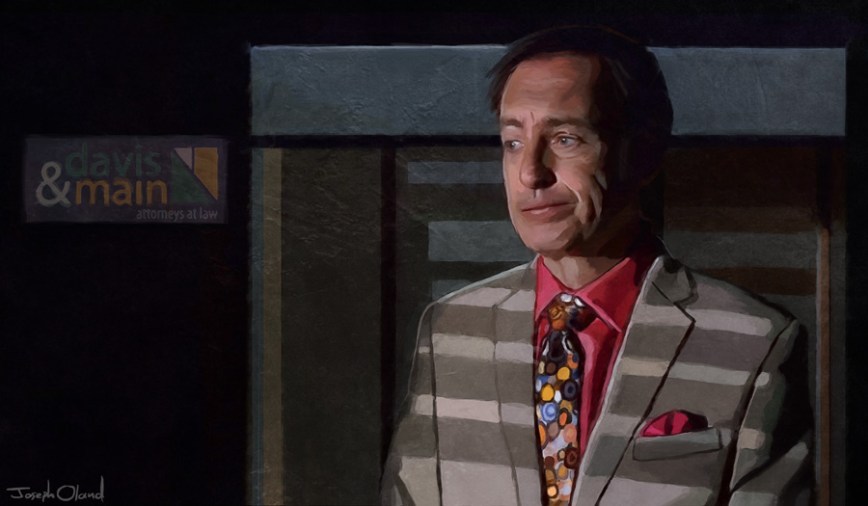
This episode sees Jimmy admitting to certain truths about himself openly. He comes clean and admits that his atrocious behavior at Davis & Main was a ploy to escape his contract (but not the signing bonus). He admits that he’s a “square peg” that needs to do his own thing. He drops the British secretary charade when he nestles back into his nail salon back-office. Kim, having absorbed Chuck’s story about Jimmy’s youthful thievery, also confronts Jimmy in more concrete terms. She cannot allow herself to partner with Jimmy and expose herself professionally to any of his shenanigans. Jimmy can sense her distrust even if he isn’t privvy to Chuck’s meddling.

Will Jimmy accept Kim’s proposal? The episode doesn’t seem to want to reveal this until next week, but my guess is that he eventually will.

FINE ART PRINTS AVAILABLE HERE
– – –
SIGN UP FOR THE LENSEBENDER NEWSLETTER

Carl – We Have An Eye Donor For You

Doc Denise postFINE ART PRINTS AVAILABLE HERE – You sick bastards.

It didn’t take long for the inter-webs to begin flooding with outcry after the latest gruesome death in AMC’s “The Walking Dead,” but this outcry is a little different than usual. Most of the time, the audience is saddened by the unexpected loss, or horrified when pivotal characters are presumed dead – let us not forget the miserable weeks when Glenn’s fate was left completely up in the air. While several plot-lines have been changed in order, presumably, to keep the narrative fresh for fans – and to prevent comic book enthusiasts like myself from spoiling upcoming events – Mr. Abraham Ford was spared the eyeball-skewering he was destined for.

Abraham Death

The problem? His replacement on the post-apocalyptic chopping block was Doctor Denise, one of the series’ only gay characters. If fact, it was only two episodes ago that Denise told her girlfriend Tara before an extended supply run that she can’t go. “I need to be here,” she said. “I’m the only doctor now. I can’t. But I want to.” This week, Denise admits that she could have gone, that she could have confessed her love to Tara, but was unable to because she was afraid. The moment she appears to arrive at romantic clarity – and the humorous macguffin of the orange soda is satisfied – Denise is killed.

The macho alpha-male is spared his scripted death, replaced by one of the only gay characters on the show. Given the nature of the show, one likely has nothing to do with the other, but that doesn’t prevent message boards and conspiracy theorists from beating their chests about what this may possibly imply.

The show has gone off-script in a variety of ways, in a calculated and creative attempt to make the content as surprising and narratively strong as possible. In this instance, the turn of events may be as easily explained as the availability of an actor on set. Tara (played by Alanna Masterson) is off for the foreseeably near-future because of a pregnancy, preventing any resolution with the Tara/Denise subplot by the end of the current season.

It ought also be noted that Denise doesn’t survive the comic book, either. She makes it much further on the written page, sure, but she is no more immune than any other beloved character. Additionally, the Denise character is straight in the graphic novel, not gay. But a little bird tells me these tidbits likely won’t quell the current outrage.

I can’t speak for the writers, producers, show-runners, or anybody else on “The Walking Dead,” but I’m guessing that the current insult was unintentional. Besides, there’s still that lingering speculation that Daryl is gay, so we may yet be able to reexamine this topic as the story continues to unfold. And what’s that, I hear? Jesus – you know, that devilishly handsome blue-eyed little thing – might be gay? Time will tell, I suppose…

For the time being, let’s raise a glass while we mourn the loss of yet another undeserving victim. The loss is always hardest to accept when the character is so intrinsically good. Let’s hope she is avenged. It couldn’t happen soon enough.

Cheers.

FINE ART PRINTS AVAILABLE HERE – You’re still sick bastards
– – –
SIGN UP FOR THE LENSEBENDER NEWSLETTER

So Long, Carol – It’s Been Fun

Carol's Cookies postFINE ART PRINTS AVAILABLE HERE

Well, somehow the lion-hearted warrior woman we’ve come to know and love has left us. Only a few episodes earlier, she was the one to strike fear into the hearts of children, travel incognito through a swarm of Wolves with a bloody ‘w’ on her forehead, and even come to blows with Morgan over his peacenik philosophy.

Carol is an enigmatic character, a wonderful dramatic foil to Daryl. In many ways, the two of them were abused, tamped-down by their life’s circumstance. Daryl was abused by absentee parents and a bully older brother, Carol by a husband’s fist. The characters have evolved organically, and are unique to “The Walking Dead” television series. Neither character exists in the comic book, so there’s no source material they need to adhere to. I think this is one of the reasons why they stand out, and why there’s been such a pronounced outcry from fans that the two develop a romantic arc. But those aren’t who these characters really are. They are more open and vulnerable with one another than anybody else in the community, and their intimacy doesn’t hinge on bedroom antics – there’s something more concrete and serious about how they relate to one another.

I think we all know we’ll be seeing Carol again. She won’t be dismissed this unceremoniously. I’m guessing she gets herself kidnapped by The Saviors, hastening a confrontation between communities. The incident on the railroad tracks will require a response from Negan and his people, and it’ll be swift and bloody. But hey, maybe they’ll like her cooking.

FINE ART PRINTS AVAILABLE HERE
– – –
SIGN UP FOR THE LENSEBENDER NEWSLETTER

Better Call Saul 2.04 – Gloves Off

Nacho Varga postFINE ART PRINTS AVAILABLE HERE

The ‘continuity game’ with Better Call Saul is insurmountable, and this week’s episode has ratcheted-up the intrigue in new and significant ways. It also contains additional easter-eggs and call-backs to Breaking Bad (see below) to keep super-fans plugged in and on-point.

– – –

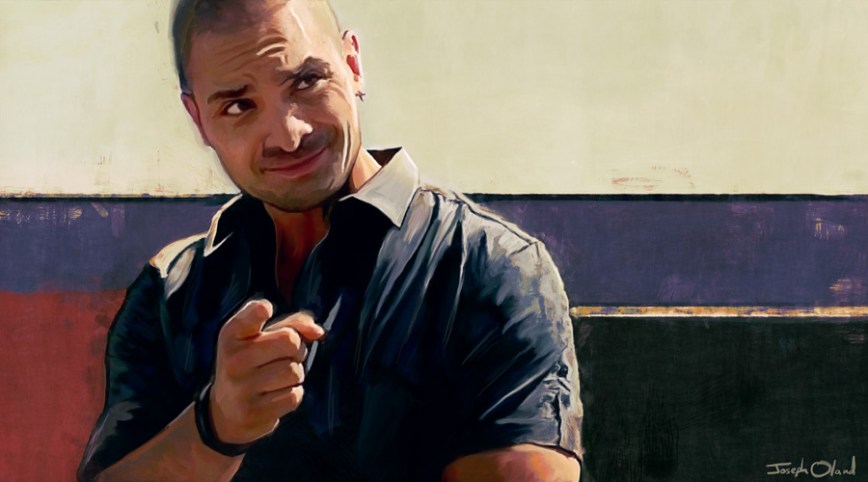
Following their late-night meeting, we find Nacho Varga (Michael Mando) laying out his plan across the street from the El Michoacano, the Mexican restaurant where drug lord Tuco Salemanca (Raymond Cruz) holds his drop-meets. With Tuco using crystal and acting erratically, Nacho needs him eliminated before Tuco learns about his side business. As we would expect, Mike Ehrmantraut (Jonathan Banks) opts to discard Nacho’s ‘up-close and ugly’ assassination plot for something more surgical.

It’s quite possible that Mike Ehrmantraut is the most interesting character in the Vince Gilligan universe. Like many others, his is a character with a dark history, having tumbled from potential greatness. He once failed to appreciate what he had, and tragedy knocked him down from his morally bankrupt ambition. The story of his life has been coming out in little drips, but in a uniquely satisfying way. The slow pacing of the series has helped with the tricky task of keeping the story mysterious and engaging; it doesn’t show all of its cards all at once.

In Breaking Bad we see Mike as a calm, calculated fixer in the employ of Gus Fring (Giancarlo Esposito). Because of this, we can reflect back and realize that he had, at some point in his past, become connected to the Salemanca drug cartel. Could this episode reveal how Mike was first acquainted? Not exactly, but the pieces are beginning to fall into place.

In season one of Better Call Saul we learn about Mike’s previous life as a police officer, that he was a corrupt cop in a corrupt precinct, and that he’s the father of a murdered son. We learn how he truly lost his soul, drawing his own son into the department’s corruption and possibly contributing, albeit in a tertiary way, to the murder.

In season two of Better Call Saul we learn just a little bit more. While shopping for the proper sniper rifle to assassinate Tuco Salemanca, it’s revealed that Mike was most likely deployed in Vietnam. In the cheap motel room, surveying military-issue hardware, we see Mike stop short after clapping eyes on a rifle he clearly has a history with. He turns to the arms dealer – a familiar face who helped equip Walter White in Breaking Bad – and says he’s changed his mind.

Jonathan Banks’ portrayal of Mike Ehrmantraut is an achievement in acting. To play such a stern and expressionless character with such exquisite finesse requires great skill. The ocean of sadness beneath Mike’s wooden veneer was revealed last season, and the audience remembers that it’s there – hidden, but there. The flash of hesitation speaks volumes of his character, and we watch as Mike chooses to take a ruthless beating – instigating a fistfight with Tuco, essentially framing him – instead of killing. It’s an emotionally complex decision for a character to make. He could have just walked away and not taken the money, but he needs that money for his daughter-in-law (and, more importantly, his granddaughter). “Gloves Off,” plain and simple, is an amazing piece of storytelling.

To quote A.R. Magalli from ‘Cut Print Film’: “How did a surly, taciturn, ruthlessly efficient, hangdog old man get to be the most tragic character in the series? If there’s a truly sympathetic character in the Gilligan-verse, it’s the man with the blood on his hands.”

– – –

EASTER EGGS:
1. Nacho tells Mike about when Tuco became erratic and paranoid while using “crank” and shot their supplier “Dawg” Paulson, leaving a piece of Dawg’s skull in Nacho. In “Breaking Bad” season two, episode two, Hank Schrader presents a profile on Tuco, mentioning that Tuco is “Reputed to have whacked one ‘Dawg’ Paulson.”

2. Mike keeps Tuco’s boxing gloves necklace as a souvenir after ensuring that he’ll spend a good five or so years in jail. The necklace is no late-addition; it can be seen back in season one.
Boxing Gloves
The gem-studded gloves may also signify that Tuco was a former competitor in the National Silver Gloves Tournament, an annual championship for young pugilists. I’m willing to bet Uncle Hector made sure Tuco knew how to fight.

3. In “Breaking Bad” we learn that Tuco’s time in jail was spent with Skinny Pete, which later leads to Jesse and Walt’s involvement with him.

4. Tuco deals with a nervous young man wearing a Tampico Furniture shirt, eventually dismissing him, saying “See you, Domingo.”

Domingo was first introduced to us in the pilot episode of “Breaking Bad,” but we knew him by a different moniker: Krazy-8. Tampico Furniture is owned by Domingo’s father, and we learn that Walt may have bought a baby crib from him when Walt, Jr. was born. If memory serves, Krazy-8 is the first person Walter White kills in the whole “Breaking Bad” series. Pretty wild, eh?

FINE ART PRINTS AVAILABLE HERE
– – –
SIGN UP FOR THE LENSEBENDER NEWSLETTER

The Walking Dead – “Not Tomorrow Yet”

Abraham postFINE ART PRINTS AVAILABLE HERE

The most recent episode of “The Walking Dead” once again establishes a sense of peaceful domesticity for the citizens of Alexandria, this time focusing on Carol. It opens with her going through the food pantry, plucking cans from the rack, and gathering acorns in the forested area outside the town walls. The pleasant jaunty folk music doesn’t pause when Carol has to…to machete a walker who interrupts her errand. She sighs at the blood spray on her white blouse in a manner one might expect from tracking mud into the house; there’s a nonchalance, a sense of normality, a sense of frustrated routine.

What the episode establishes here, with it’s folk music & baking montage, is still relatively new. It’s contrasting Carol’s struggle with adapting to living a real life (as opposed to the life she and the group have been forced to live, trying to survive on the road). From the third-person omnipotence of our living-rooms, we already know that Rick and the group are on their way back to the community from The Hilltop. We know that the people of Alexandria are going to have to prepare for war. We know that Carol is going to have to put down the cookies. It’s going to be time to kill people – again.

Carol has her moment with Tobin, we see her smile for the first time in what seems like an eternity, but then the RV pulls up. Her peaceful moment comes to a halt. And these are the rhythms of “The Walking Dead.” As director Greg Nicotero explains: “It becomes ‘Die Hard’ from here on out.”

And he isn’t joking when he says that.

Rick rallies the troops and they plan their attack on Negan’s outpost. A lot happens in this episode, but we still get the feeling that the writers and show-runners are still just setting up all the chess pieces. Glenn loses his innocence by killing his first living human, an action that coincides with plot-points in the comic book. Does this loss of innocence put a target on Glenn’s head, or will the television series diverge from the events of the (already-published) graphic novels in order to keep the audience guessing and the narrative fresh? If so, this certainly wouldn’t be the first time.

And what of Abraham? Since the beginning of the season he’s been showing greater and greater signs of caving into survival stress. He appears unable to adapt to his environment, has private emotional fits, and struggles to understand how or why Glenn & Maggie would actually elect to have a child in this brave new world. There have been moments of drunkenness, abandon, and pathos, as well as moments of unnecessary risk-taking. There was also the PTSD fever-dream on the rooftop with the RPG-strapped walker (an encounter which ultimately saved his life during the encounter with Negan’s foot soldiers on the highway). The show reintroduced Abraham’s problems in last weeks’ episode, and we now see him turning his back on Rosita in a brutal, heartbreaking fashion. He’s a fighter, there’s no doubt, and certainly not a bad man. But the show has gone to great lengths to illustrate that he is a man slowly coming undone. My prediction is that we had all better start saying our goodbyes; he isn’t getting out of the season alive.

If you think I’m wrong, feel free to let me know what you think is going to happen in the comment section below.

FINE ART PRINTS AVAILABLE HERE
– – –
SIGN UP FOR THE LENSEBENDER NEWSLETTER