January 29, 2017 – Burning Flags

burningflagspostFINE ART PRINTS AVAILABLE HERE
– – –
OTHER ‘IMAGE OF THE DAY’ PRINTS AVAILABLE HERE

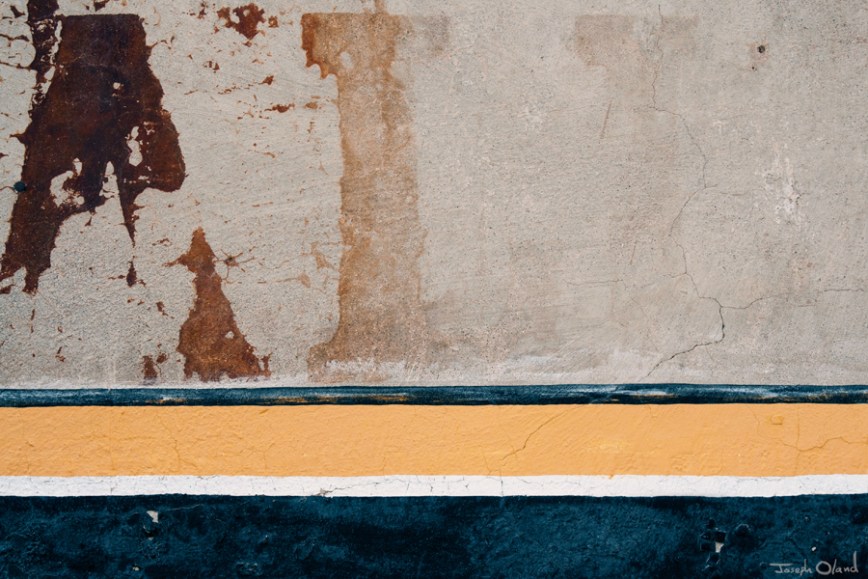
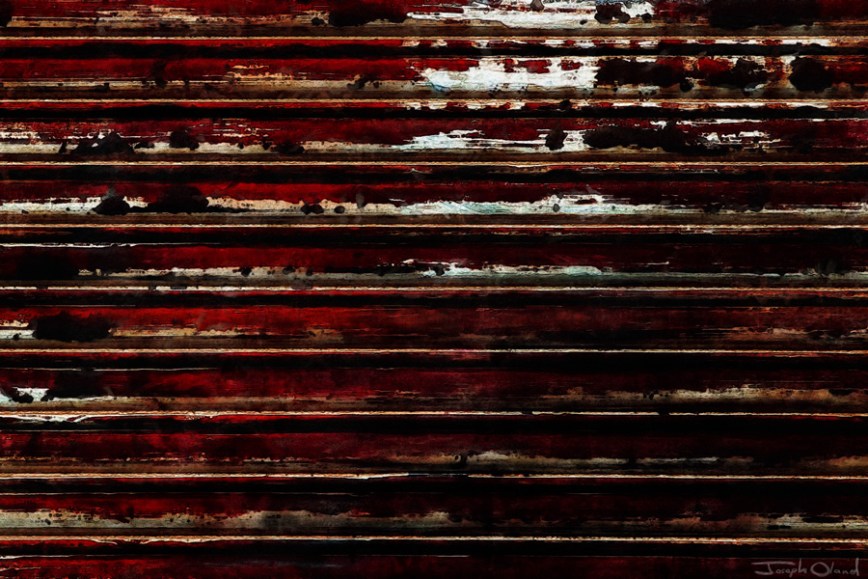
No, this is not a photograph of a flag. But for me, in the editing room, as I sculpted the image’s contrast and color, it began to remind me of the American flag, with a chipped-paint and rustic, aged texture. More than a week after the inauguration of Donal Trump, and all of the chaos that has followed after his controversial executive orders and the backlash from civil rights advocates, this image became a symbol to me of the erosion of American ideals.

As I have said about my other abstract compositions, there is beauty in simplicity – this image can mean any number of things to any number of people. But for me, this image is a meditation on America.

I would be curious to know what you think of this image, what your interpretation might be.

– – –

“There are few genuine conservatives within the U.S. political system, and it is a sign of the intellectual corruption of the age that the honorable term ‘conservatism’ can be appropriated to disguise the advocacy of a powerful, lawless, aggressive and violent state, a welfare state for the rich dedicated to a lunatic form of Keynesian economic intervention that enhances state and private power while mortgaging the country’s future.”

― Noam Chomsky, The Culture of Terrorism

SIGN UP FOR THE LENSEBENDER NEWSLETTER

January 28, 2017 – The Drip

thedrip-post

FINE ART PRINTS AVAILABLE HERE
– – –
OTHER ‘IMAGE OF THE DAY’ PRINTS AVAILABLE HERE

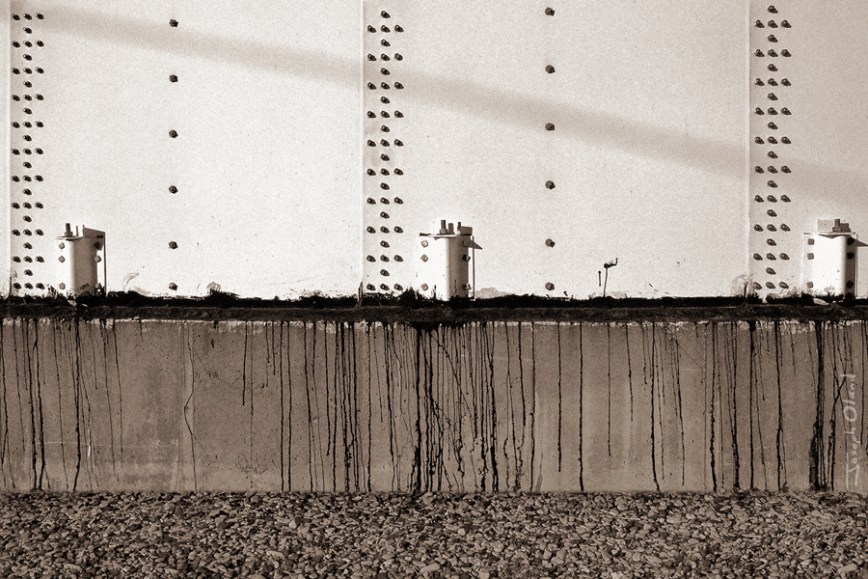
Today’s image, like many that came before, is a throwback to the days when I was making mostly abstract artwork. Rather than rattle on about my interest in abstract photography, I will simply leave today’s image with the following quote by Pablo Picasso:

“There is no abstract art. You must always start with something. Afterward you can remove all traces of reality.”

SIGN UP FOR THE LENSEBENDER NEWSLETTER

January 26, 2017 – Black and White

industrialabstractpostFINE ART PRINTS AVAILABLE HERE
– – –
OTHER ‘IMAGE OF THE DAY’ PRINTS AVAILABLE HERE

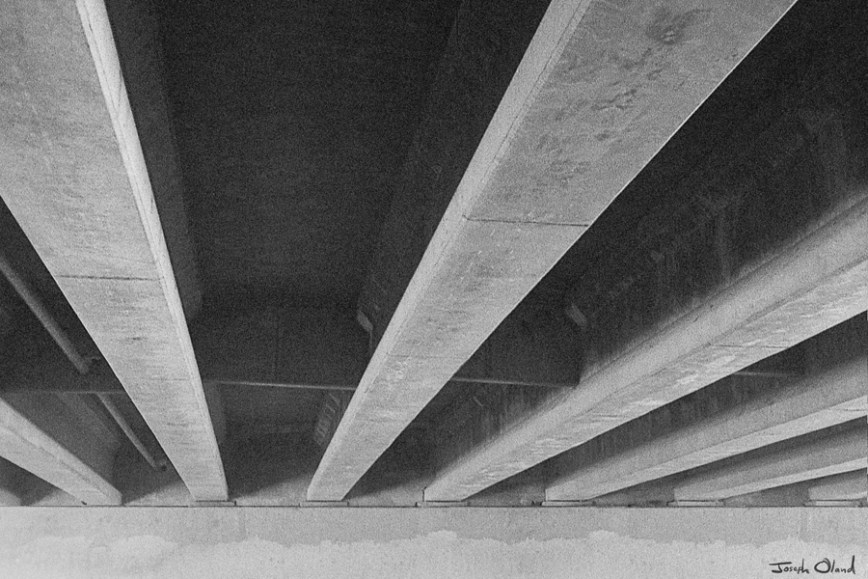
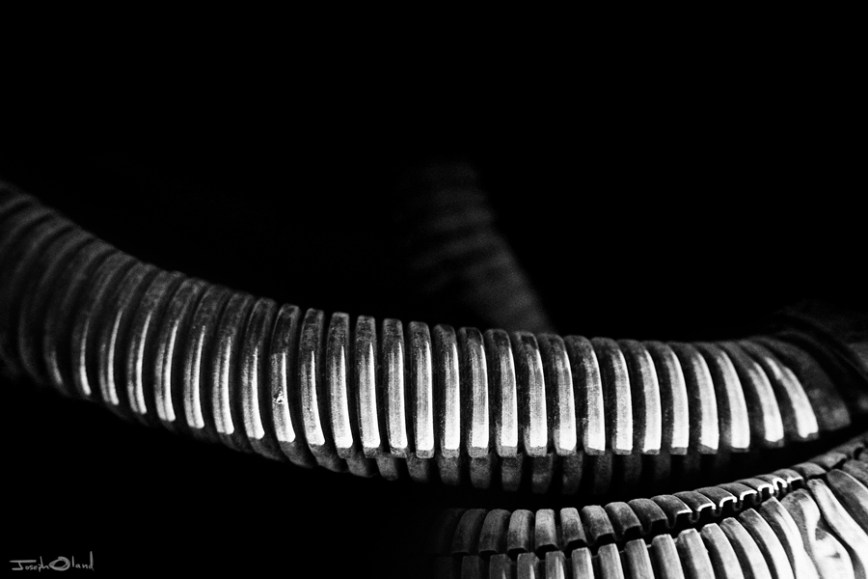
One of my friends – more of an activist, politically motivated, and extreme personality – once commented that my work specifically seeks to “mean nothing at all.” This was over a decade ago, but I remember the comment; it made me think a lot about the kinds of images I was making at the time. I didn’t feel insulted, but I did feel compelled, initially, to try and defend myself.

My natural instinct was to disagree (and I did disagree), but it was the first time I really sat down and tried to apply meaning to the photographs and paintings I was making. And it made me think about the utility of abstract imagery in a broad and general sense, too.

I don’t think all artwork needs to be a didactic teaching tool, or direct the thoughts and emotions of the viewer. In fact, in many circumstances, I have a contrary opinion. I am seduced by abstract compositions specifically because they can mean any number of things to any number of people. The possibilities aren’t infinite. Color, movement, composition, film grain, delicate or light brush strokes – these all guide our interpretation and emotional response. But abstract compositions allow us to think broadly about how an image impacts us, and the experience of viewing abstract art becomes very personal. An abstraction can remind us of a specific event, a movie we watched, an experience we had – and in an almost slight-of-hand kind of way, through some peculiar magic, an image made by a complete stranger can ascend to significance in the hearts and minds of the individuals looking at it.

I am compelled to make pictures like this for reasons that still evade me, but I make them because they affect me, they move me, they touch a part of my subconscious and tickle a part of my mind. I can’t expect images like this to be universally adored, but I have to have faith, as an artist, that there are other people out there, like me, who find this kind of composition interesting.

The hardest thing for an artist to do is follow their instincts. If I listened to all of the criticism, all I would do is try to mimic the landscapes of Ansel Adams or take endless ‘desert sunset’ pictures. There are plenty of those images in the world, and I just need to make images of my very own.

SIGN UP FOR THE LENSEBENDER NEWSLETTER

January 13, 2017 – Painted Bricks

painted-bricks-post

FINE ART PRINTS AVAILABLE HERE
– – –
OTHER ‘IMAGE OF THE DAY’ PRINTS AVAILABLE HERE

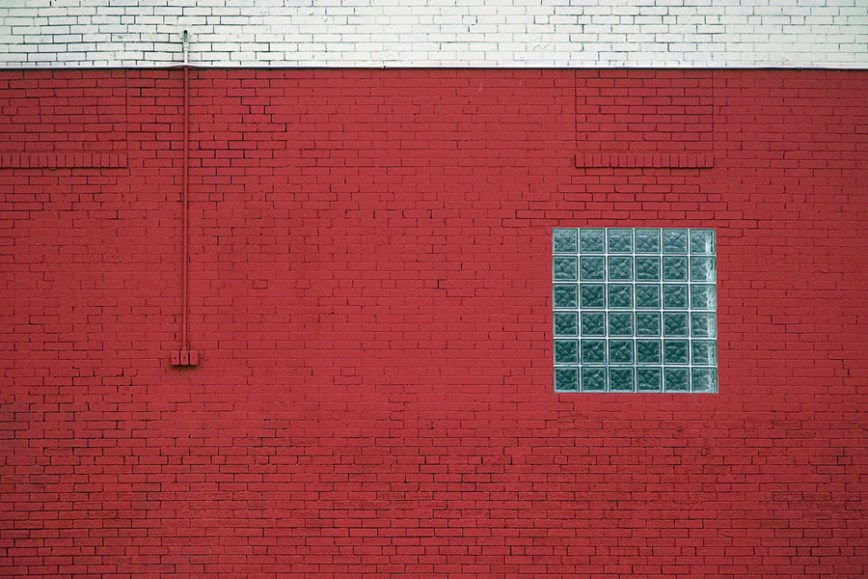
This is another image from a whole, hard-drive consuming series of reductionist, minimalist compositions I’ve made during my ‘urban hikes.’ I made most of these in Tucson, while I was attending university, but I’ve found myself looking at bricks and paint, electrical boxes and telephone wires, and the intersection of all these lines.

I still very much enjoy working in this mode, although it’s very obvious that the audiences is, at best, limited. But that won’t stop me. This kind of imagery is a pure joy to create.

SIGN UP FOR THE LENSEBENDER NEWSLETTER

January 12, 2017 – Abstractions

dhay-post

FINE ART PRINTS AVAILABLE HERE
– – –
OTHER ‘IMAGE OF THE DAY’ PRINTS AVAILABLE HERE

Today’s image is a throw-back to a years-long phase in my development as a photographic artist. After working at The Center For Creative photography, I became unapologetically obsessed with the works of Aaron Siskind and Minor White and Beaumont Newhall. I had never considered the camera as an effective device to make abstract images (in the most literal sense, cameras can only document actual object that are actually in front of the lens, so the idea of ‘abstraction’ is counter-intuitive), but began seeking out compositions, colors, and textures.

I spent most of my free time walking around Tucson – where I lived at that time – looking behind dumpsters, in the more colorful and decrepit neighborhoods, behind shops, and through alleyways. Chipped paint, graffiti, rusted metal – these became my obsession.

Whenever I feel like I’m struggling with a creative idea, I know I can always take an urban hike with my camera and find something interesting. This image came from an alley in Flagstaff, Arizona. I was on a road trip with my girlfriend and, as most photographers do, I tortured her with my constant detours. This is, for reasons I’m not entirely able to articulate, one of my favorite captures from that visit.

SIGN UP FOR THE LENSEBENDER NEWSLETTER

February 27 – Bridge Over The Wash

02-27 River Wash postThe Rillito River no longer runs twelve months a year, although it is credited with Tucson’s early growth. During a brief period of time, I lived along the wash and rode my bike along the hiking path whenever I could. During the monsoon season, the stretch of the river wash near my apartment would erupt with the sound of chirping frogs, and sometimes at night I would hear packs of coyotes howling.

Beneath the Swan Road bridge, I made several studies of the steel beams. It’s a simplistic composition, but I always thought it looked interesting through the viewfinder of my Fujica Half vintage camera. This is one of the many pictures I made during that time.

FINE ART PRINTS AVAILABLE HERE
– – –
SIGN UP FOR THE LENSEBENDER NEWSLETTER

February 23 – All

02-23 All post“Pictures, abstract symbols, materials, and colors are among the ingredients with which a designer or engineer works. To design is to discover relationships and to make arrangements and rearrangements among these ingredients.”

~Paul Rand

– – –

No flowery words today. Film February marches on with this very basic composition, taken with my first real camera, the Nikon N80 that my parents got me. Up until that point, I was using an old Canon with a broken manual rewind lever – it would take about five minutes to wind the film after finishing a roll.

This picture was made using my favorite film stock, a color-reversal stock from Fujifilm called Velvia. It was pretty expensive film, so I never used it much, but it produced these rich colors that always seemed to take the most basic, common, mundane, and forgettable subject matter leap up at you.

A faded practice, film photography, for the faded paint lettering on an old building.
Seems appropriate enough.

FINE ART PRINTS AVAILABLE HERE
SIGN UP FOR THE LENSEBENDER NEWSLETTER

February 22 – The Nebula

02-22 Nebula postExperimentation sometimes leads to the break-through. It certainly leads to some failure. Sometimes you hit an in-between result; this one lives somewhere in the middle. Today’s image wasn’t made with film, nor was it made with a camera. It was made with black-and-white photo paper, an incandescent light, some old print developer (Kodak Dektol multigrade), and a bottle of india ink.

An entire box of my photo paper was accidentally exposed to light; the material isn’t cheap, and I wasn’t amused by the loss. For those of you who don’t know what film and photo paper is, it’s a light-sensative material that’s coated in silver halide (a crystallized salt form of the metal). When light hits this material, the areas that were exposed to the greatest amount of light turn correspondingly dark. With the assistance of corrosive chemicals, you can accelerate the process of darkening the tones and then you can use another set of chemicals to fix the image permanently.

When a box of photo paper is accidentally exposed, it becomes useless for traditional printing – all prints will be slightly flat-toned or “fogged” when you go to draw a print in the darkroom. Rather than snap my fingers in defeat and pitch the useless pages into the trash, I decided to try and have some fun. The paper was already ruined, so what could I lose?

I started taking these pieces of partially-exposed paper out. I threw them into the developing bath and sprayed india ink over the prints before snapping on the overhead light. Since some of the paper was protected from the light by the dark, floating plumes of ink, strange patters begin to emerge on the paper. I’d then lift the prints before they turned completely black and put them in the fixing chemicals. The result is what you see above – atmospheric swirls and bubbles that, to my eye, are reminiscent of astral photography. I’d stumbled on a new, slightly messier form photogram, and I spent the entire afternoon experimenting, saving the best results to be toned, hand-colored, or scanned into digital files later.

Sometimes it pays just to goof off for a bit and forget that there are any rules.

FINE ART PRINTS AVAILABLE HERE
SIGN UP FOR THE LENSEBENDER NEWSLETTER

February 21 – Manhole Cover

02-21 Manhole Cover post“The longer you look at an object, the more abstract it becomes, and, ironically, the more real.”

~Lucian Freud

– – –

Film February continues with yet another recurring theme in the pantheon of old subject matter. Some people miss out on what’s going on around them because they stare at their shoes rather than look around. There’s nothing wrong with staring at the ground, if you ask me – there’s a lot going on there.

As I’ve mentioned in previous entries to this project, street photographer Aaron Siskind played a major role in inspiring a younger version of myself. Seeking out interesting compositions in mundane places became something of a game. While interning at The Center For Creative Photography in Tucson, I also became deeply fascinated by a photographer named Minor White, who also had a tendency to isolate seemingly normal, everyday objects and somehow manage to make them alien, interesting, unique.

There is definitely something magical about working in black-and-white film.

FINE ART PRINTS AVAILABLE HERE
SIGN UP FOR THE LENSEBENDER NEWSLETTER

February 20 – The Serpent (and semiotics)

02-20 The Serpent postToday’s photograph for the continuation of ‘Film February’ corresponds to a time when I was first exposed to a different, more literary side of photography. After reading “Subculture: The Meaning of Style” by Dick Hebdige, the door to semiotics was opened. It was nauseatingly confusing to me, this new philosophy of graphic language, but it was also intriguing. I fell down the rabbit hole and found myself thinking about my photographs in a completely different way. I’m reminded of one of photography’s seminal publications, “Camera Lucida: Reflections on Photography,” and a particular passage by author Roland Barthes which summarizes my feelings perfectly:

“For me the noise of Time is not sad: I love bells, clocks, watches — and I recall that at first photographic implements were related to techniques of cabinetmaking and the machinery of precision: cameras, in short, were clocks for seeing, and perhaps in me someone very old still hears in the photographic mechanism the living sound of the wood.”

From the moment I began these new studies I started looking through the viewfinder differently. This is when I became interested in macro photography, and it’s when I became much more deliberate with my compositions. When I take the time to really investigate, I discover that there are interesting things all around, that there is always something interesting to investigate with my photographers’ tools. With camera in hand, I’m a kid looking under rocks and discovering whole worlds that I never knew were there before.

FINE ART PRINTS AVAILABLE HERE
SIGN UP FOR THE LENSEBENDER NEWSLETTER