 FINE ART PRINTS AVAILABLE HERE
– – –
ALL ‘SAUL’ & ‘BREAKING BAD’ MERCHANDISE HERE
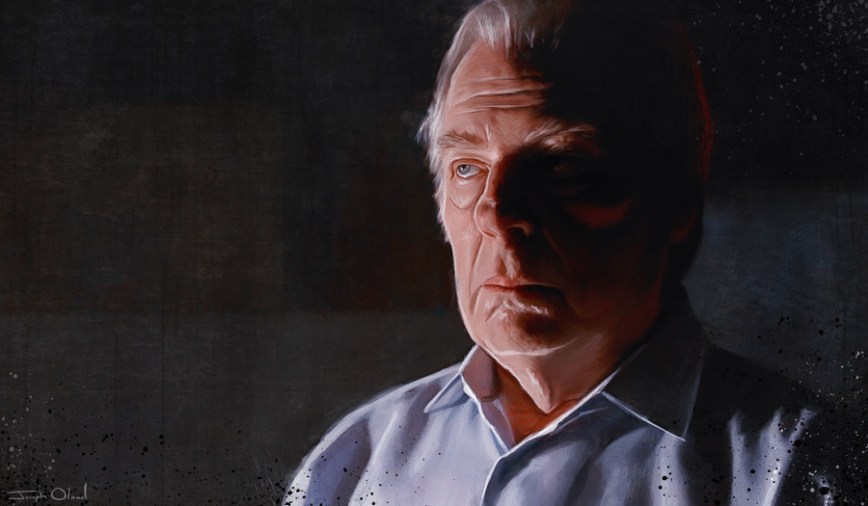
“Let justice be done, though the heavens fall.”
“Fiat justitia ruat cælum” is the Latin phrase, attributed to a number of classical figures but, alas, with no clear origin. The maxim, however, perfectly signifies Chuck’s hubris. While correct in his accusations against his brother Jimmy, Chuck has a history of preventing his brother from achieving any measurable level of stability or success; he cannot help, for any number of reasons, but attempt to cripple Jimmy’s ambitions. Cloaking himself in professional and academic success – self-justifying with grandiloquent quotes – something complex is driving Chuck’s animus toward Jimmy, something only lightly hinted at in earlier seasons.
Let justice be done though the heavens fall.
Justice must be realized regardless of the consequences.
There’s a question, of course, about what it is that makes Chuck more ‘just’ than Jimmy.
Both characters have injured one another, deceived one-another, attempted to ruin one-another professionally. To be sure, Chuck has never seen the inside of a jail cell like his brother Jimmy, but that doesn’t mean he hasn’t employed sabotage and subterfuge to achieve his own selfish goals.
That’s where this week’s episode, titled ‘Chicanery‘ begins – in a flash-back with Chuck as he concocts an elaborate story to deceive his ex-wife Rebecca in order to disguise his illness. In the opening scene, we see the roles of the brothers reversed, in which Jimmy advocates for the power of truth and the consequences of lying while Chuck insists on the necessity of deception. Without any consideration Chuck executes his ruse in one of the most cleverly-written scenes of the series which illustrates how Jimmy, on some level, likely learned some of his tricks.
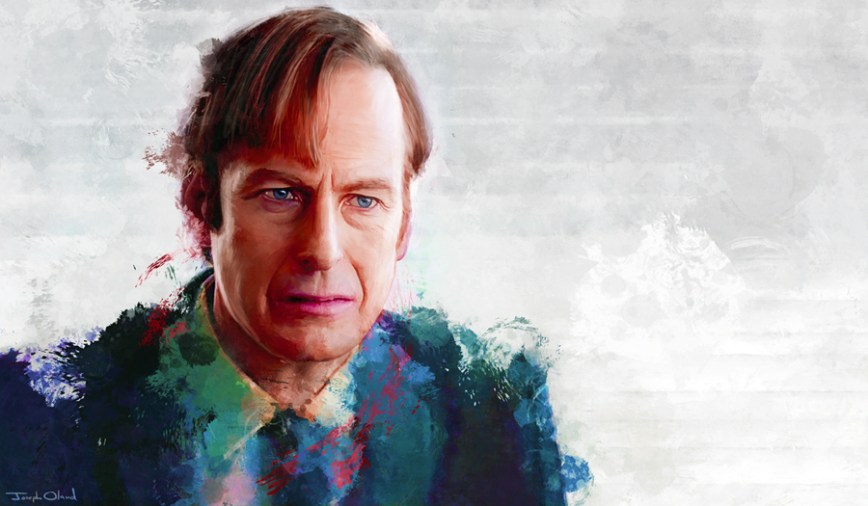
As season three of Better Call Saul has moved forward, the similarities between the two brothers has become increasingly clear. Where once Jimmy was a tragic caretaker and Chuck a victim of mental illness, now both are revealed as conniving and clever rivals. The one glaring difference – among many others, certainly – is that the elder brother is wealthier with an uncompromised reputation, leaving Jimmy at a disadvantage.
The antagonism between the brothers in Better Call Saul has proved to be an effective metaphor for justice in the modern world. The moneyed charlatan on wall-street is largely immune from his crimes while the petty grifter is prohibited from elevating himself. Neither is innocent, but one is clearly conducting battle from the high ground, and with significant advantages.
At the beginning of the series, Jimmy is a reformed con attempting to turn his life around – going to law school, working long and hard hours as a public defender, always finding himself unable to escape his past mistakes. The man with a record is always at a disadvantage, which often pushes him back into criminality – often into deeper and more intense expressions of criminality. Season three is, in a subtle way, an indictment of our modern concept of ‘justice.’
Though the heavens fall.
– – –
‘Chicanery‘ brakes from the fragmented story-telling model of the season, focusing on only one story-line rather than several. Fring, Ehrmantraut, Nacho, and the Salamanca cartel are all on the back-burner while the narrative focuses intensely on the hearing between Chuck and Jimmy. This is a huge shift in pace and a welcome breath of fresh air; it doesn’t feel like audiences are being strung-along with an endless parade of Breaking Bad callbacks (though there are plenty) and unresolved plot-lines. The brothers are allowed their time to face one another, each equally dishonest in their attempt to ruin the other – each faced with consequences they hadn’t predicted.
Ironically, Chuck is absolutely correct about the billboard stunt and his brother’s manipulation of court documents. On his own side, Jimmy demonstrates that Chuck’s illness is mental rather than physical. Both brothers think the worst about each other and, in the end, both brothers are right.
READ LAST WEEK’S REVIEW
– – –
SIGN UP FOR THE LENSEBENDER NEWSLETTER
 FINE ART PRINTS AVAILABLE HERE
 Season two already explains why Ehrmantraut has a grudge against the Salamanca cartel – Hector Salamanca had a civilian “not in the game” killed in the wake of Mike’s truck robbery – and this episode finally illustrates how Ehrmantraut and Gus Fring finally come together. The recipe is simple and as old as time:
 FINE ART PRINTS AVAILABLE HERE
 It appears that audiences can look forward to seeing how Mike (Jonathan Banks) becomes one of Fring’s chief enforcers. As Mike gets ever-closer to discovering precisely who Fring is, Jonathan Banks continues to deliver a show-stealing performance. The Saul story-line dissolves when we cut to Mike, and audiences try to figure out what he’s thinking, what he’s planning.
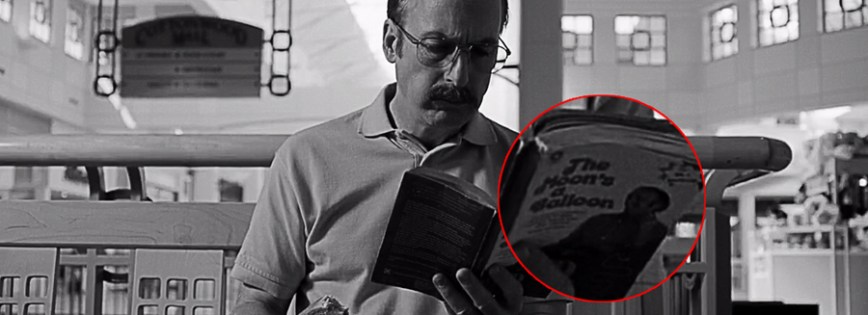 “The Moon’s A Balloon” is one of the best-selling memoirs of all time, of a man that contemporary audiences would scarcely recall: David Niven. The book is an account of his life in Hollywood during the 1950’s and 1960’s, beginning with the early loss of his aristocratic father. Stories of service during the second world war follow, and then tales of partying with legends of the silver screen. It’s a gossipy tome, at times earnest and heart-felt, but mostly boastful, about life among the stars while living in Los Angeles.
 FINE ART PRINTS AVAILABLE HERE
 FINE ART PRINTS AVAILABLE HERE
 FINE ART PRINTS AVAILABLE HERE
 FINE ART PRINTS AVAILABLE HERE
 LenseBender