March 06, 2017 – Chihuahua

FINE ART PRINTS AVAILABLE HERE
– – –
OTHER ‘IMAGE OF THE DAY’ PRINTS AVAILABLE HERE

My photographic method doesn’t change much, regardless of where I am. I try to approach every environment with curiosity, and my perspective has slowly evolved over the years, solidified. When I’m not photographing people, I’m always on the hunt for interesting textures and colors.

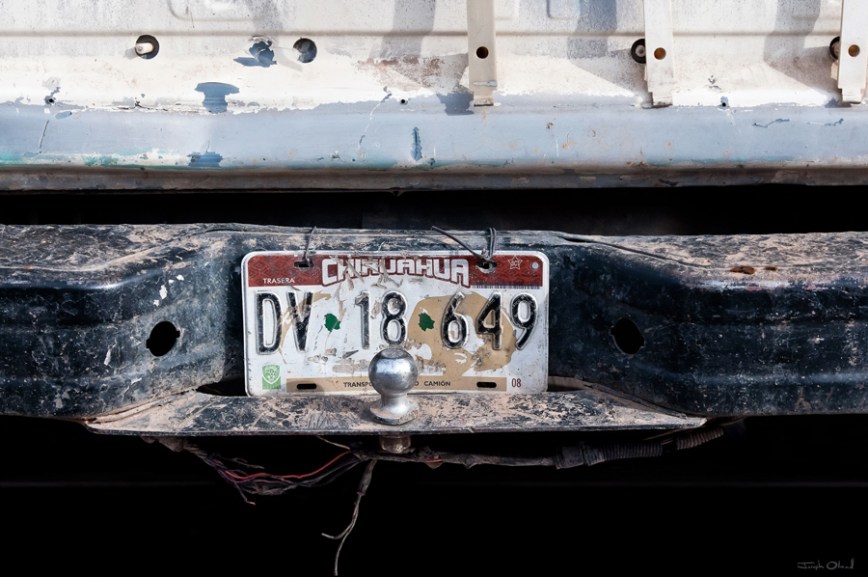
Traveling through Chihuahua, all of the old decaying adobe buildings and faded election campaign signs – painted on the sides of businesses and along walls – capture my attention. Everything here seems to be recycled, so it isn’t unusual to see 1980’s model cars and trucks, shops with a wide variety of VHS cassettes, and mountains of recycled clothing. Everything seems to carry some kind of story – some kind of history.

Nothing is polished and pristine and brand new. And I really like that.

SIGN UP FOR THE LENSEBENDER NEWSLETTER

March 05, 2017 – Arroyo de Hacienda

FINE ART PRINTS AVAILABLE HERE
– – –
OTHER ‘IMAGE OF THE DAY’ PRINTS AVAILABLE HERE

Slot canyons surround the edges of the Urique River, which winds through the tropical forests in the Copper Canyon region. Military macaws squawk from the treetops and wild fruit grows throughout the area. This image is only about a hundred yards into the canyon; on the reverse side, the canyon winds several miles deeper into the side of the mountain, where a small family of Tarahumara people live, raising chickens and crops in an open clearing.

My guide was a local Urique resident, woefully hungover after spending the previous evening drinking and celebrating at a local young woman’s Quinceañera. I thought, by the time I had made it this far into the state of Chihuahua, I was reasonably conditioned to make this hike without too much trouble. Tomás managed to make me feel like a weak and vulnerable kitten.

It was a rigorous hike. My two traveling companions tapped-out and headed back to the village only an hour-or-so into the canyon. I’m incredibly thankful that I stuck it out, even though I was somewhat hobbled by blisters the following day. Once we made it back out and onto the gravel road, we hitched a ride in the back of a pickup truck. It was the hottest part of the day, closing in on 115 degrees. I got back to the farm I was staying at, plucked a basket full of lemons, and hung out in the shade, slicing and juicing them into a plastic pitcher.

Best glass of lemonade I think I have ever enjoyed in my life, before or since.

SIGN UP FOR THE LENSEBENDER NEWSLETTER

March 04, 2017 – Urique Rancher, Mexico

FINE ART PRINTS AVAILABLE HERE
– – –
OTHER ‘IMAGE OF THE DAY’ PRINTS AVAILABLE HERE

This is a portrait of a rancher who lives on a small piece of land on the outskirts of Urique.

He was in good spirits, but unfortunately we weren’t able to communicate very clearly. He was friendly and shook our hands, and spat out words faster than we could comprehend. My travel companion, who is infinitely more facile with the Spanish language, explained to me that this gentleman had a speech impediment, a stutter, which made talking to him incredibly difficult.

Nevertheless, this man was all smiles – revealing a few missing teeth – and offered us room-temperature lemonade. Several chickens strutted around the threshold to his shack, and papayas dangled over the makeshift fence around the property.

It was a cool little place.

SIGN UP FOR THE LENSEBENDER NEWSLETTER

March 03, 2017 – The Tropical City of Urique

FINE ART PRINTS AVAILABLE HERE
– – –
OTHER ‘IMAGE OF THE DAY’ PRINTS AVAILABLE HERE

The town of Urique is at the bottom of the valley Barranca de Urique, formed by the river of the same name. In today’s photograph, you can see this river winding through the frame, and the small town huddled around it (a population hovering around one-thousand). The road down into the canyon is a series of switchbacks that wind back and forth toward the village. It’s a low-maintenance road, and a reasonably harrowing experience to drive down. Stories abound about rocks that have crushed cars, and vehicles that have tumbled over the edge.

I bought a bus ticket and put my life in the hands of somebody more skilled at making the journey than myself, and we crawled down the dirt road.

Due to its relatively low elevation above sea level – Urique is about 550 meters – the climate is nearly tropical. The town only has electricity for a fixed number of hours every evening (for light, mostly, once the sun goes down) and, during the hot days of summer, most of the village goes down to the river during the day to keep cool in the water, saving work for the early morning and for sundown.

Papayas, lemons, oranges, and bananas grow wild in the surrounding areas on the outskirts of town, and the villagers actively cultivate their own fruit and vegetable gardens. On hikes through the forest, you can find a shady spot, pluck a fresh orange from a tree, sit down and take a rest. It’s a glorious and unspoiled little corner of the world.

SIGN UP FOR THE LENSEBENDER NEWSLETTER

March 02, 2017 – Tarahumara Woman

FINE ART PRINTS AVAILABLE HERE
– – –
OTHER ‘IMAGE OF THE DAY’ PRINTS AVAILABLE HERE

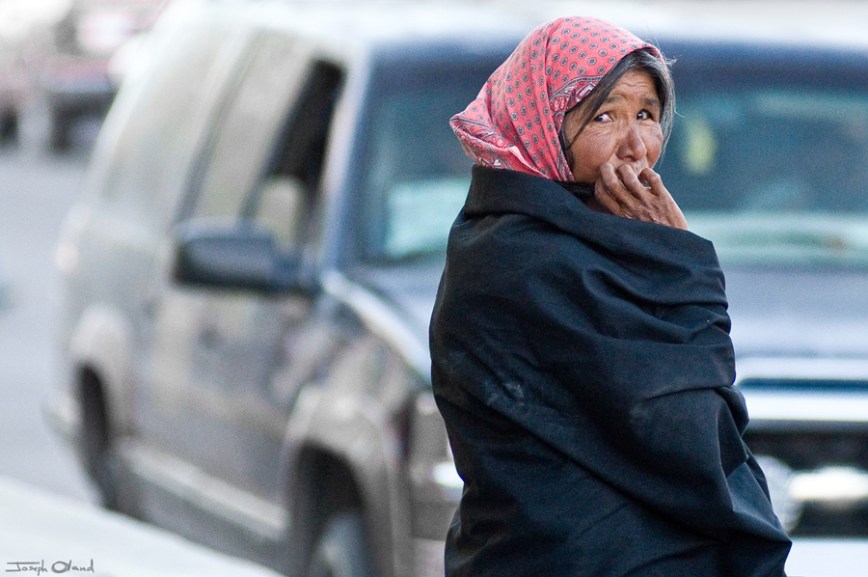
For a few years in a row, I traveled to the Copper Canyon region of Chihuahua in the springtime. Usually, the first destination was a small town called Creel, with an active community settled along the El Chepe railroad line, which carries seafood and other goods east-to-west across northern Mexico daily.

A contingent of the Tarahumara people, indigenous peoples of the region, live in this community. For the most part, only the women wear traditional Tarahumara clothing, but occasionally one might identify a Tarahumara man (Rarámuri) in bright pink, ornately patterned cloth.

This photograph was taken along the main thoroughfare through Creel, dotted with restaurants and gift shops and Tarahumara children begging for pesos.

SIGN UP FOR THE LENSEBENDER NEWSLETTER

March 01, 2017 – Serial

FINE ART PRINTS AVAILABLE HERE
– – –
OTHER ‘IMAGE OF THE DAY’ PRINTS AVAILABLE HERE

As we enter a new month, I’m considering the theme of ‘March in Mexico.’ I have countless images that have never been published from my springtime trips to the Copper Canyon (Barrancas del Cobre) Region the the state of Chihuahua. There’s a unique mix of indigenous tradition and Catholicism, an appreciation for tradition and an embrace of modernity, and there just isn’t any other place on earth quite like it.

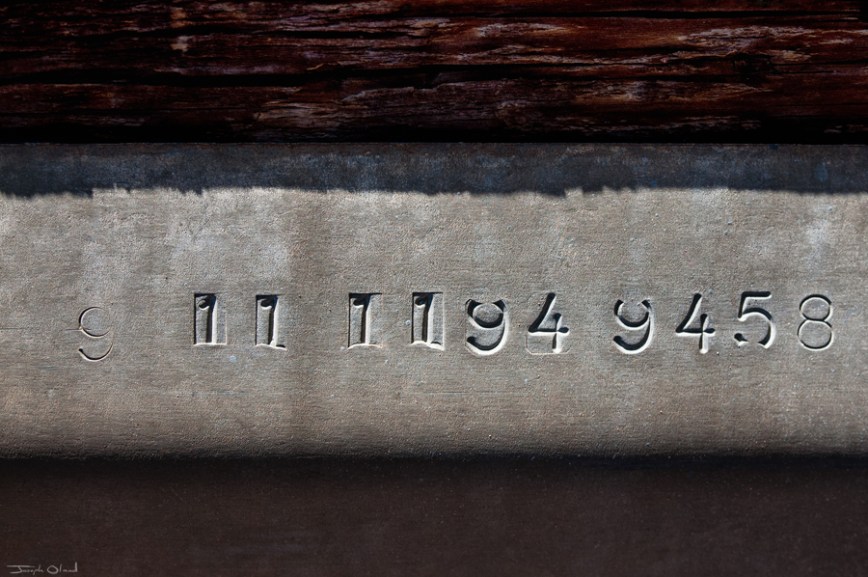
To start things off, though? I present to you another semi-abstract image I was tinkering with. Aligned with other monochrome, macro, minimalist images, this is a photograph of a line of numbers hammered into a small piece of plate metal affixed to a wooden light pole. It certainly asks more questions than it answers. The area is roughly the size of a chewing gum wrapper, and it’s one of those easy-to-miss textures and details of daily life. I’m sure that the number refers to a manufacturing spec or is related to inventory or is somehow connected to the area that the product was routed to for installation, but your guess is as good as mine.

I enjoy the texture and contrast, and I don’t really mind the mystery.

SIGN UP FOR THE LENSEBENDER NEWSLETTER

February 28, 2017 – Desert Rot

FINE ART PRINTS AVAILABLE HERE
– – –
OTHER ‘IMAGE OF THE DAY’ PRINTS AVAILABLE HERE

One of the things that photography, and the volumes of underlying science, have taught me is that there is an aesthetic beauty implicit in the process of decay. When the veneer is stripped away, and as common objects are vulnerable, new textures surface. When we peel back the skin, we see new things – and we usually spend most of our waking lives trying not to see what’s beneath the surface.

Gray’s Anatomy. Diagrams of dissected bodies. Scars and scratches on once-pristine buildings, automobiles, billboards. We close our eyes in most cases, turn our heads, and ignore the viscera. I’m rather attracted to it.

Here’s my proof.

SIGN UP FOR THE LENSEBENDER NEWSLETTER

February 27, 2017 – Rodeo Finals

Mason Clements didn’t earn Sunday’s highest score, but his aggregate put him in the number one slot for this year’s Tucson Rodeo.

FINE ART PRINTS AVAILABLE HERE
– – –
OTHER ‘IMAGE OF THE DAY’ PRINTS AVAILABLE HERE

I missed last years’ rodeo. Instead, I spent the time in Kansas with my family. It’s the first rodeo I’ve missed since 2011, and I certainly don’t intend to miss any future events. I’m not a huge advocate, really, but I do find the experience interesting. I put on what a close friend once called “Joe’s Rodeo Drag,” meaning my denim and cowboy hat, and I spend the week with people that I otherwise likely wouldn’t be around.

It’s challenging to photograph, and the people who participate are hard-working, genuine people – even if we are ideologically different. This is red-state territory, and I’m pretty much a blue-state kind of guy. But I appreciate all of the stories, conversations, and casual interactions with the staff, athletes, and volunteers.

It was an exciting year at the Tucson Rodeo, and I’m thankful to report that there wasn’t a single injury this year, livestock and human competitor alike. A couple of near-misses, and a few rough tumbles, but the crowd was pleased and everybody walked away in good health.

See you next year, Tucson Rodeo. I had no idea how much I missed you until I finally found my way back.

SIGN UP FOR THE LENSEBENDER NEWSLETTER

February 24, 2017 – Tucson Rodeo

Jabe Anderson III, of Dillon, MT, earning a 6.1 second time during Thursday’s steer wrestling event.

FINE ART PRINTS AVAILABLE HERE
– – –
OTHER ‘IMAGE OF THE DAY’ PRINTS AVAILABLE HERE

Yesterday I found myself in familiar territory: the Tucson Rodeo. The Fiesta de los Vaqueros.

It’s bittersweet, now. It always will be, from this day until my last. I’ve spent my entire life pretty disinterested in sports and competition. The eye-liner and dreadlocks and high school were a pretty strong hint. I never had the time or the patience or the interest to learn the rules; football still confuses me, and baseball still bores me.

Several years ago, however, when I was unemployed and struggling to find work and fill the empty hours, an old college friend asked if I’d like to go to the Tucson Rodeo. He was a press photographer and said he’d fudge the facts a bit, call me his assistant, and get me a press pass. He was good like that, knowing that I was a motivated photographer with little that was going my way, few excuses to pick up my camera.

I hadn’t been to a rodeo since I was in elementary school, a field trip to the Kansas City Royal. I said ‘yes’ to my buddy, of course, even though I didn’t really feel any spark or drive to go. I knew I didn’t have any excuse not to go out and take pictures. And would you believe it? The fish out of water – the industrial rock androgynous artist – had a really great time behind the bucking chutes, smelling the livestock, watching the men and women riding beautiful, giant, muscled horses. It got into me, and it has never left.

For several years, my friend William and I, regardless of what was going on in our lives, found each other at the Tucson Rodeo Grounds. We photographed beside one another, and we huddled over our computers at the end of the day, flasks of whiskey or shared pitchers of beer at Danny’s Lounge, combing through all the images and critiquing one-another’s work.

Sports photography is radically different than any other kind of photography I was ever familiar with. Everything happens so incredibly quickly. You have to be focused. You have to try and anticipate what’s going to happen next. And you never walk away feeling like you did the best job; you always feel like you could have done it better. That’s good for a photographer. It’s good for an artist. It’s good to be in situations that challenge you.

My friend shot himself a couple of years ago. My best friend. He left his friends, his family, and his wife behind. This is my second rodeo without him. I almost don’t feel like going out and doing it anymore, except for this strange sense that I’m reconnecting with him every time I put on my cowboy boots and feel the crunch of dirt beneath my feet in the arena. All of the other people in the press trailer knew him, too, so we tell stories and reinforce our memories of him, our love for him.

It’s more than just cowboys and horses for me now.

SIGN UP FOR THE LENSEBENDER NEWSLETTER
February 23, 2017 – Vintage Neon

FINE ART PRINTS AVAILABLE HERE
– – –
OTHER ‘IMAGE OF THE DAY’ PRINTS AVAILABLE HERE

Before the Interstate Highway System was developed, state routes and roadside motels dotted the southwestern landscape. Privately owned businesses lined these thoroughfares with unique signage offering a variety of services for the long-distance traveler. Greasy-spoon cafés and auto-service stations shared the strip. With the introduction of the Interstate System, travel was faster and more convenient, but the quality of character was supplanted by larger chains and a decidedly more corporate appeal.

Denny’s and Auto-Zone replaced these local businesses, few of which survive today.

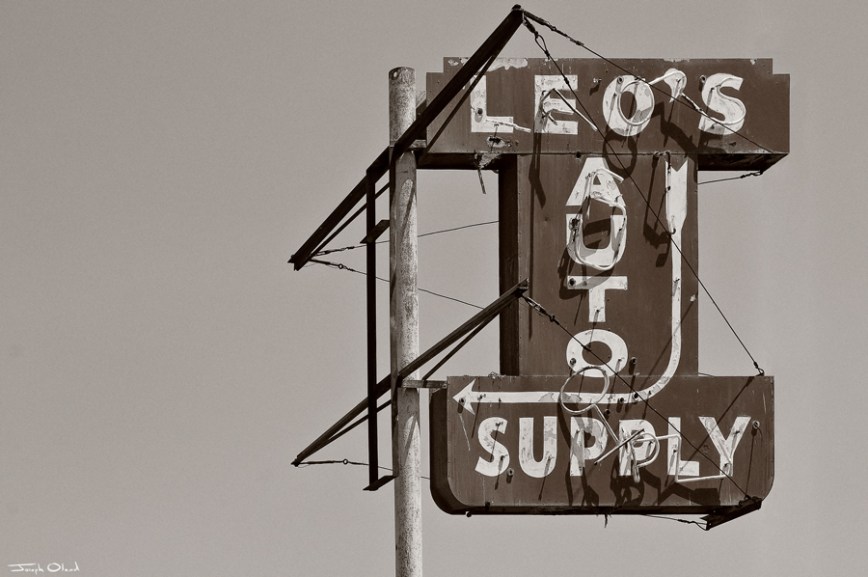
More than half a century ago now, this particular sign – a red and white vintage neon for Leo’s Auto Supply – was purchased and moved to the intersection of Glenn & Stone in Tucson, Arizona, by the proprieter of Don’s Hot Rod Shop. One of the owners, Leo Toia, had it relocated.

Along the Old Benson Highway, many of the small old roadside Motels survive, and Tucson boasts a host of vintage neon signs along the now-infamous Miracle Mile. Many of the old businesses have been lost, but there is a rich history here in Tucson, and this Leo’s Auto Supply sign is one of the survivors.

SIGN UP FOR THE LENSEBENDER NEWSLETTER