Fight Club – I Am Jack’s Lost Sense Of Self

Fight Club Embrace postFINE ART PRINTS AVAILABLE HERE

One of the first movies that ever inspired me to create fan artwork was “Fight Club.” Looking back, there are plenty of opportunities to tear holes in the ethos of the film, but the film is intentionally self-critical, which buttresses it against any concrete philosophical criticism – this is one of the things that’s so brilliant about it. It expresses an anti-corporate, crypto-fascist morality, but it’s also laden with ad placement from Pepsi, IKEA, Tommy Hilfiger, 7Eleven, and many, many others. What I think helped the film overcome its abysmal box office numbers – and eventually achieving cult status in the years following its release – was it’s exquisite illustration of disenfranchisement, job dissatisfaction, and a gnawing frustration with consumer culture.

Today’s illustration is yet another addition to my collection of “Fight Club” inspired illustrations, with the unnamed narrator played by Edward Norton and his only emotional anchor, Marla Singer, played by Helena Bonham Carter. I hope you enjoy it as much as I enjoyed making it, and I hope you might consider adding a print to your art collection. Cheers!

FINE ART PRINTS AVAILABLE HERE
– – –
SIGN UP FOR THE LENSEBENDER NEWSLETTER

Watching The World Burn

Joker In Jail postFINE ART PRINTS AVAILABLE HERE

Heath Ledger’s performance isn’t anything to be overshadowed by his untimely passing. Comic book film adaptations, even today (in the golden age of comic book feature-length films), have never been taken seriously. They are relegated to “special effects-driven extravaganza” status among Hollywood elites and film critics. Box office numbers are good, but even as revenues climb, most of the world doesn’t take Marvel and DC properties very seriously. They’re just comic books. They’re fun rides. They’re cash in the bank.

Christopher Nolan, while not the lone savior of the comic book film adaptation, certainly spear-headed this new wave. After the monumental failure of “Batman and Robin” and the forgettable bombs of “Daredevil” and “Green Lantern,” even moderately successful comic book properties like “The Crow” and “Blade” couldn’t take the stink out of Hollywood executive’s nostrils. And hell – who could blame them?

Alongside Bryan Singer’s take on the X-Men franchise and Jon Favreau’s infinitely accidental smash-hit success with the first “Iron Man” feature, the age of the Hollywood comic book feature has truly arrived. Part of this has to do with technology – the digital effects that make the extraordinary subjects of these films come to life – and part of this has to do with genuine investment in storytelling and world-building, something that graphic novels have done for decades and Hollywood executives have failed to do for an almost equal number of decades.

Well, the ‘Marvel Cinematic Universe’ has arrived. Actually, it arrived about two months after “Iron Man.” And DC has been struggling to catch up with it’s own cinematic universe ever since, re-booting Superman not once, but twice, in the interim. Most of these stories are old-hat, but known largely to comic book collectors and fan-boys. Most of us, even knowing the stories, don’t decry these film adaptations, but rather look forward to seeing how the material will be interpreted and adapted for the screen.

We’ll be seeing the Caped Crusader (the world’s greatest detective), in not one, but two feature length films in the coming months. The chances are very good that the upcoming iteration of the Batman character will be somewhat different from the Christopher Nolan films that helped breathe life back into the character over the past ten years. If anything, it appears as though the upcoming films will adhere more firmly to the comic book origins of the character, which should make a lot of ‘true believers’ quite happy – but it may alienate fans of the Nolan-verse, who have little or no attachment to the Batman character before “Batman Begins” and it’s two sequels.

The problem with the DC properties is that the focus seems scattered. From the carnival and neon-light camp of “Batman and Robin” to the Christopher Nolan “Dark Knight” trilogy, the shift in tone is undeniable. The Marvel camp has found a way to swing from the early expression of Bryan Singer’s “X-Men (2000)” into “Future Past (2014)” and “Apocalypse (2016)” without skipping a beat and without a radical change in tone. The Marvel Cinematic Universe is much more cohesive, while the DC Cinematic Universe is still struggling to find it’s identity.

Only time will tell if DC will be able to compete with the other heavy hitter on the block. For all we know, “Suicide Squad” and “Batman Versus Superman” will be the great wins of the year. Based on what we’ve seen from the two camps, and despite how powerful the characters from them are, my money is still on Marvel.

Excelsior!

FINE ART PRINTS AVAILABLE HERE
– – –
SIGN UP FOR THE LENSEBENDER NEWSLETTER

The Walking Dead – “The Same Boat”

Maggie postFINE ART PRINTS AVAILABLE HERE

This week’s episode of “The Walking Dead” demonstrates precisely how a ‘bottle episode’ should be executed. Almost all forty-two minutes take place on a single cramped set, but the emotional complexity and character-driven dialogue keeps the pace lively and the tension palpable. With Maggie and Carol held hostage by a small contingent of Negan’s foot soldiers, the entire episode concerns itself with how they are going to escape. What distinguishes this episode is how Negan’s group is portrayed. These aren’t throw-away two-dimensional “bad guys.” Rather, they motivate us to consider, for just a moment, that this group may be no better or worse than the Alexandrians.

This is also an episode that focuses on a predominantly female cast, with the leader of Negan’s group serving as a dramatic foil to Carol. The two women have been traumatized by the loss of their children, have both traveled down a blood-drenched path of self-interested survival, and have both managed to make it this far. The only difference? Carol still struggles with her morality, she has a strong attachment to her people, she is riddled with remorse. So, just as we began to suspect that Carol has crossed into territory from which she will be unable to return, the past two episodes of “The Walking Dead” have provided her with some sharp turns. Struggling with the people she’s killed, once again forced into violent confrontation, she escapes her captors wracked with sadness; she doesn’t want to kill any more, even though she knows she has to. She intentionally wounded her male captor, rather than kill him outright. She wanted to give Paula a chance, and was devastated when her hand was forced.

We already know how brutal characters like Carol and Maggie can be, but this episode was relentless. Trapping and burning people alive, Maggie caving-in the skull of one of her captors with the butt of a handgun. The violence of this episode is counterbalanced by constant reminders of Maggie’s pregnancy, and reminders of Carol and Paula’s lost children. These are all mothers, and we see how each of them reacts to their situation based on their individual experiences as nurturers. Paula lost her soul along with her children, Carol struggles with her morality in a world without her family, and Maggie fights tooth-and-nail to defend her unborn child.

This was an emotionally charged episode, revealing a growing exhaustion among the Alexandrians. And we haven’t even met Negan, seen his camp, or have any idea how many people he has.

FINE ART PRINTS AVAILABLE HERE
– – –
SIGN UP FOR THE LENSEBENDER NEWSLETTER

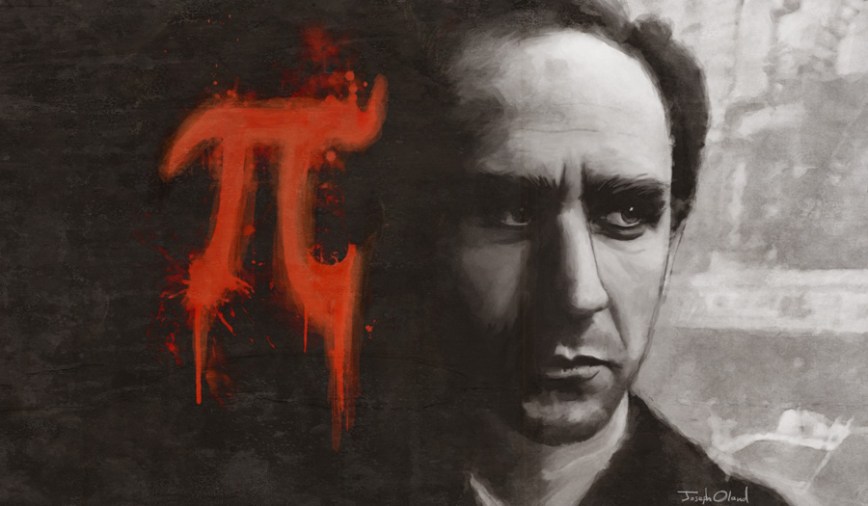
Happy Pi Day!

Pi Day postFINE ART PRINTS AVAILABLE HERE

Forget the smattering of delicious home-baked goodies swarming social media. “Pi Day” will always remind me of the pseudo-noir psychological thriller from esteemed director Darren Aronofski. It’s a difficult plot to summarize, but suffice it to say that it has the feeling of an experimental film, shot in cheap black-and-white film-stock with golf ball sized film grain that serves to hugely influence the dark tone of the film. The main character is a supremely brilliant mathematician that becomes obsessed with the number Pi, an obsession that leads him down a severely dark path. If you haven’t seen it, I highly, highly, recommend  it.

In honor of the day, I sat down and hammered out this illustration, which is now for sale at my online storefront.
Cheers!

FINE ART PRINTS AVAILABLE HERE
– – –
SIGN UP FOR THE LENSEBENDER NEWSLETTER

Better Call Saul 2.05 – Rebecca

Kim Wexler postFINE ART PRINTS AVAILABLE HERE

The female characters in the works of Vince Gilligan often come to represent family, responsibility, order, and process. The audience inherently regards the Skylar White character from “Breaking Bad” with disdain, not because she is morally wrong, but because a hijinx-appreciative audience wants to watch Walter White continue on his destructive trajectory. The women who would reign in these corrupt figures are intuitively the “bad” guys.

That’s the conundrum of Kim Wexler. In many regards, we haven’t been provided the appropriate opportunity to sympathize with her, even if we recognize her as the voice of reason, perpetually trying to talk Jimmy away from bending and breaking the rules. We have seen moments of quiet intimacy between Kim and Jimmy, and we even got to watch her execute a confidence scheme in a hotel bar alongside her wayward friend. This is what elevates her from the status of Skylar White; we know that Kim is drawn to shenanigans, even has an appreciation for how artfully Jimmy is able to find his angle, but she also occupies a moral realm. She can taste the fruit, but life goes back to normal in the morning.

This week’s episode, titled “Rebecca,” gives us an opportunity to walk in Kim’s shoes for a bit, and we understand how she has come to occupy the “nagging wife” archetype. Jimmy himself is experiencing his own form of house arrest, with a new babysitter named Erin, hired specifically to shadow slippin’ Jimmy and make sure he plays by the rules. Kim’s in the dog house and Jimmy’s on a leash, and we watch as they both attempt to adapt to their new circumstance.

The cold open is a also an interesting and revealing glimpse into the past, a dinner with Jimmy and Chuck immediately following Jimmy’s move out west to begin his new career in the mail room at HHM. Chuck’s mental illness hasn’t gripped him yet. Polished utensils, chandeliers, jazz music on the hi-fi stereo adorn the scene. And we’re introduced to a new character: Rebecca, Chuck’s wife, a celebrated violinist and a personal acquaintance of Yo-Yo Ma. The scene is underplayed and deceptively simple, but what it reveals is Chuck’s refined bourgeois lifestyle being disrupted by his brother’s beer-swilling and artless boorishness.

Rebecca is taken with Jimmy’s charm, laughing at his jokes and smiling while Chuck is left aside to scowl. There is resentment, here. Jimmy has an ease and charm about himself that Chuck cannot comprehend, and certainly doesn’t appreciate. At the end of the flashback, Chuck tries telling a joke to Rebecca, hoping for a similar laughing response – but he fails. This undercurrent of anger and resentment colors the entire dynamic between the brothers, and we become much more aware of the Biblical ‘Cain and Abel’ dynamic at play.

The brothers are engaging in silent war. The book-end of the McGill conflict occurs at the end of the episode, with Chuck telling a story about his father to Kim. We learn that Chuck blames Jimmy for their father’s death, and his story is an obvious attempt to poison Kim against her friend and sometimes lover. Simultaneously, he insist that he will talk to Hamlin and try to get her out of the doc-prep dog house and back into an office. At the beginning of his sermon, he points out how destructive and self-interested Jimmy is. He ends his sermon by demonstrating that he is the only McGill that’s willing to go to bat for her. It will be some time before we see how she responds to the brothers, each yanking her in different directions.

The most interesting aspect of the episode is in it’s title, which doesn’t only refer to the introduction of Chuck’s absent wife. A.R. Magalli of CutPrintFilm astutely observes:

“‘Rebecca,’ the 1938 novel by Daphne du Maurier, is the story of a woman caught between fighting in the present over the wrongs of the past, largely the death of the titular Rebecca. The novel’s protagonist is used as a pawn when those devoted to the deceased try for revenge on who they feel is responsible. Here we see another Rebecca disappeared, and the man once devoted to her, Chuck, using another woman as a weapon against the man he may feel is responsible for her death or disappearance, Jimmy.”

There is little chance in the Gilligan-verse for this to be a coincidence. Painterly sweeps of light, the color palette of the offices of HHM, the connective-tissue of the narrative – all are carefully mapped-out, infusing “Better Call Saul” with a tension and an identity that sets it apart from anything else on television. This is among one of the most literate programs ever produced, asking more questions than it answers and peeling away at the layers of each individual character with slow deliberation.

FINE ART PRINTS AVAILABLE HERE
– – –
SIGN UP FOR THE LENSEBENDER NEWSLETTER

Sweaty Cartoons – A Cautionary Tale

Gary Went Home postFINE ART PRINTS AVAILABLE HERE

Tonight’s image is another example of a Chaos Portrait, a series of images born from two drunk idiots passing pen and paper around saloon tables, insisting that neighboring tables of inebriated foolhardy revelers pick up the pen and scrawl-out some lines on paper. I think some of the best art comes from a complete lack of agenda. Spontaneous fits of expression can be remarkably profound, and my associate Mr. Trent Ducati and I put this to the test. We accosted drunk revelers with blank pages and sharpened pencils and asked them to draw. We then took those drawings home and re-interpreted them into this body of work. A lot of interesting shit started to happen.

Chaos portraits. The most dishonest expression of honest emotion any human is likely to see.

Tonight’s image? It was made in my living-room with Mr. Ducati. He had sixty seconds to capture my countenance in charcoal and newsprint paper. We then spent about ten minutes circling the floor, hardening lines and spitting on our thumbs to try and erase lines. We hammered at the canvas, together, until a single, unified visage was lifted from the flakes of chipped charcoal and the agony of lost time. I scanned the image into my computer and added color, chiseling away some lines and accentuating others. The ‘Chaos Portrait’ project became more of an editor’s project.

We took the initial drawing and treated it like a clay sculpture, adding and subtracting information until the final image made sense. I couldn’t even really tell you how this image first started, but it became an emblem, a mascot, of the desperate drunk fools that we encountered every night down at Danny’s Lounge, The Depot, and Shooters – all Tucson watering holes replete with revelers both pathetic, confident, old, young, achieved, and despairing.

We named this mascot ‘Gary.’ Gary is a lonely creature looking for love – or pussy. It’s hard to tell. But he’s based on an image of me, so I guess I’m compelled to be a little protective. He’s a sad, lonely wolf. He doesn’t know how to talk to people. He isn’t a dullard, but doesn’t know how to fly the flag of his brilliance. He is wasted, paranoid, and sad.

Raise a glass. To Gary!

FINE ART PRINTS AVAILABLE HERE
– – –
SIGN UP FOR THE LENSEBENDER NEWSLETTER

Dumb And Dumber – Don’t Fall Off The Jetway Again

Fell Off The Jetway postFINE ART PRINTS AVAILABLE HERE
– – –
It’s unfortunate when we have to forgive a franchise it’s latter-day sins, but it happens. Sometimes we stand on the shoulders of giants, and sometimes we fall off those shoulders. “Dumb & Dumber” was one of the unique films that was tremendously effective in its comedy specifically because it didn’t know it would be so great. It was earnest in its approach but knew how to take risks. It respected its audience and it never pretended to be anything other than what it was: a story of two dimwits on a road-trip. It’s a “buddy comedy” through-and-through. Even though the sequel appears to have been a nostalgic cash-grab, that alone cannot unseat the genuine brilliance of the 1994 classic.

The real train-wreck is a film that aspires to dramatic greatness when, at best, it’s a soap opera. We’ve all watched a comedy that over-clocked the same joke, much to our boredom and disappointment. We’ve seen humor recycled ad infinitum and we’ve seen movies that desperately hope a successful punchline from one feature will lead to success in another, a laziness and hubris of film-making that plagues the Hollywood circuit to this day. One of the reasons the new “Ghostbusters” trailer has caught so much negative criticism is because of this. The “that’s gonna leave a mark” gag stretches back as far as Jack Benny and Peter Sellers; it has been uttered by John Candy in “Spaceballs,” Chris Farley in “Tommy Boy,” and Michael Richards (Kramer) in multiple episodes of “Seinfeld,” and this is naming only a very select few.

In the end, audiences recognize when a film is out of its depth, trying too hard for an Oscar, or taking its audience for granted. “Dumb and Dumber” never did this. The characters were honest and three-dimensional, with their own histories and aspirations and shortcomings. A quick glance might reveal a flimsy animated cartoon cell, but an honest viewing of the whole movie shows us characters of agency, two outsiders fumbling about in a world they don’t (and because of their intellectual limitations, can’t) understand.

The Harry and Lloyd characters of “Dumb and Dumber” fulfill the “fish out of water” trope on two important levels. On the first level, they’re too dumb to function in society in any meaningful capacity. They struggle to hold down simple jobs, can’t pay their bills on time, are gullible enough to be swindled by a disabled elderly woman on a motorized cart. On the second level is where we, the audience, can actually meet them halfway and begin to relate to them rather than just laughing at them. On the second level, after finding a suitcase full of money, the duo winds up attempting to blend-in with high-society, a subterfuge that clearly doesn’t work but motivates us to think about how wealth is expressed in our society. It’s never the nugget ring or the gaudy fringed cowboy boots, no matter how expensive, that ever expresses refinement. It’s always something more subtle – the brand of watch, the fold of the pocket square, the part of the hair.

The premise of “Dumb and Dumber” is absurd, yes, but the characters are deployed with such gleeful honesty that it’s difficult not to want to see them succeed. That the film is goofy and recognizes that it’s goofy is what makes it successful. So strap into the Shaggin’ Wagon, stock up on your Binaka, and please, be sure not to fall off the jet-way again.

FINE ART PRINTS AVAILABLE HERE
– – –
SIGN UP FOR THE LENSEBENDER NEWSLETTER

A Word About Dr. Quinzel

Harley in the Hall post

FINE ART PRINTS AVAILABLE HERE

Any comic book aficionado or perennial nerd – every video-game, graphic-novel, pop-culture freak – can tell you what they think about this character and why. Most of us can tell you which version of the character we were first introduced to, and which iteration we prefer, from the after school cartoon to the decidedly more gritty and demented video game character from the award-winning “Arkham” series of Batman video games.

The more recent comic book and video game depictions of the character aren’t just grittier, but also much more sexualized, and this appears to have informed the direction of the character for the new “Suicide Squad” film. This makes sense for a film targeting a teenage and adult male audience. The character is perfectly tailored to play the seductive role while maintaining her dignity; complete insanity can be fun that way. What’s interesting and attractive about the character goes beyond sex appeal, though, which is probably one of the main reasons why so many people are interested in her. She isn’t a two-dimensional comic foil in a tight outfit. Or, I should say, she isn’t just a comic foil in a tight outfit. Her character is fully formed, she has agency and motivation, and this elevates her from many of the cinematic adaptations of female super-heroes and super-villains. There aren’t any one-liners to pigeonhole this one.

What we might also consider is that Dr. Harleen Frances Quinzel isn’t a throwback to the 1950s, or any other earlier era of antiquated Americana. Many comic book stories from the early days of Marvel and DC weren’t very kind to women and their portrayal in popular media. This one is very original. Harley Quinn – a pretty ‘on-the-nose’ pun on the word ‘harlequin’ – was created by Paul Dini and Bruce Timm back in 1991. Her first appearance was in an episode of “Batman: The Animated Series” in September of 1992.

The animated series was undeniably for kids, but it adopted a wonderfully dark tone and took it’s subject matter seriously. The show was illustrated in muted tones and was heavily influenced by art-deco design. The stories were also genre-defining, presenting conflicted characters, gothic atmosphere, and emotionally intelligent plots. The production team respected its audience even though most of them were children; this might explain why the series is still considered relevant today. It’s one of those timeless classics that’ll likely extend much further than it’s original run. Heck, it already has.

In the animated series, Harley Quinn isn’t given an origin story. She just appears as an obvious, humorous female sidekick to The Joker, who disregards her extreme admiration and devotion to him. With a thick Jersey accent and an almost innocent, bubbly desire to please the man of her dreams, much of the humor comes from her obliviousness. She scarcely seems to recognize how psychotic the object of her affection is. This worked well in the cartoon format, with a characterization that remained consistent, more or less, throughout the series.

The origin story didn’t appear until the 1994 graphic novel in the “Batman Adventures” series, titled “Mad Love.” We learn that the good Dr. Quinzel began as an ambitious and uniquely brilliant young psychiatrist at Arkham Asylum. Through a drawn-out attempt to psychoanalyze The Joker, she is eventually manipulated by the madman into setting him free. It’s a Stockholm-Syndrome-esque turn-of-events, and the doctor is subsequently twisted into one of The Joker’s puppets. The narrative is under-girded by Harley’s intellectual gifts and her emotional frailty, conflicting characteristics that make her a fascinating victim  – she’s both dangerous and vulnerable. The story was widely praised and won the Eisner and Harvey Awards for Best Single Issue Comic of the Year.

From the look of things, this origin story will not be a part of the new “Suicide Squad” film. The origin story may be hinted at, but it won’t be a focus of the film’s narrative. Not enough is revealed by the movie trailers alone to cast judgement, but commentators and fans appear to be split regarding this new incarnation of Harley Quinn. Some say the look is perfect, others wish there would be a more true-to-comic presence. Others are concerned that she doesn’t have that thick Jersey accent that helped define her cartoon countenance (an understandable critique when we watch the trailer and hear the classic ‘joker laugh’ from actor Jared Leto, a clear homage to Mark Hamill’s voice acting in the animated series).

The only way to know if the new Harley is worth a damn, of course, is to buy the ticket, take the ride, and see if works. I, for one, am optimistic that this is going to be a fun ride.

FINE ART PRINTS AVAILABLE HERE
– – –
SIGN UP FOR THE LENSEBENDER NEWSLETTER

Trump – The Stakes Are High

Trump Steak postFINE ART PRINTS AVAILABLE HERE

With the Republican party cannibalizing itself, Trump’s race to the White House has managed to plow forward unimpeded. After the first wave of disillusioned Democrats, scratching their heads wondering how on earth a boorish windbag like Donald Trump could continue to pull off victory after victory, establishment GOP figureheads have themselves joined the ranks of Trump critics. He is a chameleon, a game changer, an insurgent candidate – it’s true. And there is nothing good about it. We can advocate for change in our political process, but this is not the proper path.

At the end of the day, Trump can scarcely claim to be a Republican in the first place. His base is not a contingent of highly educated political scholars. They are average working people who are as fed up with the broken machinery in Washington as anybody else, and they support him from a place of absolute knee-jerk emotion, checking reason at the door. How else could his proven lies stick? How else can a politician, of any stripe, behave the way he has behaved – and continues to behave – without backlash?

It’s a dangerous game we’re playing. There’s nothing wrong with an electorate that’s fed up with political gridlock and economic despair, but flocking to the loudest, meanest bully in the schoolyard is destructive at most, foolhardy at least. We need look no further than what we’ve seen at his rallies – from photographers being choke-slammed and press members being penned in for ridicule to ethnic minorities and protesters being assaulted – and we ought not talk ourselves into thinking that violent rhetoric doesn’t influence violent behavior. We are better than this. There are better people to represent the conservative half, and it is a damn shame that the largest barrier preventing genuine intelligent statesmen (and women) from entering the race is money. A Trump victory will be the ultimate proof; we will no longer be able to say that political positions in America aren’t flat-out bought.

Will tonight’s debate be the same shit-show as the previous dozen?
My money is on continued chaos and a dangerous lack of much-need discussion.
Follow me on Twitter @LenseBender for live updates.

FINE ART PRINTS AVAILABLE HERE
– – –
SIGN UP FOR THE LENSEBENDER NEWSLETTER

Ghostbusters Reboot – What Are They Thinking?

Ghost Gunslinger postFINE ART PRINTS AVAILABLE HERE

One week ago, the new trailer for “Ghostbusters (2016)” was released. In the internet age, the release of a trailer is a significant event, an event in which the online community is able to instantaneously react to the the material. Message boards and comment sections immediately begin to swell with the opinions of amateur and professional media prognosticators alike; the fate of many films seem to be decided much earlier than the actual release date. If we remind ourselves of the considerable excitement generated by the “Star Wars: The Force Awakens” trailers, as well as underdog films like “Deadpool” (the trailers of which managed to secure the attention of comic book lovers and total Deadpool neophytes alike) and realize that these trailers translated into record box office numbers.

Since the “Ghostbusters (2016)” trailer debuted, there isn’t even a fifty-fifty split; the people have spoken, and this feature is dead on arrival. With over twenty-two million views (as of this writing), the two minute video has garnered twice as many ‘dislike’ votes than ‘like’ votes. Reaction videos immediately begin to spring up over the past week, and the general consensus is that this film is going to be atrocious.

So what happened?

Many commentators have cast the new film aside as a contrived, politically correct rehash, tailored to the “social justice warrior” contingent and hordes of vapid ‘millennials.’ This is an absurd knee-jerk reaction. Director Paul Feig has already proved his mettle with comedies featuring strong female leads in smash-hit films like “Bridesmaids” and “Spy,” as well as sitting in the director’s chair for several episodes of the hit television series “Nurse Jackie.” The cast itself has a long list of successful projects under its belt, especially Kristen Wiig and Melissa McCarthy, two actresses whose off-beat brand of comedy have attracted a great deal of attention.

A more honest analysis would require a quick discussion of the first “Ghostbusters (1984).” The original film was completely new, with a variety of inventive and novel concepts. It presented a coherent story, blending interesting characters, horror tropes, and comedy in a seamless tapestry. It was an interesting and fun film, unencumbered by audience preconceptions, laden with fast-tongued protagonists and filled to the brim with undeniable creativity.

This is what we would call a “tough act to follow.”

Remaking a genre film is risky business. Consider, as an example, if “The Force Awakens” wasn’t a continuation of our favorite story told in a galaxy far, far away, but actually sought to re-cast and remake the original “Star Wars: A New Hope.” It would not go over well. Fans of the franchise would revolt. While the cult status of “Ghostbusters (1984)” is arguably less pronounced than “Star Wars,” it is a cult classic nonetheless. Nobody wants to see a remake of “The Rocky Horror Picture Show” for a reason. Cult films do not translate well into updates, remakes, or reboots. They too easily threaten to alter the very elements of the original film that audiences have come to know and love.

Another problem with the new “Ghostbusters (2016)” is that the trailer isn’t clear about the universe in which the story takes place. The trailer begins with the line “thirty year ago, four scientists saved New York.” This would indicate that the new feature is a continuation of the narrative from the first and second iterations of the franchise. This is hugely problematic because the new feature is a “hard reboot” of the 1984 film; it’s a stand-alone re-telling of the original story set in contemporary New York with an all-female cast. The four beloved hucksters from the cult-classic do not exist in this new film’s canon. There are rumors of a Bill Murray cameo, but there’s no indication that he’ll be reprising his role. Chances are, he’ll be little more than an easter-egg for fans of the original films.

For almost fifteen years there have been rumors that a third Ghostbusters movie was in the works, a film in which the original cast would reprise their roles. Unfortunately the project never got on its feet and, with the death of Harold Ramis in 2014, the project was abandoned altogether. In the interim, however, it was clearly recognized that there was interest in rebooting the franchise. Once it was known that the original four (Dan Aykroyd, Ernie Hudson, BIll Murray, and Harold Ramis) would not be on board, a whole world of possibilities opened up.

I don’t believe the decision to make the new film all-female was an attempt at political correctness. Rather, it was an opportunity to expand the demographic reach of a beloved property; it’s an attempt at expanding the audience. There would be nothing wrong with this decision so long as the characters are portrayed as whole women, as characters with agency, avoiding stereotypes of female insecurity and competition – this is where the film appears to have failed. Licking gun barrels and insecurely seeking approval (“The hat is too much, isn’t it? Is it the wig or the hat?”), just doesn’t work. It’s difficult to glean adequate character development from a two minute trailer, but it certainly doesn’t seem like these new characters are as three-dimensional as audiences would prefer.

The “social justice” contingent appears to be cannibalizing an earnest effort at updating this property, but this is only because it has been done so ham-fistedly, incorporating the same-song stereotypes of feminine insecurity and uneducated ethnic minorities, and then wrapping it all up in an unpalatable burrito of updated visual effects, gross-out humor, and Joel-Schumacher-eque neon colored light. Licking gun-barrels and competing for one-liners just doesn’t work.

Where the original film was an adventurous blend of comedy and seriousness, this updated film appears to go full-tilt in the direction of physical comedy. Some of the ghosts in the original film were genuinely scary, counter-balanced by goofy ghosts like the ever-so-enjoyable “ugly spud,” Slimer. It disrespects the source material by disregarding the narrative complexity of the original film. The best comedy comes from a place of thoughtfulness, and this film doesn’t appear to take its license seriously.

Part of the reason why “Ghostbusters (1984)” worked is because the characters were unique and relatable. They were brilliant, marginalized outcasts railing against supernatural forces and governmental bureaucracy at the same time. The new “Ghostbusters (2016) is a focus-grouped cash-grab, and audiences can already tell that they’re being taken for granted by Columbia Pictures.

This, my friends, is what happens when you cross the streams.

FINE ART PRINTS AVAILABLE HERE
– – –
SIGN UP FOR THE LENSEBENDER NEWSLETTER