March 07, 2017 – The Railroad in Creel, Chihuahua

FINE ART PRINTS AVAILABLE HERE
– – –
OTHER ‘IMAGE OF THE DAY’ PRINTS AVAILABLE HERE

March in Mexico continues with one of my favorite, albeit simple, photographs.

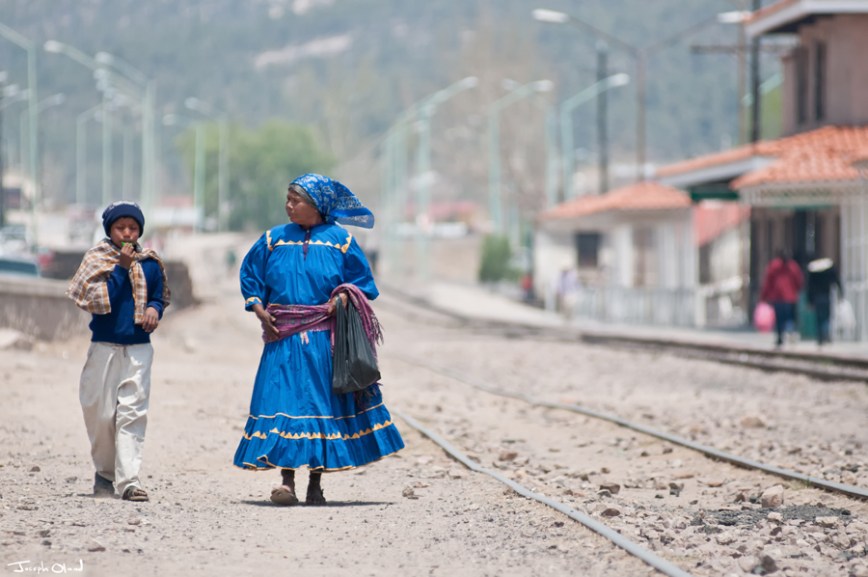
The bus stop and train station is the hub in Creel, Mexico. The El Chepe train line travels east-west across the whole country, delivering goods, people, and fresh seafood. The town square is a stone’s throw away, along with restaurants, curio shops, and privately owned markets. Tarahumara families, usually dressed in their brightly-colored traditional clothing, are always in the town square selling their hand-woven bear-grass baskets and hand-woven garments. As tourism has declined (Creel used to be a popular destination for American travelers), these families have much less to live off of than they used to. Tarahumara fathers, usually wearing regular ‘jeans and t-shirt’ street clothes, are known to walk along the main roads with their youngest and cutest children, pointing out who the children should approach to beg for pesos.

There’s an alpine feel to Creel, surrounded by pine forests and canyons. At dusk, a haze of smoke settles over the town from the wood-fired stoves that residents use for warmth and cooking. The entire town smells like burning pine-bark. Life here is simple, and the people are incredibly friendly. There’s a reason why I’ve gone back several times.
SIGN UP FOR THE LENSEBENDER NEWSLETTER

March 06, 2017 – Chihuahua

FINE ART PRINTS AVAILABLE HERE
– – –
OTHER ‘IMAGE OF THE DAY’ PRINTS AVAILABLE HERE

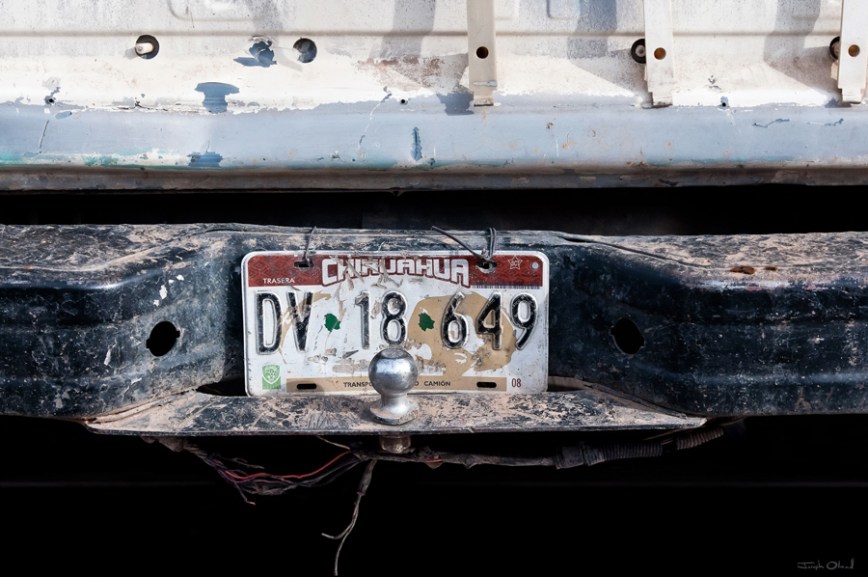
My photographic method doesn’t change much, regardless of where I am. I try to approach every environment with curiosity, and my perspective has slowly evolved over the years, solidified. When I’m not photographing people, I’m always on the hunt for interesting textures and colors.

Traveling through Chihuahua, all of the old decaying adobe buildings and faded election campaign signs – painted on the sides of businesses and along walls – capture my attention. Everything here seems to be recycled, so it isn’t unusual to see 1980’s model cars and trucks, shops with a wide variety of VHS cassettes, and mountains of recycled clothing. Everything seems to carry some kind of story – some kind of history.

Nothing is polished and pristine and brand new. And I really like that.

SIGN UP FOR THE LENSEBENDER NEWSLETTER

March 05, 2017 – Arroyo de Hacienda

FINE ART PRINTS AVAILABLE HERE
– – –
OTHER ‘IMAGE OF THE DAY’ PRINTS AVAILABLE HERE

Slot canyons surround the edges of the Urique River, which winds through the tropical forests in the Copper Canyon region. Military macaws squawk from the treetops and wild fruit grows throughout the area. This image is only about a hundred yards into the canyon; on the reverse side, the canyon winds several miles deeper into the side of the mountain, where a small family of Tarahumara people live, raising chickens and crops in an open clearing.

My guide was a local Urique resident, woefully hungover after spending the previous evening drinking and celebrating at a local young woman’s Quinceañera. I thought, by the time I had made it this far into the state of Chihuahua, I was reasonably conditioned to make this hike without too much trouble. Tomás managed to make me feel like a weak and vulnerable kitten.

It was a rigorous hike. My two traveling companions tapped-out and headed back to the village only an hour-or-so into the canyon. I’m incredibly thankful that I stuck it out, even though I was somewhat hobbled by blisters the following day. Once we made it back out and onto the gravel road, we hitched a ride in the back of a pickup truck. It was the hottest part of the day, closing in on 115 degrees. I got back to the farm I was staying at, plucked a basket full of lemons, and hung out in the shade, slicing and juicing them into a plastic pitcher.

Best glass of lemonade I think I have ever enjoyed in my life, before or since.

SIGN UP FOR THE LENSEBENDER NEWSLETTER

March 04, 2017 – Urique Rancher, Mexico

FINE ART PRINTS AVAILABLE HERE
– – –
OTHER ‘IMAGE OF THE DAY’ PRINTS AVAILABLE HERE

This is a portrait of a rancher who lives on a small piece of land on the outskirts of Urique.

He was in good spirits, but unfortunately we weren’t able to communicate very clearly. He was friendly and shook our hands, and spat out words faster than we could comprehend. My travel companion, who is infinitely more facile with the Spanish language, explained to me that this gentleman had a speech impediment, a stutter, which made talking to him incredibly difficult.

Nevertheless, this man was all smiles – revealing a few missing teeth – and offered us room-temperature lemonade. Several chickens strutted around the threshold to his shack, and papayas dangled over the makeshift fence around the property.

It was a cool little place.

SIGN UP FOR THE LENSEBENDER NEWSLETTER

March 03, 2017 – The Tropical City of Urique

FINE ART PRINTS AVAILABLE HERE
– – –
OTHER ‘IMAGE OF THE DAY’ PRINTS AVAILABLE HERE

The town of Urique is at the bottom of the valley Barranca de Urique, formed by the river of the same name. In today’s photograph, you can see this river winding through the frame, and the small town huddled around it (a population hovering around one-thousand). The road down into the canyon is a series of switchbacks that wind back and forth toward the village. It’s a low-maintenance road, and a reasonably harrowing experience to drive down. Stories abound about rocks that have crushed cars, and vehicles that have tumbled over the edge.

I bought a bus ticket and put my life in the hands of somebody more skilled at making the journey than myself, and we crawled down the dirt road.

Due to its relatively low elevation above sea level – Urique is about 550 meters – the climate is nearly tropical. The town only has electricity for a fixed number of hours every evening (for light, mostly, once the sun goes down) and, during the hot days of summer, most of the village goes down to the river during the day to keep cool in the water, saving work for the early morning and for sundown.

Papayas, lemons, oranges, and bananas grow wild in the surrounding areas on the outskirts of town, and the villagers actively cultivate their own fruit and vegetable gardens. On hikes through the forest, you can find a shady spot, pluck a fresh orange from a tree, sit down and take a rest. It’s a glorious and unspoiled little corner of the world.

SIGN UP FOR THE LENSEBENDER NEWSLETTER

March 02, 2017 – Tarahumara Woman

FINE ART PRINTS AVAILABLE HERE
– – –
OTHER ‘IMAGE OF THE DAY’ PRINTS AVAILABLE HERE

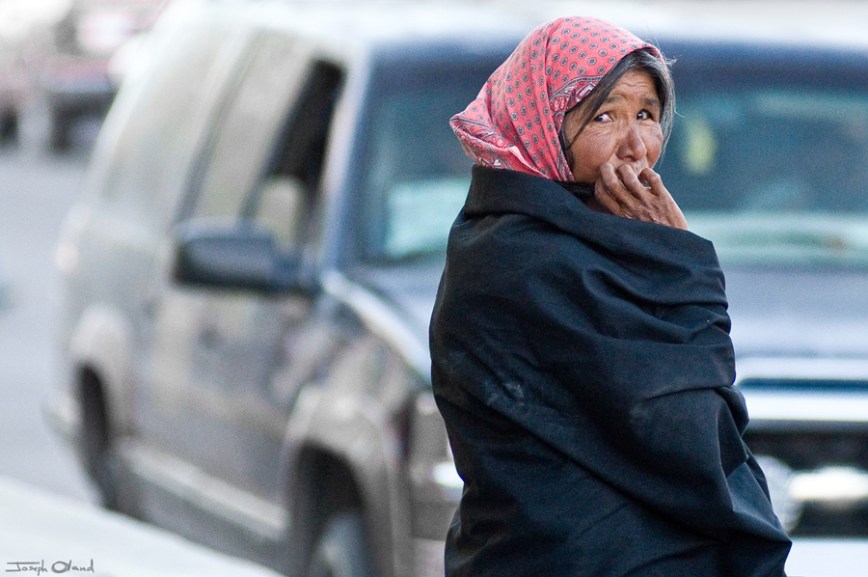
For a few years in a row, I traveled to the Copper Canyon region of Chihuahua in the springtime. Usually, the first destination was a small town called Creel, with an active community settled along the El Chepe railroad line, which carries seafood and other goods east-to-west across northern Mexico daily.

A contingent of the Tarahumara people, indigenous peoples of the region, live in this community. For the most part, only the women wear traditional Tarahumara clothing, but occasionally one might identify a Tarahumara man (Rarámuri) in bright pink, ornately patterned cloth.

This photograph was taken along the main thoroughfare through Creel, dotted with restaurants and gift shops and Tarahumara children begging for pesos.

SIGN UP FOR THE LENSEBENDER NEWSLETTER

February 23, 2017 – Vintage Neon

FINE ART PRINTS AVAILABLE HERE
– – –
OTHER ‘IMAGE OF THE DAY’ PRINTS AVAILABLE HERE

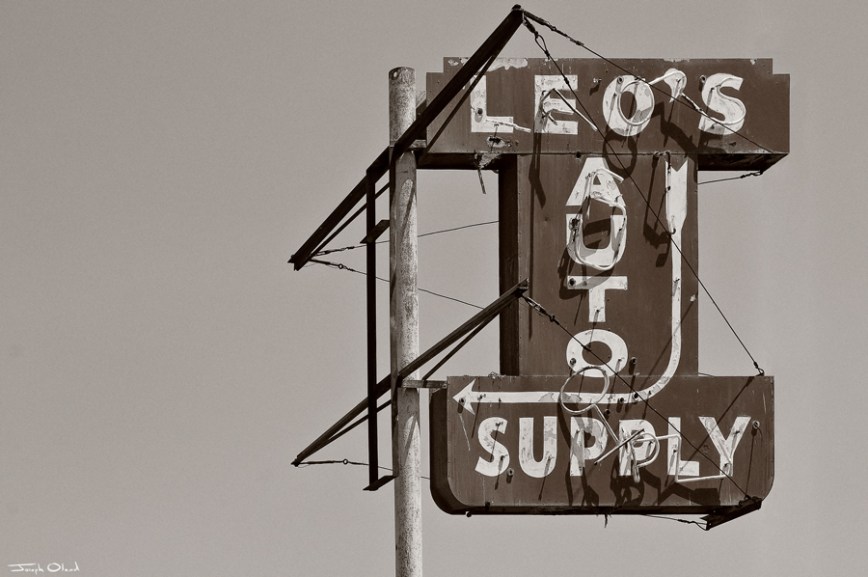
Before the Interstate Highway System was developed, state routes and roadside motels dotted the southwestern landscape. Privately owned businesses lined these thoroughfares with unique signage offering a variety of services for the long-distance traveler. Greasy-spoon cafés and auto-service stations shared the strip. With the introduction of the Interstate System, travel was faster and more convenient, but the quality of character was supplanted by larger chains and a decidedly more corporate appeal.

Denny’s and Auto-Zone replaced these local businesses, few of which survive today.

More than half a century ago now, this particular sign – a red and white vintage neon for Leo’s Auto Supply – was purchased and moved to the intersection of Glenn & Stone in Tucson, Arizona, by the proprieter of Don’s Hot Rod Shop. One of the owners, Leo Toia, had it relocated.

Along the Old Benson Highway, many of the small old roadside Motels survive, and Tucson boasts a host of vintage neon signs along the now-infamous Miracle Mile. Many of the old businesses have been lost, but there is a rich history here in Tucson, and this Leo’s Auto Supply sign is one of the survivors.

SIGN UP FOR THE LENSEBENDER NEWSLETTER

February 22, 2017 – Old Car

FINE ART PRINTS AVAILABLE HERE
– – –
OTHER ‘IMAGE OF THE DAY’ PRINTS AVAILABLE HERE

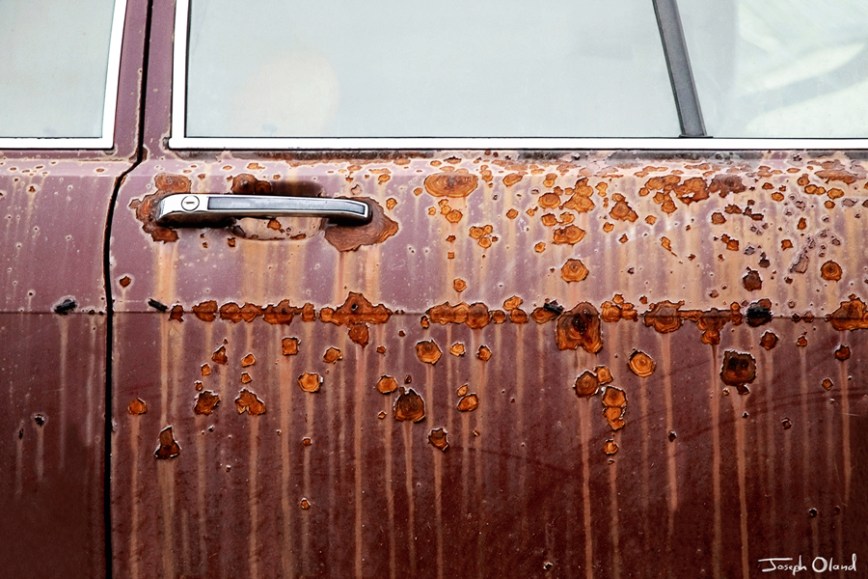
Today’s image comes from Opera Drive, a winding road on one side of the canyon known to local Bisbee, Arizona residents as Brewery Gulch. There’s new money in the old mining town, and some old money – but mostly there’s no money. Anybody who walks far enough up Brewery Gulch will see the junk houses and the yards filled with splintered lumber, old tires, bathtubs, and rusted cars. The paved road terminates, giving way to a gravel pathway with sharp rocks and small remnant shacks from the old mining days, when Bisbee produced more copper than any other mine in the United States.

Up on Opera, looking down on the gulch, are houses perched on the hillside – some little more than remnant shacks, others renovated by the nouveau riche. Regardless of income or social standing, the views are just the same, and always fantastic. I made this picture of an old car parked on the roadside while I was hiking up to the end of the gulch, where the road splits into a couple of hiking trails that wind around into the surrounding hills in the high desert.

“The goal of abstract art is to communicate the intangible, that which eludes the photograph and normal seeing.”
~Curtis Verdun

SIGN UP FOR THE LENSEBENDER NEWSLETTER

January 15, 2017 – Rusted Car

rusted-carpostFINE ART PRINTS AVAILABLE HERE
– – –
OTHER ‘IMAGE OF THE DAY’ PRINTS AVAILABLE HERE

Today’s image – like most of them – is pretty self-explanatory. I mean, it’s photography, right?

Usually – but hey, not necessarily always – it’s almost always obvious what a photographic image is actually of. Even a brickwork of primary-colored Mondrian tiles is imbued with subtext and pregnant with meaning. So why not a portrait of a rusted heap, rotting in the desert like a disposed of beer can baking under the sun?

But it isn’t my job to tell anybody how they’re supposed to feel about an image like this. Much of my work, I’ve been told, carries with it, or conveys, a certain ambivalence. This isn’t even halfway close to true. I compose my images carefully, but I’m not concerned, at least not at all times, with being explicit with personal meanings. Ambiguity allows for different experiences, and I think that ambiguity can be a very powerful tool when creating artwork – especially photographic artwork, which is often disregarded as an easy, unimportant happenstance that occurs between the photographer and whatever happens to fall before his or her camera lens.

I am drawn to textures, contrasts, and colors. And I love the camera’s ability to take everyday objects and completely re-frame them. We all know what a car is – wheels and a seat, a hood and door-handles. But when we encounter cars in our day-to-day lives, we’re always taking in the whole thing. It’s a familiar object and, because of its familiarity, it’s easy to disregard. But when you look at the details, the scratches, the design of the body, the wear on the upholstery, the scuffs on the tires, something else emerges. I wouldn’t want to give that ‘something’ a name, really, but the camera has given me, if nobody else that looks at my photographs, the ability to recognize absolutely insane beauty in the unutterably mundane.

In a world filled with cars – to an almost sickening degree – I was walking down the road and saw the age and rust on this particular vehicle, and I was drawn to it. So…I dunno. Do with that anecdote what you will.

SIGN UP FOR THE LENSEBENDER NEWSLETTER

Save

Save

January 29 – Grandma

01-29 Grandma Goodmans post

“True terror is to wake up one morning and discover that your high school class is running the country.”

~Kurt Vonnegut

– – –

I’ll be spending the better part of today in airports, threading my way through Chicago and onto Hartford where my aunt and uncle live. Connecticut is one of the most beautiful states that I have absolutely no knowledge of; sadly, this will not be the voyage that finds me discovering much. My grandmother needs assistance traveling back home to Kansas City, and I will be the steady arm for her to hold onto.

These posts may not arrive until after I return; since I will be traveling far to see my grandmother for the first time in several months, and because I know our time is limited, I will be focusing on enjoying the trip and spending time with dear relatives that I woefully do not often get to see.

I’ll be gathering pictures and stories throughout.

I leave this short post pointing to the image above. For any soul who has traveled the roads south of Tucson, along the San Pedro river, you may have driven through the peculiar and verdant valley town of Saint David. The store’s full name is “Grandma Goodman’s” and I cannot recall a time that it was ever open for business. I like to imagine that it was a small general store, and I like to imagine that it was as quaint as its name suggests.

FINE ART PRINTS AVAILABLE HERE
SIGN UP FOR THE NEWSLETTER HERE