February 18, 2017 – Saguaro Cactus Landscape

sahuaros-postFINE ART PRINTS AVAILABLE HERE
– – –
OTHER ‘IMAGE OF THE DAY’ PRINTS AVAILABLE HERE

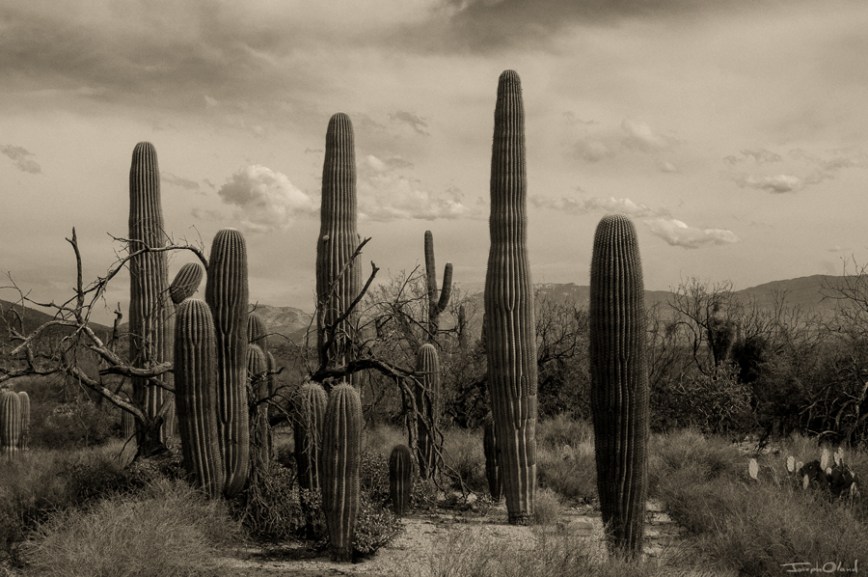
Sometimes black-and-white is the only way to go. There’s a timelessness to black-and-white landscapes that is almost universally appealing. This was taken while hiking through the mountain run-off in Sabino Canyon last week. My feet were wet and squishy from tromping through knee-deep water, tromping up to the Seven Falls area.

A thunderstorm rolled through and cut the hike short, but it was an exquisite several hours in the canyon.

Getting out into the world, walking the downtown streets or the canyons are going on my ‘urban hikes’ are terribly important to me. There’s so much to discover out there, even just walking around the block, if one takes a moment to concentrate, train themselves to really keep their eyes open all the time.

I hope you like today’s photograph. Cheers.

“If you want to be a better photographer, stand in front of more interesting stuff.”
Jim Richardson

SIGN UP FOR THE LENSEBENDER NEWSLETTER

Save

February 15, 2017 – The Circuit

the-curcuit-post

FINE ART PRINTS AVAILABLE HERE
– – –
OTHER ‘IMAGE OF THE DAY’ PRINTS AVAILABLE HERE

This is a completely synthetic landscape, the subject matter based on function over form. Whoever designed this circuit board was focused on making the disc drive it was a part of to function properly – they weren’t interested in inspiring aesthetic interest from a photographer like me. For whatever reason, though, there’s an elegant beauty here. Most of my macro photography focuses on raw textures and plants – stones and concrete, flowers and insects.

But I find something incredibly inspiring by images like this.

To me, this type of image represents possibility. It’s a representation of human creativity.
I hope you like it.

SIGN UP FOR THE LENSEBENDER NEWSLETTER
February 11, 2017 – Birds on a Wire

birds-on-wire-postFINE ART PRINTS AVAILABLE HERE
– – –
OTHER ‘IMAGE OF THE DAY’ PRINTS AVAILABLE HERE

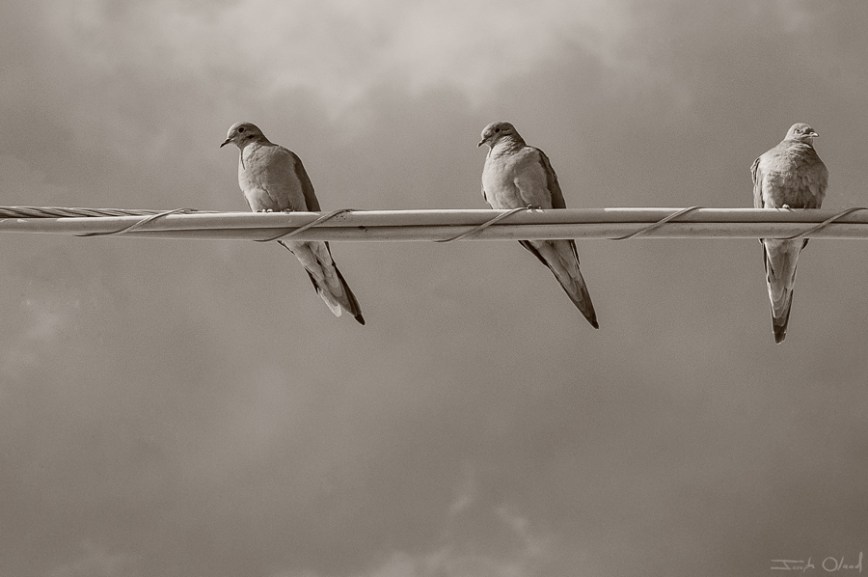
On a little urban walkabout in Tucson, I found myself standing underneath these perched little characters. Looking up and looking down, there are fun little things to observe all around. It’s easy to ignore the details of our daily routine, and I find that putting a camera in between myself and the rest of the world makes it easier to notice all these details. What is simple and boring and banal becomes, magically, interesting and majestic and beautiful.

“What I like about photographs is that they capture a moment that’s gone forever, impossible to reproduce.”
Karl Lagerfeld

SIGN UP FOR THE LENSEBENDER NEWSLETTER

Save

January 07, 2017 – Sunset

201701-07-blog

FINE ART PRINTS AVAILABLE HERE
– – –
OTHER ‘IMAGE OF THE DAY’ PRINTS AVAILABLE HERE

Landscape photography is about as old as photography itself – it has reached a level of cliche that’s hard to escape. At the same time, it isn’t the easiest art-form, either. We all have friends who have taken that ‘epic’ sunset photograph, replete with power lines and ugly houses in the foreground that completely distract from the colors, the clouds, and the experience.

I’m not a naysayer – I love that we all have cameras in our pockets, on our phones, that allow us to document majestic moments. But this doesn’t make us all artists. There’s something to be said about composition, intent, and execution. Cameras allow us all to be witnesses to nature’s majesty, but that doesn’t make us all artists. What I love about camera technology is that it hints at the possibility that we all CAN be artists – the tools to make exciting images are completely democratized, totally universal and, as I already mentioned, in each and every one of our pockets.

Get out there, guys. Keep your eyes open. Make something. Nature does all of the heavy lifting – all you have to do is recognize the beauty, pick up your camera, and give it a go.

SIGN UP FOR THE LENSEBENDER NEWSLETTER

Save

Save

Save

January 03, 2017 – Muddy Stream

201701-03-blog

FINE ART PRINTS AND MERCHANDISE AVAILABLE HERE
– – –
FOLLOW LENSEBENDER ON INSTAGRAM

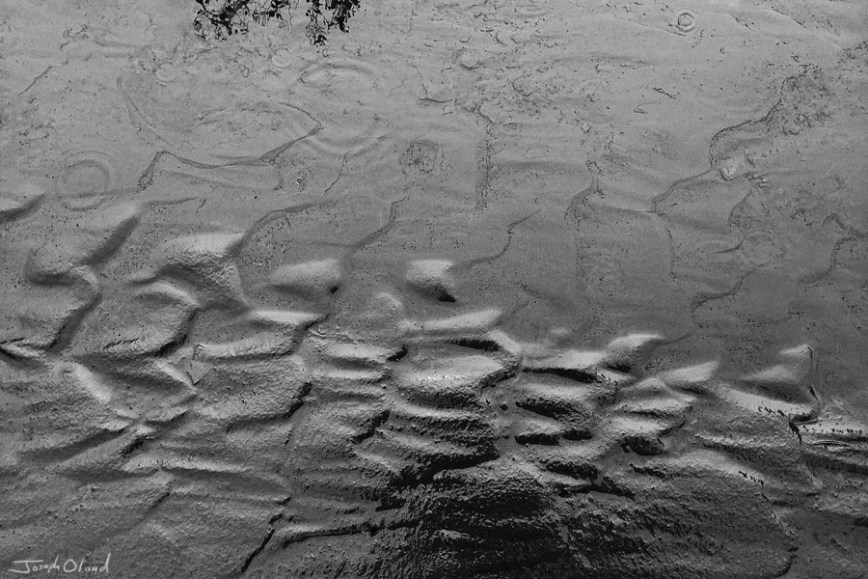
Textures – a long obsession of mine.
Without spending too much time being overwhelmingly boring, I will say that I have spent weeks – probably months – of my life with a macro lens in my hands and earbuds piping music into my brain, photographing cracks in pavement, tree bark, broken patches of clay-rich earth, rusty garbage containers, and just about anything you can find on a rusting old car or in a back alley, in order to expand my collection of texture images.

My library is extensive.

Some of these images are used to add grit and texture to other photographs I’ve taken (as overlays and double exposures). Some of them reveal themselves to be stand-alone pieces. The image above just so happens to be one of those stand alone pieces. While hiking through the rain-drenched red mud of Sedona, Arizona, there was a moment when I realized I had been paying too much attention to the mountains towering over me – that’s what always captures people’s attention – and I needed to take a moment and start looking around.

So I trained my lens on the ground, rather than the high peaks. To the streams and the insects, the animal tracks and the budding cacti, rather than the red rock spires that dominate the landscape. And this is what I got – a portrait of the tiny little stream, the stream that traveled a long distance from a large rock formation, from a mist of rain, to soak into my boots and ensure that my feet would be wet and itchy all day long.

Small price to pay to be reminded how beautiful the world is.

The details, the small little things? They really are beautiful. And they really do matter.

“The past becomes a texture, an ambience to our present.”
~Paul Scott

SIGN UP FOR THE LENSEBENDER NEWSLETTER

The Yashica-D

Yashica-DThis camera is closely associated with what press photographers carried during the 1950s and 1960s, although I must admit that the Yashica is a bit of a knock-off; the Rolleiflex is the original sensation. The reason these were considered more professional had a lot to do with the lens specifications and the selective-focus feature, allowing for more artful and aesthetically pleasing compositions.

This is a medium format camera – accepting 120mm medium format film – and makes 6×6 centimer square images.
Most of the latter models were equipped with a three-element 80mm lens capable of opening up to f/2.8 – this is considerably “faster” glass than many contemporaneous camera models, allowing for faster exposures, effectively giving the photographer the power to ‘freeze’ moving objects on the film plane. Earlier camera models had darker glass and slower shutter speeds, so moving objects would render as a blurry jumbled mess.

– – –

With the discovery of Vivian Maier‘s work and the release of her books, the often ignored TLR style camera has seen renewed interest. Prices for the Rolleiflex have risen significantly, leaping from as low as $150 to figures closer to $1,000. The Yashica (and the Rollei) are relatively easy to find, and because they aren’t as user friendly as your smart phone, I’m confident this fad will die down. When the fad dies down, so will the price.

If you’re a camera freak like me, I suggest you keep your eyes peeled – get one of these as soon as possible. They’re cumbersome to work with compared to modern DSLRs, but they are reliable, sharp, and produce stunning negatives. Like any tool, a well-built camera is a joy to work with.

And if you haven’t heard the name Vivian Maier, go and see  John Maloof & Charlie Siskel’s documentary “Finding Vivian Maier” immediately. It’s blasphemous if you haven’t at least heard the name.

SIGN UP FOR THE LENSEBENDER NEWSLETTER HERE

Vivian YouTube