March 06, 2017 – Chihuahua

FINE ART PRINTS AVAILABLE HERE
– – –
OTHER ‘IMAGE OF THE DAY’ PRINTS AVAILABLE HERE

My photographic method doesn’t change much, regardless of where I am. I try to approach every environment with curiosity, and my perspective has slowly evolved over the years, solidified. When I’m not photographing people, I’m always on the hunt for interesting textures and colors.

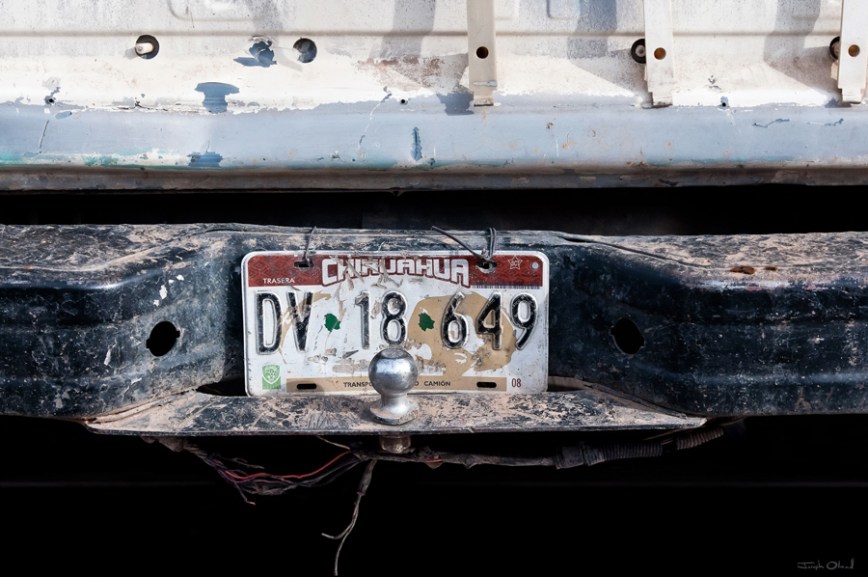
Traveling through Chihuahua, all of the old decaying adobe buildings and faded election campaign signs – painted on the sides of businesses and along walls – capture my attention. Everything here seems to be recycled, so it isn’t unusual to see 1980’s model cars and trucks, shops with a wide variety of VHS cassettes, and mountains of recycled clothing. Everything seems to carry some kind of story – some kind of history.

Nothing is polished and pristine and brand new. And I really like that.

SIGN UP FOR THE LENSEBENDER NEWSLETTER

March 05, 2017 – Arroyo de Hacienda

FINE ART PRINTS AVAILABLE HERE
– – –
OTHER ‘IMAGE OF THE DAY’ PRINTS AVAILABLE HERE

Slot canyons surround the edges of the Urique River, which winds through the tropical forests in the Copper Canyon region. Military macaws squawk from the treetops and wild fruit grows throughout the area. This image is only about a hundred yards into the canyon; on the reverse side, the canyon winds several miles deeper into the side of the mountain, where a small family of Tarahumara people live, raising chickens and crops in an open clearing.

My guide was a local Urique resident, woefully hungover after spending the previous evening drinking and celebrating at a local young woman’s Quinceañera. I thought, by the time I had made it this far into the state of Chihuahua, I was reasonably conditioned to make this hike without too much trouble. Tomás managed to make me feel like a weak and vulnerable kitten.

It was a rigorous hike. My two traveling companions tapped-out and headed back to the village only an hour-or-so into the canyon. I’m incredibly thankful that I stuck it out, even though I was somewhat hobbled by blisters the following day. Once we made it back out and onto the gravel road, we hitched a ride in the back of a pickup truck. It was the hottest part of the day, closing in on 115 degrees. I got back to the farm I was staying at, plucked a basket full of lemons, and hung out in the shade, slicing and juicing them into a plastic pitcher.

Best glass of lemonade I think I have ever enjoyed in my life, before or since.

SIGN UP FOR THE LENSEBENDER NEWSLETTER

March 04, 2017 – Urique Rancher, Mexico

FINE ART PRINTS AVAILABLE HERE
– – –
OTHER ‘IMAGE OF THE DAY’ PRINTS AVAILABLE HERE

This is a portrait of a rancher who lives on a small piece of land on the outskirts of Urique.

He was in good spirits, but unfortunately we weren’t able to communicate very clearly. He was friendly and shook our hands, and spat out words faster than we could comprehend. My travel companion, who is infinitely more facile with the Spanish language, explained to me that this gentleman had a speech impediment, a stutter, which made talking to him incredibly difficult.

Nevertheless, this man was all smiles – revealing a few missing teeth – and offered us room-temperature lemonade. Several chickens strutted around the threshold to his shack, and papayas dangled over the makeshift fence around the property.

It was a cool little place.

SIGN UP FOR THE LENSEBENDER NEWSLETTER

March 03, 2017 – The Tropical City of Urique

FINE ART PRINTS AVAILABLE HERE
– – –
OTHER ‘IMAGE OF THE DAY’ PRINTS AVAILABLE HERE

The town of Urique is at the bottom of the valley Barranca de Urique, formed by the river of the same name. In today’s photograph, you can see this river winding through the frame, and the small town huddled around it (a population hovering around one-thousand). The road down into the canyon is a series of switchbacks that wind back and forth toward the village. It’s a low-maintenance road, and a reasonably harrowing experience to drive down. Stories abound about rocks that have crushed cars, and vehicles that have tumbled over the edge.

I bought a bus ticket and put my life in the hands of somebody more skilled at making the journey than myself, and we crawled down the dirt road.

Due to its relatively low elevation above sea level – Urique is about 550 meters – the climate is nearly tropical. The town only has electricity for a fixed number of hours every evening (for light, mostly, once the sun goes down) and, during the hot days of summer, most of the village goes down to the river during the day to keep cool in the water, saving work for the early morning and for sundown.

Papayas, lemons, oranges, and bananas grow wild in the surrounding areas on the outskirts of town, and the villagers actively cultivate their own fruit and vegetable gardens. On hikes through the forest, you can find a shady spot, pluck a fresh orange from a tree, sit down and take a rest. It’s a glorious and unspoiled little corner of the world.

SIGN UP FOR THE LENSEBENDER NEWSLETTER

March 02, 2017 – Tarahumara Woman

FINE ART PRINTS AVAILABLE HERE
– – –
OTHER ‘IMAGE OF THE DAY’ PRINTS AVAILABLE HERE

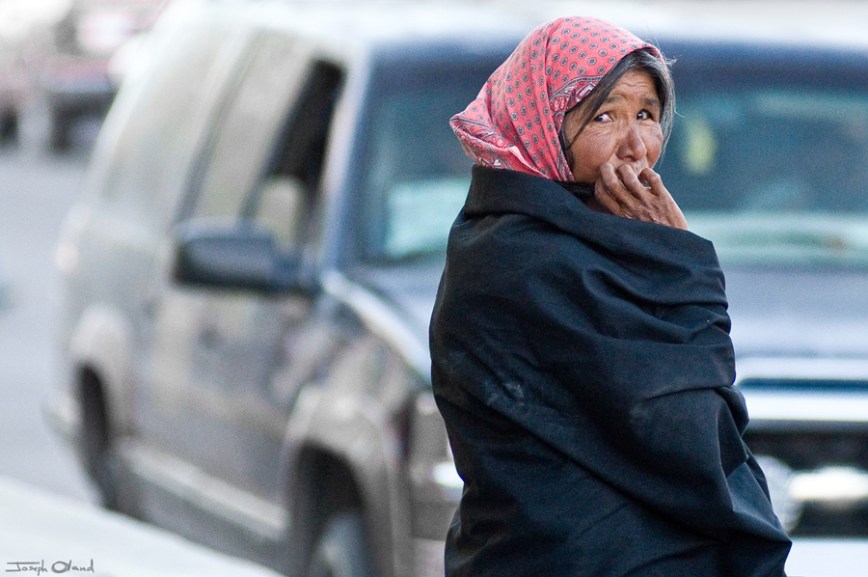
For a few years in a row, I traveled to the Copper Canyon region of Chihuahua in the springtime. Usually, the first destination was a small town called Creel, with an active community settled along the El Chepe railroad line, which carries seafood and other goods east-to-west across northern Mexico daily.

A contingent of the Tarahumara people, indigenous peoples of the region, live in this community. For the most part, only the women wear traditional Tarahumara clothing, but occasionally one might identify a Tarahumara man (Rarámuri) in bright pink, ornately patterned cloth.

This photograph was taken along the main thoroughfare through Creel, dotted with restaurants and gift shops and Tarahumara children begging for pesos.

SIGN UP FOR THE LENSEBENDER NEWSLETTER

February 09, 2017 – The Barrio

the-barrio-post

FINE ART PRINTS AVAILABLE HERE
– – –
OTHER ‘IMAGE OF THE DAY’ PRINTS AVAILABLE HERE

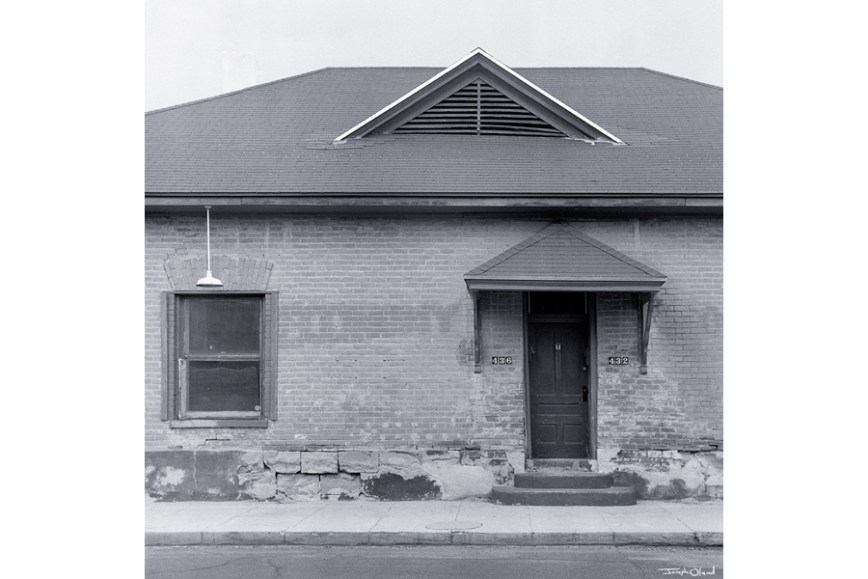
Downtown Tucson is divided into the Presidio District, Barrio Viejo, and the Congress Street Arts and Entertainment District. You could throw a rock from one end and hit the other. But the old barrio is filled with old adobe mud-brick buildings and other rustic reminders of Tucson’s past. In the shadow of some of downtown’s taller office buildings and hotels, the neighborhood is strangely quiet, despite the fact that one could walk three blocks north or east and find themselves smack in the middle of the Rio Nuevo bar and restaurant scene.

This is a unique place, one I like to visit often, and home to a number of supremely talented artists, musicians, and other eclectic Tucson personalities.

This photograph was made using a vintage Yashica-D Twin Lens Reflex, a 1960’s-era medium format film camera. I just loaded some new film into the old beast, after several years, and started making new pictures. I look forward to sharing them with you.

SIGN UP FOR THE LENSEBENDER NEWSLETTER

January 27, 2017 – Borderlands

the-borderlands-postFINE ART PRINTS AVAILABLE HERE
– – –
OTHER ‘IMAGE OF THE DAY’ PRINTS AVAILABLE HERE

The San Rafael Valley is a well-kept secret in the borderlands of Cochise County, Arizona. Micro-climates make this a surprisingly fertile territory for wine grapes, and several wineries are dotted throughout the area, surrounded by BLM territory and a collection of independently operated ranches. There are the odd ‘desert rats’ that live on these lands, too – individuals who prefer to live a more solitary life, away from the noise and bustle of the city.

This largely unmanicured region can seem threatening. The rules of the west are fully on display. If you trespass on the wrong property, you will most-assuredly come face-to-face with an angry rancher and a shotgun. Landowners are wary of outsiders; many are hardened against trespassers as a result of drug-muling and human trafficking. But for the casual traveler, if you play by the rules, the only sign of human life you will ever encounter are Border Patrol trucks and the occasional unmanned drone flying overhead.

I feel at home out here, looking down the deep valley, where the wind gliding through the dry grass is the dominant sound. Where the sky opens up and reminds one how small they really are.

SIGN UP FOR THE LENSEBENDER NEWSLETTER

February 11 – Smith Pipe and Steel

02-11 Smith Steel post


In the warehouse district south of Downtown Tucson, beyond the night clubs & restaurants, Armory Park & El Barrio Viejo, one might happen upon this peculiar sight. It appears to be a life-size – perhaps larger than life-size – sculpture of a velociraptor, sitting comfortably on the corner of Euclid & East 25th Street. It keeps constant watch over the parking lot of Smith Pipe & Steel, an industrial warehouse of some kind.

Sometimes a photograph speaks for itself, and I believe this would be one of those times.

Head down to Tucson’s South Park (no joke) neighborhood. According to a GoogleMaps search, this interestingly out-of-place character was still there in 2013. Chances are, it’s still there, like so many rotting beer cans in the desert.

FINE ART PRINTS AVAILABLE HERE
SIGN UP FOR THE LENSEBENDER NEWSLETTER


January 26 – Agave Americana

01-26 Agave Americana post

Several years ago, I was in the habit of hiking the hilltop behind my house. I did this on an almost daily basis – sometimes early in the morning to try and capture photographs of the hummingbirds, and sometimes at dusk, as the light turned golden yellow. During the monsoon season, the skies swell with dramatic light-grabbing clouds. I think I made so many pictures of the area at that time, I began to forget how truly dazzling the scenery was; most of the pictures remain in the dark, unpublished and under-utilized in my catalog.

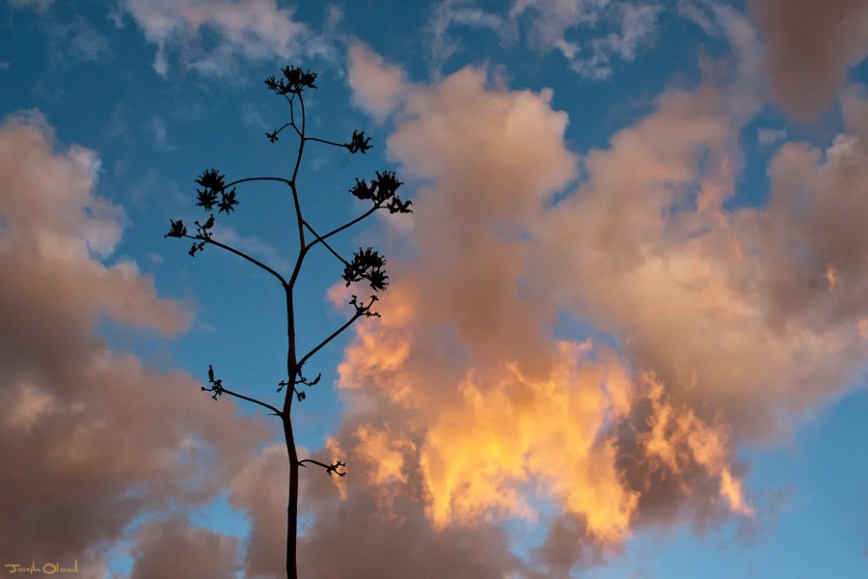
The silhouette is the dried corpse of an agave americana plant. These spires line the hills in the mountains of Southern Arizona and are as recognizable in the borderlands as the Saguaro Cactus (think Roadrunner and Wile W. Coyote cartoons) is just a hundred miles north in Tucson and the Coronado National Forest.

Commonly referred to as a “century plant,” they don’t actually live quite that long. These drought-resistant buggers typically live between ten and thirty years.

I figured a sunset photograph would be a nice book-end to my birthday. Thirty-three years ago I arrived on this peculiar organic spaceship, this mossy rock flying through the cosmos. A wetware android, my brain has been gathering information and making connections ever since that day, furiously trying to make sense of everything.

I’m not sure how successful I’ve been, but it sure is fun trying.
Most of the time.

PRINTS AVAILABLE HERE
SIGN UP FOR THE NEWSLETTER HERE
January 23 – Arizona Winter

01-23 Arizona Winter post

While a wall of snow pummels the east coast, it’s customary for Arizonans to post memes about how nice the weather is in their own neck of the woods. I must admit, I did my fare share of that, too, and I know I will in the future.

We live in a world of comparisons. The east coast has culture and history that the southwest can’t boast quite so easily. The east coast has mass transit that would slap a smile on anybody who’s ever conducted battle on California’s 405 Freeway. There are upsides and downsides, and nobody’s existence is ever really any better than anybody else’s. That’s just the damn truth. The trick is finding the dysfunction that we, individually, can roll with – and run headlong toward it.

For me, I’ll take the heat and political madness of Arizona over anything else. Bad public schools, rogue governors, perpetual arguments about immigration. I’ll take it. The hills have stories to tell, and the desert landscape is beautiful for its surface simplicity, and it’s deep, volcanic complexity. These hills provided lead for the civil war, copper for the stock market, lawlessness for the lawless. The adventurous spirit of this nation’s early years lead straight out into these hills, among warring tribes, labor camps, and a relentless, fearless draw toward independence.

Most of the mines are gone. Most of the camps were never built to last, so the thoroughfares sank back into the ground and were reclaimed by nature. The shacks the workers lived in had no foundations – they, too, sank back into the earth. In the Mule Mountains, we can today look out into a wilderness where, just a century ago, industry was thriving. Once wars ended, once the ore gave out, the communities vanished and moved onward toward the next venture. Only sparse skeletal remains can be found today, of sunken shafts and splintered timber. The path of the short-line railroad still exists along the San Pedro River, even though the steel rails have been plucked back up and reassembled into a fence along the Mexico border.

Open spaces are hard to find, but not in the valleys of southern Arizona, where my heart resides.

PRINTS AVAILABLE HERE
SIGN UP FOR THE NEWSLETTER HERE