March 08, 2017 – Mexican Streetside

FINE ART PRINTS AVAILABLE HERE
– – –
OTHER ‘IMAGE OF THE DAY’ PRINTS AVAILABLE HERE

For the life of me, I can’t remember the name of this small town. Somewhere about a hundred and fifty miles south of the port of entry in Naco Arizona (Naco Sonora). Cracked facades and faded paint jobs are common in these little towns. On the surface, these places appear inhospitable – and I’ve heard plenty of horror stories – but I’ve never had a negative experience in these places. People are friendly, the bodega owners are more than happy to take your money, and there’s always at least one fantastic restaurant or taco cart.

When traveling through the smaller villages in Mexico, there’s no “I just need to find a McDonalds” option. You pretty much have to trust the local food. Either that, or eat nothing but flamin’ hot cheetos and drink nothing but coca cola. And what’s the fun in that?

SIGN UP FOR THE LENSEBENDER NEWSLETTER

March 07, 2017 – The Railroad in Creel, Chihuahua

FINE ART PRINTS AVAILABLE HERE
– – –
OTHER ‘IMAGE OF THE DAY’ PRINTS AVAILABLE HERE

March in Mexico continues with one of my favorite, albeit simple, photographs.

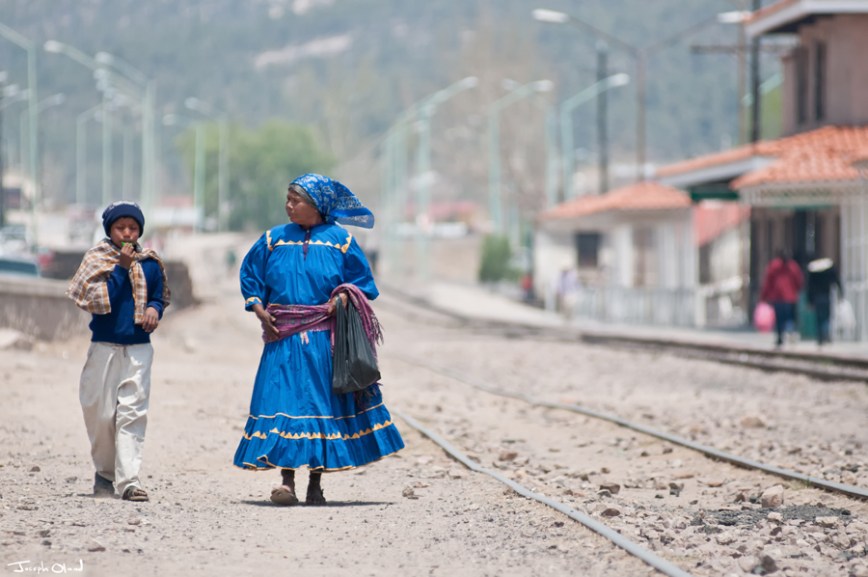
The bus stop and train station is the hub in Creel, Mexico. The El Chepe train line travels east-west across the whole country, delivering goods, people, and fresh seafood. The town square is a stone’s throw away, along with restaurants, curio shops, and privately owned markets. Tarahumara families, usually dressed in their brightly-colored traditional clothing, are always in the town square selling their hand-woven bear-grass baskets and hand-woven garments. As tourism has declined (Creel used to be a popular destination for American travelers), these families have much less to live off of than they used to. Tarahumara fathers, usually wearing regular ‘jeans and t-shirt’ street clothes, are known to walk along the main roads with their youngest and cutest children, pointing out who the children should approach to beg for pesos.

There’s an alpine feel to Creel, surrounded by pine forests and canyons. At dusk, a haze of smoke settles over the town from the wood-fired stoves that residents use for warmth and cooking. The entire town smells like burning pine-bark. Life here is simple, and the people are incredibly friendly. There’s a reason why I’ve gone back several times.

SIGN UP FOR THE LENSEBENDER NEWSLETTER

March 06, 2017 – Chihuahua

FINE ART PRINTS AVAILABLE HERE
– – –
OTHER ‘IMAGE OF THE DAY’ PRINTS AVAILABLE HERE

My photographic method doesn’t change much, regardless of where I am. I try to approach every environment with curiosity, and my perspective has slowly evolved over the years, solidified. When I’m not photographing people, I’m always on the hunt for interesting textures and colors.

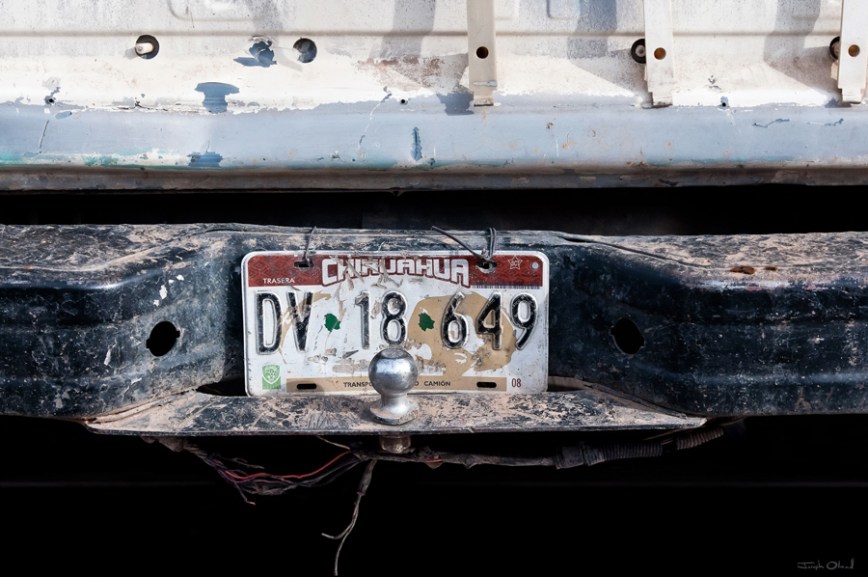
Traveling through Chihuahua, all of the old decaying adobe buildings and faded election campaign signs – painted on the sides of businesses and along walls – capture my attention. Everything here seems to be recycled, so it isn’t unusual to see 1980’s model cars and trucks, shops with a wide variety of VHS cassettes, and mountains of recycled clothing. Everything seems to carry some kind of story – some kind of history.

Nothing is polished and pristine and brand new. And I really like that.

SIGN UP FOR THE LENSEBENDER NEWSLETTER

March 05, 2017 – Arroyo de Hacienda

FINE ART PRINTS AVAILABLE HERE
– – –
OTHER ‘IMAGE OF THE DAY’ PRINTS AVAILABLE HERE

Slot canyons surround the edges of the Urique River, which winds through the tropical forests in the Copper Canyon region. Military macaws squawk from the treetops and wild fruit grows throughout the area. This image is only about a hundred yards into the canyon; on the reverse side, the canyon winds several miles deeper into the side of the mountain, where a small family of Tarahumara people live, raising chickens and crops in an open clearing.

My guide was a local Urique resident, woefully hungover after spending the previous evening drinking and celebrating at a local young woman’s Quinceañera. I thought, by the time I had made it this far into the state of Chihuahua, I was reasonably conditioned to make this hike without too much trouble. Tomás managed to make me feel like a weak and vulnerable kitten.

It was a rigorous hike. My two traveling companions tapped-out and headed back to the village only an hour-or-so into the canyon. I’m incredibly thankful that I stuck it out, even though I was somewhat hobbled by blisters the following day. Once we made it back out and onto the gravel road, we hitched a ride in the back of a pickup truck. It was the hottest part of the day, closing in on 115 degrees. I got back to the farm I was staying at, plucked a basket full of lemons, and hung out in the shade, slicing and juicing them into a plastic pitcher.

Best glass of lemonade I think I have ever enjoyed in my life, before or since.

SIGN UP FOR THE LENSEBENDER NEWSLETTER

The Walking Dead 7.12 – Say Yes

FINE ART PRINTS AVAILABLE HERE
– – –
ALL WALKING DEAD MERCHANDISE HERE

The last several episodes, in my humble opinion, have been misfires. This is pretty apparent if you’ve read through my previous write-ups. It isn’t as though fans aren’t aware of the abundance of “filler episodes” in the show, and it isn’t as though any of us are unaware that there can be an effective use for these episodes when it comes to illustrating the growing connections and tensions between the show’s characters. The trend that I’ve noticed is that all of the material invented specifically for the show – rather than material taken directly from the comic books – straight-up isn’t as dynamic, interesting, or well-thought-out. And no, this isn’t “fan boy” territory, as though I personally would want to see on television exactly what I’ve already read in the comics; that’d make watching the show exceedingly boring. I adore that the writers and show-runners are actively trying to make the television show distinct from the comics in several inventive ways in order to maintain interest among pre-existing fans, create suspense, and keep audience members guessing.

The point is this: the “Oceanside” and “Garbage Picker” (as I’ve come to call them) communities have absolutely no personality to speak of, no heart or soul, and no reasonable explanation as to how they even exist. They deserve little, if any, sympathy from the show’s established communities, or from the audience. How does Oceanside surveil their town? And why haven’t they migrated to territory further away from Negan’s clutches, where they’re less likely to be discovered by scavengers under Negan’s employ? And no men, you say? At some point, this community is going to realize that the trauma delivered by The Saviors won’t be enough to quell a woman’s need for sexual intimacy – at least not indefinitely. And what of the Garbage Pickers? Surviving after making a home in the most unsanitary place they could find, a landfill, despite a massive shortage of medical professionals, medical supplies, not to mention clean food and water? In a landscape filled with rusted nails, rotting food, pack rats, and flies? Yeah – that makes perfect sense. And how are we to honestly believe that they’ve forgotten how to speak English less than two years after the collapse of civilization? No linguist is going to accept that any new form of distinct English dialect would surface from a semi-isolated community in such a painfully short period of time.

The following is a transcript, verbatim, of the words spoken by Jadis, the inexplicable leader of the Garbage Pickers, at the time when Rick delivers several dozen new firearms: “Operational? All? Yes, yes. But operational? No. Not enough. Enough to fight your fight. Us. Nearly twice. Need nearly twice. No. Our guns to take. Our deal. Still on.”

Following that ridiculous, truncated word salad is a negotiation between Rick and Jadis regarding how many of the guns Rick can keep in order to protect his people while they search for even more guns. During the negotiation – as a part of the negotiation – Jadis demands Rick give back the wire cat sculpture he took from the dump – the dump! – after his gladiatorial fight with pin-head, to give to Michonne as a gift. How could such a trivial, stupid goddamn thing enter into a serious negotiation about armaments?

Because of these things – and many, man more – these communities haven’t really earned any empathy; audiences aren’t devastatingly concerned about what’s going to happen to them. This is specifically why I think both communities are going to be decimated in the war to come. The introduction of these new communities feels almost like an afterthought. They absolutely reek of the same wooden, unsympathetic personalities that we see in Fear The Walking Dead, the ill-begotten spin-off series. Why do these things – the Garbage Pickers/Oceanside characters and the Fear The Walking Dead characters – feel so similar, you might ask? Once again,  because they aren’t inventions of Robert Kirkman, who created the whole Walking Dead universe. With no solid source material, there are no solid characters.

None of this means there isn’t an awful lot to celebrate about The Walking Dead, and it would be overly cynical of me not to admit that this week’s episode definitely got a lot right.

The series has spent far too many episodes neglecting the impact of Abraham and Glenn’s deaths on Rick’s emotional well-being. In some ways, I suspect that the season premiere – focused predominantly on Negan breaking Rick’s spirit – was intended to do just that. At the same time, I think it would’ve been better to sporadically reinforce how Rick is (or isn’t) managing his emotions in a few little ‘reminder moments’ scattered throughout the season. He is, after all, the main character of the series, and the audience largely sees the world through his eyes. It was a breath of fresh air to finally see him opening up about that sarcastic young pizza delivery boy, Glenn, who saved his life in the very first episode, when he was trapped inside that immobilized combat tank.

This episode made for wonderful character progression for Rick and Michonne. It has been a long time since we’ve been able to feel this kind of sympathy for Rick. He’s typically written in such a way that we almost always know he’s going to survive: outliving his wife, outliving a rival in love (Shane), making it through the governor’s assault, the swine flu, the hacking off of his girlfriend’s arm when Alexandria was overrun by walkers, and persevering when he had to fight that ridiculous pin-head super-walker for the Garbage Pickers earlier this season – and that’s just to name a few. A very few. And it even happens again in this episode, when that love-struck fool tries to shoot a deer in the middle of a walker assault and gets himself trapped by an encroaching wall of the stumbling but savage undead. The saving grace here is that the majority of the episode was executed incredibly well.

We are finally reinvigorated, seduced yet again into wishing for success for Rick and the gang. We want them to overcome the horrors they’ve endured. Episodes of The Walking Dead are always wonderful when they remember to let the audience see the characters smile and enjoy a small victory, despite their bleak surroundings. It’s affecting to have a moment of levity in an episode (or a whole season) mired in struggle and heartache.

How often do we actually see Michonne smile in The Walking Dead? We see her smile just about as often as we ever hear any character actually laugh (unless, of course, it’s a mustache-twirling villain preparing to bash somebody’s brains in). Hearing Rick and Michonne cackling just after falling through the roof is arguably one of my favorite moments of the episode. It was unexpected bliss, rather than an unexpected jump-scare or a tragic and untimely death.

The episode ends with the Garbage Pickers insisting they still need more guns, despite the cache delivered by Rick and Michonne. And, how convenient that we have Tara at the end of the episode – the only one who knows about those well-armed ladies in Oceanside – with something important to confess. How unutterably convenient. Ten bucks says that this plot-line won’t be addressed, at all, in next week’s episode. We’ll have to wait a week or two, if not several months into the future when the next season begins.

Cliffhangers aren’t even cliffhangers anymore. Not in The Walking Dead. You won’t tune in next week at the same bat-time, same bat-channel, and learn what happens to our heroes next. No, no. We’re all going to learn something completely unrelated, in one of the other communities, about a whole group of other characters.

In the words of foghorn leghorn: I ga-rohn-teeeee!

READ LAST WEEK’S REVIEW
– – –
SIGN UP FOR THE LENSEBENDER NEWSLETTER

March 04, 2017 – Urique Rancher, Mexico

FINE ART PRINTS AVAILABLE HERE
– – –
OTHER ‘IMAGE OF THE DAY’ PRINTS AVAILABLE HERE

This is a portrait of a rancher who lives on a small piece of land on the outskirts of Urique.

He was in good spirits, but unfortunately we weren’t able to communicate very clearly. He was friendly and shook our hands, and spat out words faster than we could comprehend. My travel companion, who is infinitely more facile with the Spanish language, explained to me that this gentleman had a speech impediment, a stutter, which made talking to him incredibly difficult.

Nevertheless, this man was all smiles – revealing a few missing teeth – and offered us room-temperature lemonade. Several chickens strutted around the threshold to his shack, and papayas dangled over the makeshift fence around the property.

It was a cool little place.

SIGN UP FOR THE LENSEBENDER NEWSLETTER

March 03, 2017 – The Tropical City of Urique

FINE ART PRINTS AVAILABLE HERE
– – –
OTHER ‘IMAGE OF THE DAY’ PRINTS AVAILABLE HERE

The town of Urique is at the bottom of the valley Barranca de Urique, formed by the river of the same name. In today’s photograph, you can see this river winding through the frame, and the small town huddled around it (a population hovering around one-thousand). The road down into the canyon is a series of switchbacks that wind back and forth toward the village. It’s a low-maintenance road, and a reasonably harrowing experience to drive down. Stories abound about rocks that have crushed cars, and vehicles that have tumbled over the edge.

I bought a bus ticket and put my life in the hands of somebody more skilled at making the journey than myself, and we crawled down the dirt road.

Due to its relatively low elevation above sea level – Urique is about 550 meters – the climate is nearly tropical. The town only has electricity for a fixed number of hours every evening (for light, mostly, once the sun goes down) and, during the hot days of summer, most of the village goes down to the river during the day to keep cool in the water, saving work for the early morning and for sundown.

Papayas, lemons, oranges, and bananas grow wild in the surrounding areas on the outskirts of town, and the villagers actively cultivate their own fruit and vegetable gardens. On hikes through the forest, you can find a shady spot, pluck a fresh orange from a tree, sit down and take a rest. It’s a glorious and unspoiled little corner of the world.

SIGN UP FOR THE LENSEBENDER NEWSLETTER

March 02, 2017 – Tarahumara Woman

FINE ART PRINTS AVAILABLE HERE
– – –
OTHER ‘IMAGE OF THE DAY’ PRINTS AVAILABLE HERE

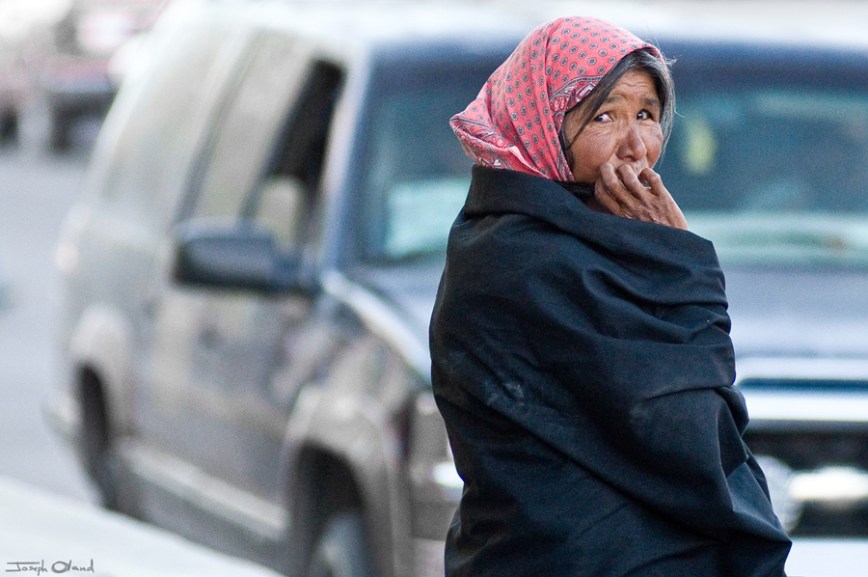
For a few years in a row, I traveled to the Copper Canyon region of Chihuahua in the springtime. Usually, the first destination was a small town called Creel, with an active community settled along the El Chepe railroad line, which carries seafood and other goods east-to-west across northern Mexico daily.

A contingent of the Tarahumara people, indigenous peoples of the region, live in this community. For the most part, only the women wear traditional Tarahumara clothing, but occasionally one might identify a Tarahumara man (Rarámuri) in bright pink, ornately patterned cloth.

This photograph was taken along the main thoroughfare through Creel, dotted with restaurants and gift shops and Tarahumara children begging for pesos.

SIGN UP FOR THE LENSEBENDER NEWSLETTER

March 01, 2017 – Serial

FINE ART PRINTS AVAILABLE HERE
– – –
OTHER ‘IMAGE OF THE DAY’ PRINTS AVAILABLE HERE

As we enter a new month, I’m considering the theme of ‘March in Mexico.’ I have countless images that have never been published from my springtime trips to the Copper Canyon (Barrancas del Cobre) Region the the state of Chihuahua. There’s a unique mix of indigenous tradition and Catholicism, an appreciation for tradition and an embrace of modernity, and there just isn’t any other place on earth quite like it.

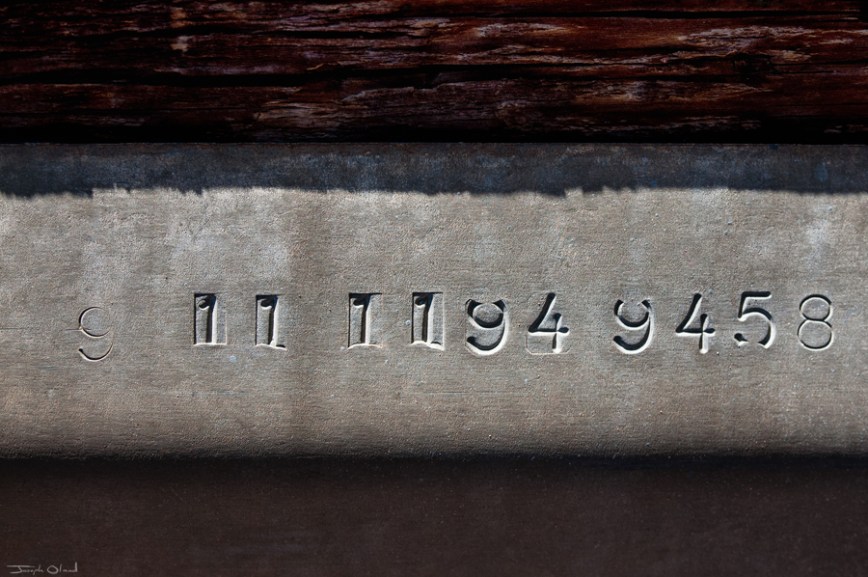
To start things off, though? I present to you another semi-abstract image I was tinkering with. Aligned with other monochrome, macro, minimalist images, this is a photograph of a line of numbers hammered into a small piece of plate metal affixed to a wooden light pole. It certainly asks more questions than it answers. The area is roughly the size of a chewing gum wrapper, and it’s one of those easy-to-miss textures and details of daily life. I’m sure that the number refers to a manufacturing spec or is related to inventory or is somehow connected to the area that the product was routed to for installation, but your guess is as good as mine.

I enjoy the texture and contrast, and I don’t really mind the mystery.

SIGN UP FOR THE LENSEBENDER NEWSLETTER

February 28, 2017 – Desert Rot

FINE ART PRINTS AVAILABLE HERE
– – –
OTHER ‘IMAGE OF THE DAY’ PRINTS AVAILABLE HERE

One of the things that photography, and the volumes of underlying science, have taught me is that there is an aesthetic beauty implicit in the process of decay. When the veneer is stripped away, and as common objects are vulnerable, new textures surface. When we peel back the skin, we see new things – and we usually spend most of our waking lives trying not to see what’s beneath the surface.

Gray’s Anatomy. Diagrams of dissected bodies. Scars and scratches on once-pristine buildings, automobiles, billboards. We close our eyes in most cases, turn our heads, and ignore the viscera. I’m rather attracted to it.

Here’s my proof.

SIGN UP FOR THE LENSEBENDER NEWSLETTER