April 22, 2017 – The Lizard (No. 4)

FINE ART PRINTS AVAILABLE HERE
– – –
OTHER ‘IMAGE OF THE DAY’ PRINTS AVAILABLE HERE

“Listen, real poetry doesn’t say anything; it just ticks off the possibilities. Opens all doors. You can walk through any one that suits you.”
~Jim Morrison

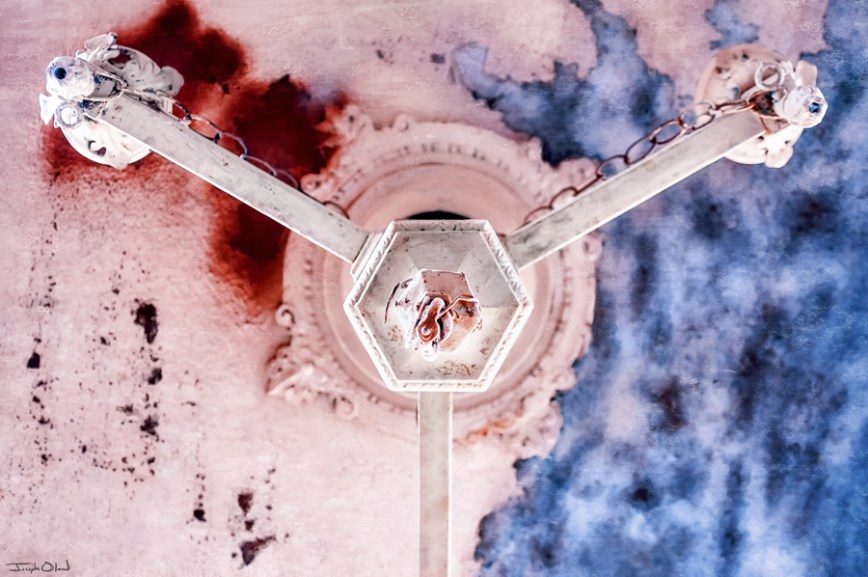
I suppose it makes sense to plant a quote from The Lizard King (or Mr. Mojo) at the top of today’s post. It’s not the most profound quote, but it does remind me of the active decisions that artists have to make – to include this and exclude that. Composition – whether visual, musical, or literary – is about making very specific decisions. It’s all an abstract problem-solving exercise.

I made a lot of decisions – invisible to you – about this image, regarding the color saturation, cropping, and texture. A lot of folks think that photographic art is something that requires a snap of the shutter and that’s it. I’ve spent half of my adult life in a darkroom, and learned how to use a number of tools in the digital darkroom. I make all kinds of subtle edits, trying to sculpt a good final product. A lot more time goes into images like this than you might realize.

I hope you dig it.

SEE YESTERDAY’S IMAGE OF THE DAY
– – –
SIGN UP FOR THE LENSEBENDER NEWSLETTER

April 21, 2017 – More Red White and Blue

FINE ART PRINTS AVAILABLE HERE
– – –
OTHER ‘IMAGE OF THE DAY’ PRINTS AVAILABLE HERE

“Works of art, in my opinion, are the only objects in the material universe to possess internal order, and that is why, though I don’t believe that only art matters, I do believe in Art for Art’s sake.”
~E. M. Forster

I believe in ‘art for art’s sake’ too. I think that obscure and abstract art objects embody this ideal. There may not seem to be a lot of thought or sense in it, but that isn’t really the truth. There’s action and intention, and there are reasons why people make things. And it isn’t necessary for all of us to know exactly why – sometimes the idea is to wonder why.
I really dig being a part of this.

SEE YESTERDAY’S IMAGE OF THE DAY
– – –
SIGN UP FOR THE LENSEBENDER NEWSLETTER

April 20, 2017 – Peeling Paint

FINE ART PRINTS AVAILABLE HERE
– – –
OTHER ‘IMAGE OF THE DAY’ PRINTS AVAILABLE HERE

“The essential function of art is moral. But a passionate, implicit morality, not didactic. A morality which changes the blood, rather than the mind.”
~D. H. Lawrence

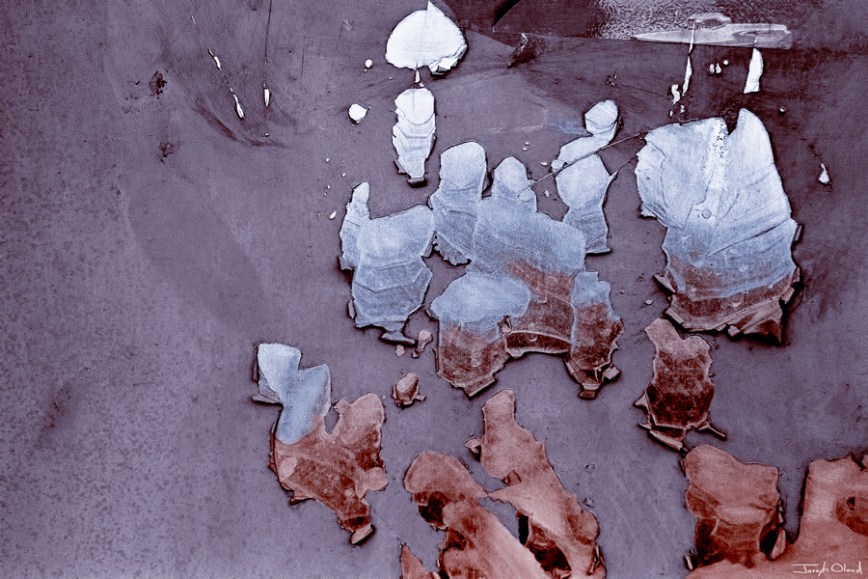
The intention of abstract art, especially, isn’t the intention of civilizing or moralizing. It’s ambiguous, and speaks to each person differently. Sometimes the themes and the tone are obvious, but not always. Sometimes, it’s color and texture and light, on a print or canvas, and we have to be active participants, making up our own minds about how it makes us feel, what it reminds us of, and what – if any – significance it carries.

Here’s some peeling paint.

SEE YESTERDAY’S IMAGE OF THE DAY
– – –
SIGN UP FOR THE LENSEBENDER NEWSLETTER

April 19, 2017 – Street Patterns

FINE ART PRINTS AVAILABLE HERE
– – –
OTHER ‘IMAGE OF THE DAY’ PRINTS AVAILABLE HERE

“Vision is the art of seeing what is invisible to others.”
~Jonathan Swift

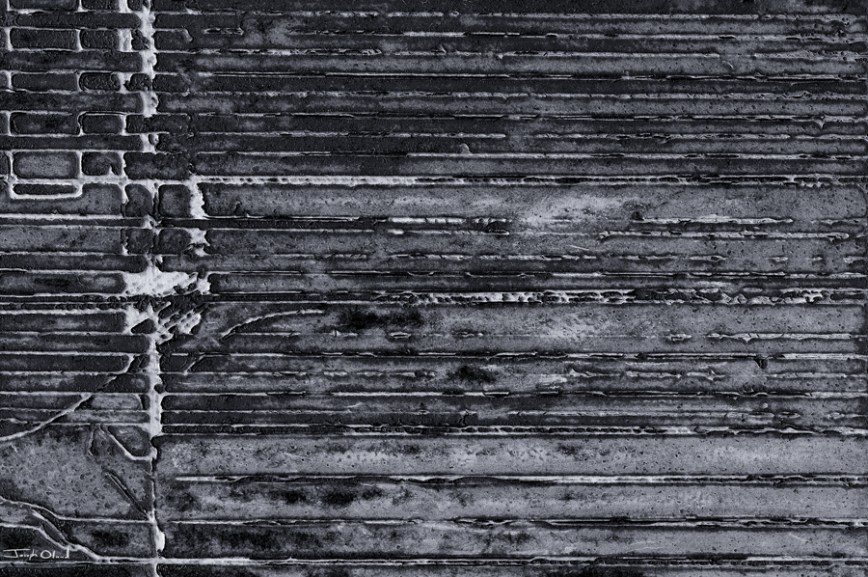
This is a photograph of a storefront near the University of Arizona. Cheap Chinese noodles, walking distance from the photography department on the corner of Park Avenue and Speedway Boulevard. And yes, I agree with today’s quote quite a bit. My vision is that anything, any and all visible things, are interesting – and if viewed the right way, from the right perspective, with the right temperament, any and all visible things are exquisite and beautiful.

That’s why I’m in the business of making pictures.

SEE YESTERDAY’S IMAGE OF THE DAY
– – –
SIGN UP FOR THE LENSEBENDER NEWSLETTER

April 18, 2017 – Abstract Solar Plate

FINE ART PRINTS AVAILABLE HERE
– – –
OTHER ‘IMAGE OF THE DAY’ PRINTS AVAILABLE HERE

“The most beautiful thing we can experience is the mysterious. It is the source of all true art and science.”
~Albert Einstein

This is a scan of a solar plate I produced in a printmaking class about ten years ago. The object itself, I find, holds my interest and wonder more than the prints that I drew from the plate. After being inked and pressed to make a series of prints, the stained metal plate had all of these lovely textures that just didn’t translate onto the paper prints.

The base image? Pretty boring. The aluminum louvers of window blinds, a photograph taken of a shop window while in Bisbee, Arizona during a New Year’s trip with my girlfriend at the time. This is precisely why I love photography – a casual image can be twisted, turned, processed, manipulated into something entirely different. Experimenting with printmaking and photography – both film and digital – and looking at the world through the camera lens, I have learned a whole new way of looking at the world and appreciating it.

SEE YESTERDAY’S IMAGE OF THE DAY
– – –
SIGN UP FOR THE LENSEBENDER NEWSLETTER

April 17, 2017 – Fields of Light

FINE ART PRINTS AVAILABLE HERE
– – –
OTHER ‘IMAGE OF THE DAY’ PRINTS AVAILABLE HERE

“Art is never finished, only abandoned.”
~Leonardo da Vinci

Yes, it’s a da Vinci quote, even though most modern folks attribute it to filmmaker George Lucas.

The beauty of photography is that abandonment of the constructed or witnessed moment must, by its very nature, be abandoned. There’s no room for conventional fantasy in photography – the object or scene exists, it is photographed, and it will not be repeated in the exact same way ever again. Models age, landscapes slowly change, perspectives shift. I could try, for one hundred years, to mimic the exact image at the top of this post, and I could get close – but I could never replicate it perfectly.

Photography is the best reminder that time is real, and cannot be stopped (even when captured).

SEE YESTERDAY’S IMAGE OF THE DAY
– – –
SIGN UP FOR THE LENSEBENDER NEWSLETTER

Better Call Saul 3.02 – Witness

FINE ART PRINTS AVAILABLE HERE
– – –
ALL ‘SAUL’ & ‘BREAKING BAD’ MERCHANDISE HERE

Jimmy: Does that look straight to you?
Francesca: I think you’re a little crooked.
Jimmy: Yeah…a little crooked…

This is precisely the kind of nuanced conversation that Better Call Saul fans love. Of course we know that these two characters aren’t discussing the moral turpitude of the show’s ethically challenged protagonist – they’re discussing the paint job in the lobby of Jimmy’s new law practice. We’re all in on the joke, though, and the actors play it totally straight, which perfectly sells the moment.

The scene involves Jimmy McGill (Bob Odenkirk) meeting Francesca Liddy (Tina Parker) for the first time. A former Motor Vehicle Division employee, she’s looking to apply as a receptionist for the Law Offices of Wexler-McGill. This is yet another introduction of a Breaking Bad alum, a tertiary character embedded in the narrative for longtime fans to appreciate and for newcomers to meet for the first time.

That’s the subtle magic of Better Call Saul. Seeing Tuco Salemanca in season one was a great reveal, inciting audiences to question precisely how the floundering public defendant, Jimmy McGill, eventually manages to ingratiate himself among the prolific criminal empires we already know about from Breaking Bad. In season two we have the one-two punch of seeing ‘The Cousins’ as well as the drug kingpin himself, Hector Salemanca. Rumors of Walter White (Bryan Cranston) making a cameo – even just a simple glimpse of him walking through the background of a scene – have been circulating on social media for over a year, and the anticipation of Gus Fring’s (Giancarlo Esposito) return in season three has had fans wringing their fingers for months.

It’s a tricky narrative dance, introducing an ensemble of characters that audiences are already familiar with and whose ultimate fates are already known. Breaking Bad aficionados already know exactly what happens to Tuco, Hector, The Cousins, Gus, and many, many others. How does the show motivate interest when it’s already known what happens further down the line? The prequel game is a tricky one, but somehow it has been working for Vince Gilligan and Co, who have managed to keep audiences engaged.

The other interesting aspect of Better Call Saul in general, and season three in specific, is the minimalist approach to dialogue. Some people may find the pacing too slow, especially compared to Breaking Bad, with long sequences in which characters are thinking, plotting, planning, studying, or hunting. ‘No dialogue’ means one serious thing: you have to keep your eyes on the screen and you have to pay attention.

Visual story-telling has made a huge resurgence, both in television and film, and Better Call Saul has been expert in maintaining narrative intrigue with a minimal approach to dialogue – especially in a number of Mike Ehrmantraut (Jonathan Banks) scenes. This week’s scene in Los Pollos Hermanos when Jimmy is sitting in his booth, not a word is spoken. Jimmy sits, fumbles with his food, and waits for his mark to arrive. Then we watch Jimmy struggle to figure out how to get close to his mark, eavesdrop, and find a new seat close enough to keep the man in his sight-line. I’m reminded of the massive success of ‘Mad Max: Fury Road’ and the fact that the entire film could have been silent (and there genuinely was very little dialogue) and audiences would have completely understood the universe that these characters inhabit. I’m also reminded of ‘No Country For Old Men,’ where entire scenes unfold in silence, motivating viewers to put themselves in the mind of the protagonist and guess at what he’s thinking and wondering the exact same things he must be wondering. It’s a brilliant device that rewards patience.

– – –
No breakdowns here. If you’re reading this you’ve seen the episode. Ehrmantraut is slowly unraveling details about the Salemanca Cartel’s rivalry with Gus Fring’s operation, even though he has yet to identify Gus Fring as a major player. He knows he’s being tracked, and he’s using his exceptional skill and patience to solve the problem. Chuck has successfully sabotaged his brother Jimmy, and Kimmy is going to be stuck in the middle of this colossal lie-laden disaster. How much does Fring actually know, and what are his plans? That’ll have to be left for later episodes, it seems.

At the end of the day, this writer has one humble prediction for the show: most of the characters who aren’t in Breaking Bad – Chuck McGill, Kim Wexler, Nacho Varga – aren’t going to escape Better Call Saul with their lives. Losing Chuck and Kim would be a logical conclusion to Jimmy’s unique Faustian tale. The obliteration of family and love, a corrupt and ugly dance with the devil, will lead to Jimmy’s metamorphosis into the morally bankrupt Saul Goodman we met in Breaking Bad.

I’d be willing to put money on it.

– – –
Afterthoughts: there’s a fun little easter egg that seems to have gone under a lot of people’s radar.

The cigarette smoking driver that sped away from Los Pollos Hermanos in order to lure Mike onto a remote stretch of desert highway? That’s right, it’s Victor, Fring’s perpetually scowling henchman tasked with guarding Walter White and Jesse Pinkman in the underground lab. If this isn’t ringing a bell, just think “Gus Fring – Utility Knife.”

No dialogue means one thing: pay attention.

READ LAST WEEK’S REVIEW
– – –
SIGN UP FOR THE LENSEBENDER NEWSLETTER

April 16, 2017 – Paint

FINE ART PRINTS AVAILABLE HERE
– – –
OTHER ‘IMAGE OF THE DAY’ PRINTS AVAILABLE HERE

“Art is not what you see, but what you make others see.”
~Edgar Degas

One man’s vandalism is another man’s art, I suppose. Not that I necessarily condone the act, but I’ve enjoyed finding and photographing all manner of graffiti throughout the years. By photographing these things, I have the opportunity to frame the image, manipulate the saturation and apply subtle edits, and make somebody else’s art into my own – photography is the appropriation of reality, which is alchemical in its own right, and I thoroughly enjoy the process.

SEE YESTERDAY’S IMAGE OF THE DAY
– – –
SIGN UP FOR THE LENSEBENDER NEWSLETTER

April 15, 2017 – The Grid

FINE ART PRINTS AVAILABLE HERE
– – –
OTHER ‘IMAGE OF THE DAY’ PRINTS AVAILABLE HERE

“Not all doors open in the same direction and with the same effort.”
~Jasleen Kaur Gumber

One of my long-time fascinations – innocuous tin boxes, fuses, electrical meters, and other devices that track our consumption, gather data, and influence each and every one of our lives. These boxes are attached to every single structure with an outlet, and I find that both interesting (in an abstract sense) and prescient.

Like the ‘Red, White, And Blue’ compositions (see yesterday’s post), I think there’s something here. It’s been a tough nut to crack, but I think there’s something here that I’ll be expanding on.

SEE YESTERDAY’S IMAGE OF THE DAY
– – –
SIGN UP FOR THE LENSEBENDER NEWSLETTER

April 14, 2017 – Red White and Blue

FINE ART PRINTS AVAILABLE HERE
– – –
OTHER ‘IMAGE OF THE DAY’ PRINTS AVAILABLE HERE

“Nobody is visually naive any longer. We are cluttered with images, and only abstract art can bring us to the threshold of the divine.”
~Dominique De Menil, Writings on Art and the Threshold of the Divine

Another composition in red, white, and blue. I think I’ve assembled a decent portfolio of these images to produce an editioned series. I’m not quite so presumptuous as the above quote might indicate, but I do think that we live in a cultural environment in which we are all in the business of making pictures. We all have cameras in out pockets, on our phones and on our tablets, and we absorb a tremendous number of images in our day-to-day lives.

Abstract art is one of the easiest ways to divorce oneself from the generic images that flood social media – kids going to their first day of kindergarten, hanging out with friends at the sports bar, going to that wedding. There’s nothing wrong with those pictures, but fine art photographers have been buried by a culture that’s obsessed with making photographs. I’ve enjoyed making abstract and macro compositions, an I like to think that they stand out from the other kinds of pictures we’re used to seeing.

SEE YESTERDAY’S IMAGE OF THE DAY
– – –
SIGN UP FOR THE LENSEBENDER NEWSLETTER