January 09 – Old Lenexa

01-09 Old Lenexa post

“History never looks like history when you are living through it.”

– – –

Na-Nex-Se Blackhoof, widow of Chief Blackhoof, was the signer of an 1854 treaty. Over one and a half million acres of the Kansas Shawnee Indian reservation was ceded to the United States government. In 1865, shortly before the widow’s death, the Kansas and Neosho Valley Railroad was organized; a railroad depot was erected and a civil engineer platted a town. In 1869 the name “Lenexa,” a derivation of Na-Nex-Se, was adopted. The old Santa Fe Trail ran directly through this little corner of the cosmos.

I only write these words because I didn’t know about this until today. I was raised a few miles away from the railroad depot. The city of Lenexa was my home until I turned eighteen and left for Arizona’s warmer climates. It dawns on me that there’s an awful lot that I don’t know that I probably ought to.

The historic downtown area is small. If you’re driving through and you blink your eyes, you might just miss it. Today it’s pretty much only comprised of this old rail house, a saloon, and a barber shop. I never spent any time here. For one reason or another, the idea struck me yesterday that it might be a good idea to drive over and make a few pictures. It may well have proved to be a waste of time. The weather was disagreeable, and I’m not so sure I’m pleased with any of the photographs I got out of the deal. But at least I learned about my hometown’s namesake.

There are lots of little details that slip through the cracks. It can be argued every which way that the details of our history are important. The details also rarely seem to be very glamorous. In fact, most of the time the details of our history seem decidedly mundane. Nevertheless, the importance of our history is argued regularly. It has been my experience, however, that rarely are our words ever put into proper practice. The business of life overwhelms us. At the end of the day, the television seems to be a greater comfort than a history book.

I’m wholly confident that this is not a good thing.
PRINTS AVAILABLE HERE

January 08 – Tragedy In Tucson

01-08 Tragedy in Tucson post

“We can easily forgive a child who is afraid of the dark; the real tragedy of life is when men are afraid of the light.”

~Plato

– – –

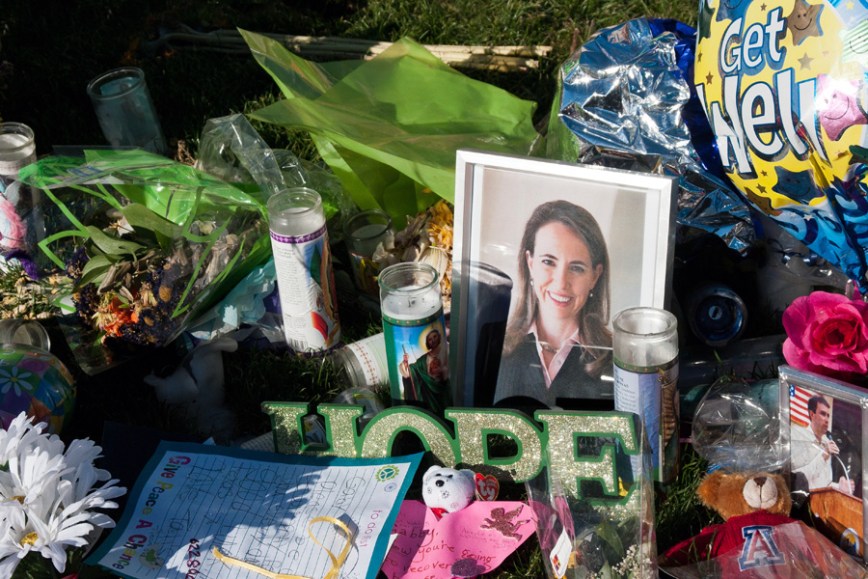
Five years ago violence was visited upon Tucson when a gunman opened fire at a grocery store parking lot. Nineteen individuals were shot, including United States Representative Gabrielle Giffords. Six people lost their lives. I expect that this anniversary will be marked by many in the media, especially after President Obama’s executive order earlier this week. Gun control legislation continues to be a huge point of contention among American voters, but gun violence continues to be an undeniable problem. This isn’t the forum for an individual like myself to hammer out a screed about the issue. All I know is that I was in Tucson that day and I remember how it felt.

I had only just heard the news when my phone rang. A gentleman from SIPA Press introduced himself. He had received my name from a journalist friend of mine, who had explained I’d likely be available to cover the story. This would be the first time I was ever hired to work as a photographic journalist. With shaky hands and shallow breath, I packed up my gear and headed down to the University Medical Center where the wounded, including Representative Giffords, were being treated. I wasn’t sure how I was going to do this job, and I certainly didn’t know what to expect. But I knew I had to go and try my best to do a decent and respectful job.

The next several days were a blur of people in mourning, of funerals and press conferences, of being pressured to go to Jared Loughner’s home and try and get pictures. Any time when I began to feel like a paparazzo, I put my camera down. There were some things I wouldn’t do. Cristina Green – the nine-year-old girl who lost her life in the shooting – was particularly challenging. The media predictably poured in like ghouls for the funeral, sticking microphones into crying faces and asking people “how do you feel, sitting out here” while they choked and sobbed their responses. I was thankful, in that moment, to be a photographer; I was able to do my job from a distance rather than invade people’s space in a moment of sadness.

There is a lot more I could say – about violent political rhetoric, about the second amendment, about the moments years later when I got to sit down with Mark Kelly and Gabby for a brief cup of coffee – but again, I don’t really think this is the place. Gabby has made more of a recovery than any of us could have ever hoped or expected. Jared Loughner, the wild-eyed gunman, is serving seven consecutive life sentences. The world is still here, even if it has been deprived of a not-so-insignificant portion of peace and happiness.

VIEW THE EXTENDED GALLERY HERE


January 07 – The Plaza

01-07 The Plaza post

“The photographer is a manipulator of light.”

~Laszlo Moholy-Nagy

– – –

A photograph of somebody else’s artwork. Is it really even appropriate for a photographer to take such an image and claim it for themselves? It’s an interesting dilemma because the photographer is still engaged in making decisions about the light, the framing, the angle of the shot. All of these variables – and many, many others – influence the emotional impact of the photograph. I tend to tread lightly with topics like this, but I make efforts to exploit my own skills to capture the subject as dramatically or uniquely as possible.

The fountains and statuary of The Country Club Plaza – known by most folks simply as The Plaza – have been photographed by countless thousands of people throughout the years. It’s just on the Missouri side in the Kansas City Metro area, near downtown. It boasts upscale shopping and fine dining, beautiful lights around Christmas, and horse-drawn carriage rides. A couple of city blocks away, though, and you’ll see some of the most impoverished neighborhoods in the city. This is the case all over the country, though, isn’t it? The Plaza is the kind of place where the local police will pick up the panhandlers, drive them over a few blocks, and drop them back off where, presumably, they belong. I’ve see it happen with my own eyes. And I get it. I just don’t like it, is all.

I remember my first high school photography class, using this old metal hunk of a manual Canon film camera my father bought me. A friend of mine from school – you know, who actually had a driver’s license – drove us out to The Plaza. I remember thinking I’d get some great shots. I hadn’t even considered how truly unoriginal the idea was, but hell, it was all new to me. I have to remind myself of the same thing today. “Sure,” I’ll tell myself. “The Grand Canyon’s been photographed a thousand times before. But not by me.”

We have to have our own experiences, now, don’t we?

I still have the negatives from that trip to The Plaza – most of them under-exposed – sitting in an old three-ring binder with many other of my early failed attempts at the whole ‘photography’ thing. I read about a New York photographer who set their camera up on a tripod in their apartment and pointed it straight out the window to the street scene below. He took one photograph every day for a year. Not the most ambitious project, but it’s something. I think we’ve all seen videos of people who do this with self-portraits, to document how much they have (or haven’t) changed in one years’ time. But this photographer did it in 1918, and nobody had every done anything like it before. The modern photographic method hadn’t even reached the century mark; there were lots of things that hadn’t been done with the camera yet. So this photographer’s year-long project made the history books, and the photographs are preserved in some archive or another, probably at the Eastman House in New York.

I’m sure there are plenty of things that have yet to be done with photography, too. It just always seems like it’s all been done before, but that’s just the lie we tell ourselves so we can talk ourselves out of trying. It’s really just a matter of figuring it out. So I guess I’d better get back to it.

PRINTS AVAILABLE HERE

January 06 – Forgotten Spaces

01-06 Forgotten Spaces post

“We look at the world and see what we have learned to believe is there. We have been conditioned to expect. As photographers, we must learn to relax our beliefs.”

~Aaron Siskind

– – –

Several years ago – I can’t quite recall how many – I stumbled across a friend’s Facebook album. It was a series of photographs, documenting every payphone along one road in Phoenix. I can’t recall which street it was. I think maybe it was Van Buren. I can’t even remember whose album it was, but I think it was this one gentleman who graduated ahead of me from art school named Aaron. Anyways, when I was looking at those photographs, I remember thinking it seemed like a silly project. But then, not to long after, it began to intrigue me a bit. In an era where so many households don’t even have landlines, in a world where flickering screens are constantly competing for our attention, I had scarcely thought about the eventual extinction of the pay phone.

When I was in high school, there was a payphone outside of the coffee shop I frequented. Frequented? Hell, I should have been paying rent. I practically lived there. The payphone outside could receive incoming calls, I remember. And those of us who spent all of our free time at The Grape Coffee House knew the number by heart. We didn’t have cell phones or tablets, and only a small handful of ‘rich kids’ even had a computer. We just had cheap cigarettes and used bookstore paperbacks. And endless conversation.

Most of the coffee shops I spent time in during college were different. Everybody had laptops and earbuds. I suppose this is the part of the narrative where I start to sound like somebody’s cantankerous grandfather, griping about how kids these days wouldn’t know good music if it bit ’em in the ass, or some such thing. It’s not so much that I’m bothered by the direction of things; it’s that I tremendously value the sense of community that I recall experiencing back in those days. Since then I, too, have watched Netflix on my laptop, at a coffee shop, for no other reason than I damn-well felt like it. But that won’t erase those good old times, when we didn’t have modern conveniences to distract us from one another.

Walking around the city, examining the loading docks behind grocery stores and the alleyways we never dare to go, something of the old world is still there. And, to my surprise, there are still payphones out there. There aren’t very many, but if you have a few coins in your pocket, you can still communicate with somebody.

And you don’t even have to think about your data plan, minutes, or cell phone bill. But you might have to remember how to use a phone book, lest you can remember a single important phone number all on your own.

Now ain’t that somethin’?

PRINTS AVAILABLE HERE


January 05 – Magical Places

01-05 Magical Places post

“One may say the eternal mystery of the world is its comprehensibility.”

~Albert Einstein

– – –

There are magical people in this world. There are magical moments. At least, that’s the best way I would be able to describe it. Experiences that are striking and unexpected, that stop everything from moving, that capture our attention, ignite our imagination, leave a mark. There are places, too, that have this effect. You can visit them whenever you want, and the feeling they provide almost always seems to be there. Places where you feel centered and calm. Unafraid.

The old mission church outside of Tucson, San Xavier del Bac, is one such place. Every time I ascend the hillside overlooking the church, it feels like everything in the world has stopped. It feels like there is no pain or frustration, no madness, no confusion. I suppose religious places have this effect on a lot of people, but San Xavier is the only one I’ve visited that really made me feel at peace. Not the Basilique Saint-Sernin de Toulouse, not Notre Dame, and certainly not the Holy Trinity Catholic church I attended when I was a child.

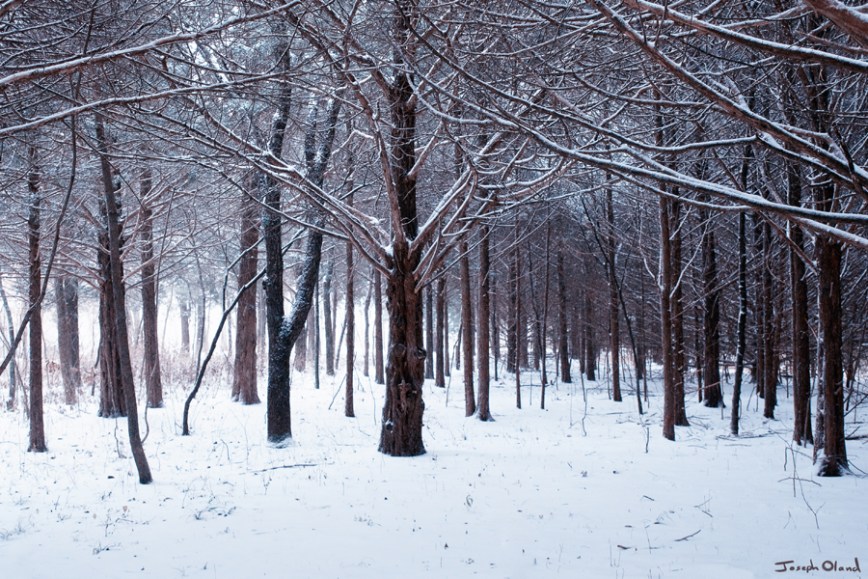
Walking through the woods, I was overcome suddenly. I took my eyes off the ground. I stopped and caught my breath, pouring out of me in thick clouds. The sound of shifting dry snow, that unusual crackling that sounds like it could almost be a campfire, except there’s no light or warmth. I looked around and it seemed as though the woods extended forever. I felt like I was in a Tolkien novel, or ‘The Lion, The Witch, and the Wardrobe.’ This plot of earth begged to possess some kind of mystical name, like The Icefields of Tregaron, or The Blue Hallows of Kill Creek. Kansas is, after all, the Land of Oz, so I suppose I should be satisfied enough by that.

I may have only been there a moment, but it drew out; it felt like I was there for a long and enjoyable time. I didn’t feel cold.

And then I kept moving forward.

PRINTS AVAILABLE HERE


January 04 – An Abstract

01-04 An Abstract post

“There is no abstract art. You must always start with something. Afterward you can remove all traces of reality.”

~Pablo Picasso

– – –

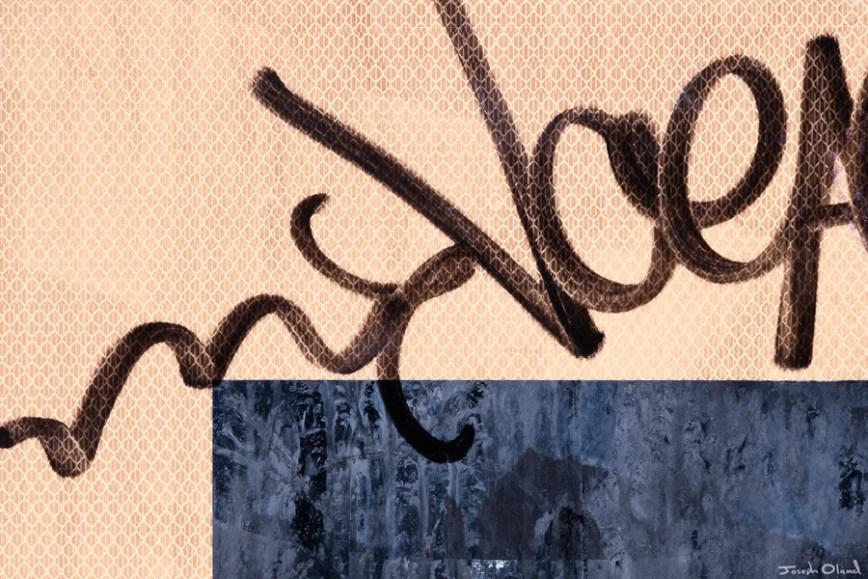
For the longest time, I’ve tried to explain to folks why I enjoy abstract photography. I’ve never been really satisfied with my explanation. I’m okay with that. The best that I can say about it is that, to one degree or another, photography wasn’t really invented with the idea of ever being used that way. The camera was invented to create accurate representations of real world objects, people, and scenes. When you make abstract work out of it, you’re kind of thumbing your nose at the tide of history, but in a playful way.

I like making pictures like this because it gives me a chance to step back from how I normally look at the world. I’ve spent more hours than I can count, just walking the streets, investigating all of the textures that you can’t appreciate when you’re filling your tank, driving to work, have other things that you’re in the middle of trying to accomplish. When I go on these ‘urban hiking’ excursions, I usually just go at an easy pace, pop my headphones in, and start looking around.

It feels like I’m a kid again, plucking up rocks and seeing that whole world of little critters hiding underneath.

PRINTS AVAILABLE HERE

January 03 – The Great Prairie

01-03 Winter Tree

The days are getting longer, but they’re still dark. These past several years, it’s been right around this time that it really starts to settle into my bones. It happens all of the sudden, and even though the holidays have come and gone, you realize that the coldest days are still ahead.

I’ve been feeling isolated. And that would be a pretty huge understatement, if I’m to tell the truth. Loneliness can be a crushing beast. In most situations, I enjoy solitude. Time to think, to read, listen to music, write, and create. But then, solitude and loneliness are different animals, aren’t they? I like to think that I do a decent job starving my sadness, filling the minutes of my day with activity. I’m sure I’ve driven my nearest and dearest a little mad at times with my unusual requirements; I need space, and I need solitude. But this winter season finds me feeling a little differently about my solitude. I find myself more anxious, and fantasizing about warm weather, about returning to Arizona where I know I belong.

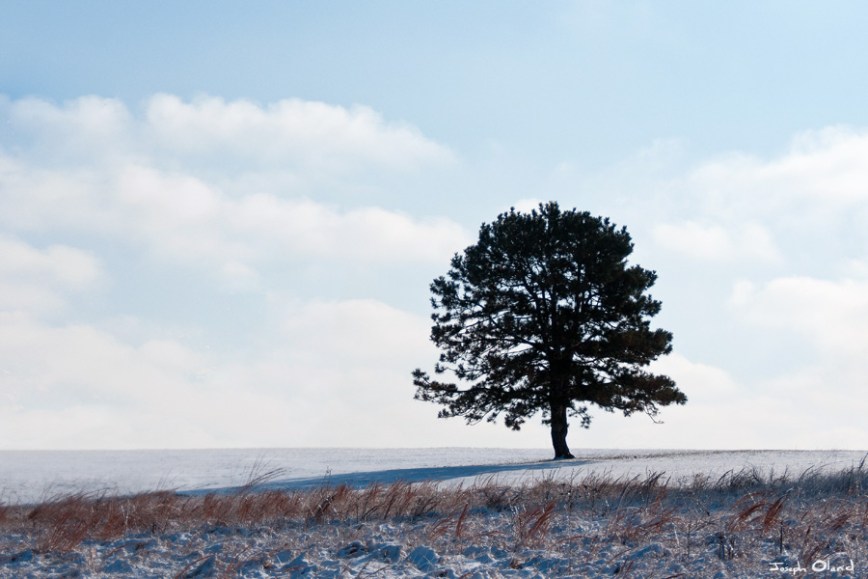
I suppose this image accurately reflects how I’m feeling, at least from my point of view. A lonely tree in the blue winter light. It looks like it’s out in the country, but this photograph was made about five miles away from my parents’ house. This little patch of land is surrounded on all sides by subdivisions and strip malls. In that way, I suppose the image reflects how I’m feeling on a whole other level, now, doesn’t it?

Nevertheless, the point of these words isn’t pity. There is beauty in everything we experience. When we’re tested, we have an opportunity to learn a great deal about ourselves. Sometimes we learn a great deal about others, too. Good things grow out of struggle, and even on a lonely winter day, I can sip my coffee, go for a walk, and find a little patch of nature in the concrete that speaks to me. And that ain’t half bad.

PRINTS AVAILABLE HERE

January 02 – Leaf

01-02 Treeleaf blog

“Nature will bear the closest inspection. She invites us to lay our eye level with her smallest leaf, and take an insect view of its plain.”

~Henry David Thoreau

– – –

After several troubled months, I found myself walking down the main street of a small town in Illinois, a short distance from the Mississippi River and the Gateway To The West. Edwardsville is a quiet place, iconic, like the “everytown” you see in movies depicting life in the 1950s, where the homes are perpetually decorated for the Forth of July. Green grass and cobblestones, it’s one of the oldest towns in the Illinois territory, and it’s just small enough that the streets aren’t overrun with strip malls; the roadways are festooned with vintage neon signs, there’s an old single-screen theater, local brewpubs, and weathered bricks wrapped around quaint coffee shops and pizzerias.

I walked in and around the town with my headphones on, piping-in a soundtrack to my walkabout. Through the residential streets and small parks, up into downtown, I felt – for the first time in months – safe and secure, shielded from the chaos that so often dominates our lives. Sure, the fantasy ended and the business of life had to keep plunging forward, but for a few hours I was able to let my thoughts wander. I watched schoolchildren playing outside, contractors mixing cement outside of an historic storefront, delivery trucks pouring into the alley behind the pizzeria to unload fresh tomatoes and cheese. Walking around the courthouse, snapping shots of bees rolling around in the pollen in the rose garden, watching birds drinking from the fountain in the plaza, I found myself smiling; it had been a long time.

Cleaning things out today, sifting through holiday sweaters and stacking greeting cards for safe keeping, I picked up a book I had been reading while I was in Illinois, visiting my sister. I thumbed through it and found this leaf; I had completely forgotten about it. While walking around, camera in hand and headphones in, I knelt down and picked it up, admiring it’s colors, noticing that the whole sidewalk was littered with bright color. I unzipped my backpack and pressed it between a couple of pages of my book, and then I got back to walking down the row. I don’t know why I did that. I don’t know what I would be saving it for.

But I found it today, and I was reminded of my walk, of that first moment of genuine peace after several months of conflict. I suppose I saved it so that I could find it again, and now I’m sharing it with you.

Prints Available Here

January 01 – Winter Woodpecker

Woodpecker wordpress

I spent the day in Eudora, Kansas – a small farmhouse with snow slowly melting back into the earth. The skies were clear today. It was sunny. I worked with a friend, tearing old aluminum siding and cedar slats off the house. Splintered wood and tattered insulation, the clanking of pry-bars and stretching wood – we made a mess, and it was enjoyable. The dripping sound of melting snow surrounded the property, accented occasionally by a lonely wing-broke rooster, unable to hop the fence of the coop to follow the hens into the leaf piles on the edge of the treeline.

As the light began to fail, I asked my friend if he could escort me down through the field, up to the western edge of the property where his tree stand is set up. I brought my camera to work today, hoping I might be able to spend dusk looking for deer. The temperature dropped quickly. Sitting silent and still, the cold grips you in a way that it really just can’t when you’re hauling lumber, swinging a hammer, running up and down a ladder.

No deer tonight, however. The low scream of State Route 10 in the distance, the red sky turned blue, darkened, and the leafless trees blended into the growing darkness. I stumbled back through the dark, through muddy grass. I followed the light of the faintly-illuminated windows of the farmhouse, and I said goodnight to the family. I was a little bummed; the lingering tracks in the snow made it seem like a sure thing that I’d see some deer. Maybe next time. I’m thinking about driving out there tomorrow night, just to give it another go.

The upside was a cluster of pretty fearless woodpeckers in the tree beside mine. I watched them, for maybe an hour – maybe an hour and a half – in the quiet, circling the tree and pecking at it, climbing to the top in a corkscrew trajectory. Once they reached the top, they’d fly back down to the bottom and ascend the tree again, combing it over meticulously. They’re funny little creatures, and quite the trick to photograph; they’re always moving. I enjoyed sitting still, watching the tireless movement of these little creatures.

Not a bad way to begin the new year, I might reckon. Happy New Year. Let’s see if sixteen really is sweet, shall we?

Prints Available Here